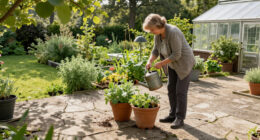
To manage condensation in your greenhouse, focus on proper ventilation and humidity control. Use exhaust fans, ridge vents, or sidewall vents to promote airflow and remove moist air—especially during warm parts of the day. Monitor humidity levels regularly and adjust ventilation as needed. Water plants early and avoid overwatering to reduce excess moisture. Keeping the space clean and combining passive with active airflow strategies helps prevent condensation buildup—stay tuned to discover even more effective tips.

Get garden gear delivered free — and shop member deals
- Fast, free delivery on millions of items
- Access to Prime Big Deal Days deals on October 6–7
- Prime Video, Amazon Music and more included
Key Takeaways
- Ensure proper ventilation with automated vents, exhaust fans, and ridge or sidewall vents to promote airflow and remove moist air.
- Monitor humidity levels regularly with a hygrometer and adjust ventilation or use dehumidifiers accordingly.
- Open roof or side vents during warm daytime hours to facilitate natural airflow and reduce condensation buildup.
- Avoid overwatering plants and water early in the day to allow moisture to evaporate before cooler nights.
- Remove dead plant material and debris to reduce organic matter that can hold moisture and contribute to condensation.
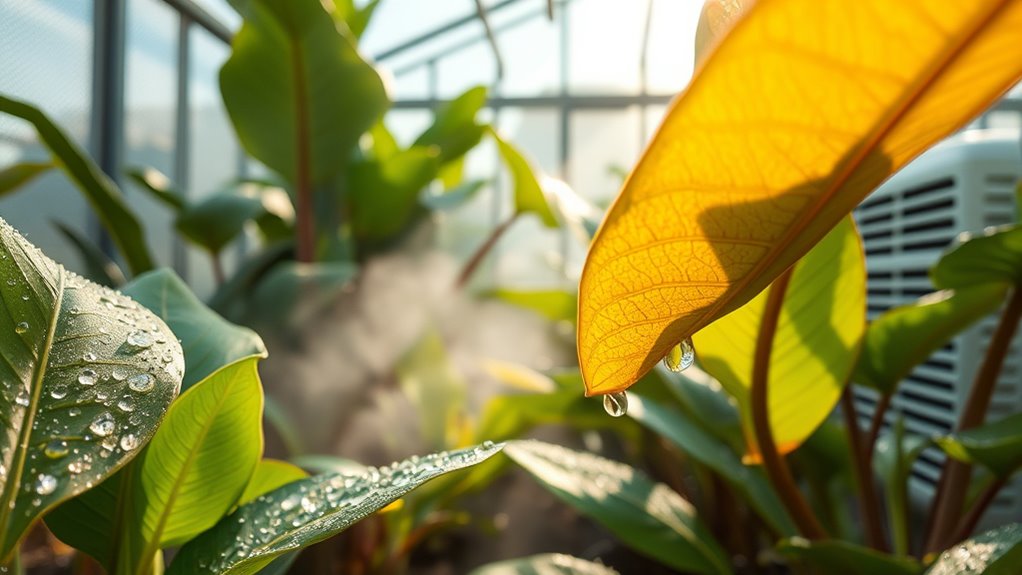
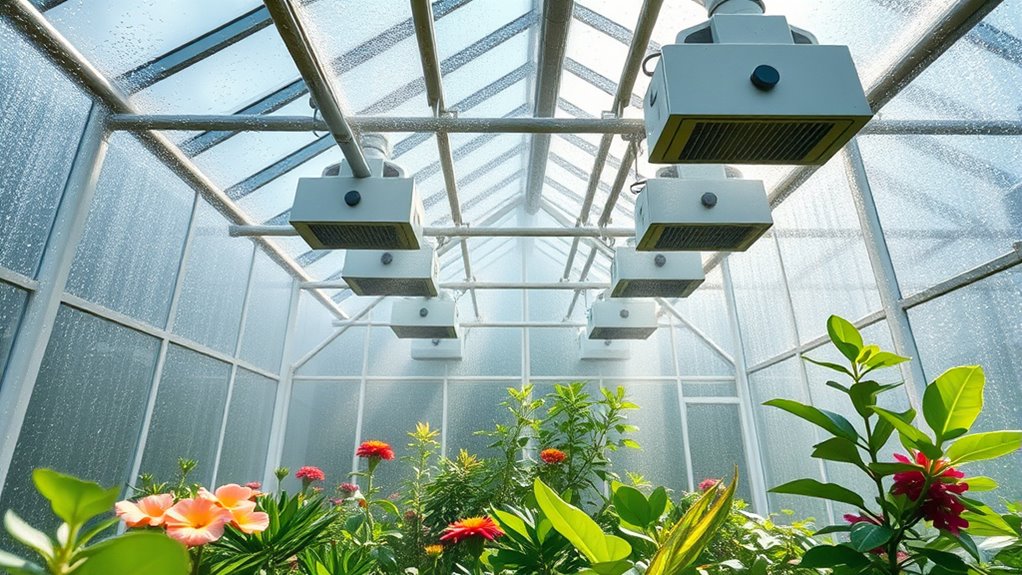
Condensation is a common challenge in greenhouses, but with proper management, you can prevent excess moisture from harming your plants. One of the most effective ways to do this is by implementing proper ventilation strategies. Good airflow helps regulate temperature and humidity, reducing the chances of moisture buildup on surfaces and plant tissues. You want to guarantee that fresh air circulates consistently throughout your greenhouse, so consider installing exhaust fans or vents that open automatically when humidity levels rise. Using sidewall vents or ridge vents allows hot, moist air to escape naturally, maintaining a balance that discourages condensation.
Proper ventilation prevents condensation and promotes healthy plant growth in greenhouses.
Controlling humidity is essential to prevent the formation of condensation. You should regularly monitor the humidity levels using a reliable hygrometer, aiming for ideal conditions specific to your plants. When humidity gets too high, excess moisture condenses on cooler surfaces, creating a damp environment that can promote mold, mildew, and diseases. To manage this, employ strategies such as using dehumidifiers or adjusting ventilation to increase air exchange. Opening vents during the day when temperatures are higher can help remove moisture-laden air, while at night, you might need to use fans or other mechanical systems to keep humidity in check.
In addition to active ventilation, passive ventilation methods can substantially contribute to humidity control. For example, opening roof vents or side windows during the warmest parts of the day allows hot, moist air to escape naturally. This reduces the overall humidity and helps prevent condensation from forming on plant surfaces or greenhouse structures. You should also consider positioning vents strategically to maximize airflow across all areas of the greenhouse, avoiding stagnant pockets of humid air.
Furthermore, managing condensation involves adjusting your watering practices. Overwatering increases humidity levels, so watering early in the day gives moisture ample time to evaporate before cooler night temperatures set in. Using drip irrigation instead of overhead watering minimizes excess moisture in the air, helping to keep humidity within desired ranges. Good sanitation practices, such as removing dead plant material and debris, also reduce the organic matter that can hold moisture and contribute to condensation issues. Recognizing that proper ventilation is crucial for controlling humidity can improve your greenhouse environment significantly.
Ultimately, combining effective ventilation strategies with vigilant humidity control allows you to create a stable environment that promotes healthy plant growth. Regularly check your systems and adjust as needed, especially during seasonal changes or unexpected weather patterns. By actively managing airflow and moisture levels, you’ll prevent condensation from becoming a problem and ensure your greenhouse remains a healthy, productive space.
As an affiliate, we earn on qualifying purchases.
Frequently Asked Questions
How Does Plant Type Affect Condensation Levels?
Your plant type influences condensation levels through its physiology, especially regarding transpiration rates. Some plants release more moisture, increasing humidity and condensation risk, while others are more water-efficient. By understanding your plants’ physiology, you can adjust humidity control strategies accordingly. For high-transpiring plants, boost ventilation or dehumidification to prevent excess condensation, ensuring a healthy greenhouse environment. Proper humidity control tailored to your plant types helps maintain ideal growing conditions.
Can Condensation Harm Specific Greenhouse Plants?
Condensation can definitely harm your greenhouse plants, especially those with specific vulnerabilities. Excess moisture can lead to fungal diseases, root rot, and mold, damaging delicate leaves and stems. Plants like orchids and seedlings are particularly susceptible to condensation damage. To protect them, you should monitor humidity levels closely, guarantee proper ventilation, and avoid rapid temperature changes that promote condensation buildup. This proactive approach keeps your plants healthy and thriving.
What Are the Long-Term Effects of Condensation?
Long-term, condensation can lead to serious issues like mold and fungal diseases, which threaten your plants’ health. It also hampers effective humidity control, making it harder to maintain ideal growing conditions. Over time, these problems can reduce yields and weaken plants. To prevent this, focus on disease prevention by managing condensation and controlling humidity levels diligently, ensuring your greenhouse stays healthy and productive in the long run.
How Do Outdoor Weather Patterns Influence Condensation?
Outdoor weather patterns greatly influence condensation by affecting humidity levels inside your greenhouse. When it’s rainy, humid, or cold outside, you’ll notice increased condensation. To combat this, you should focus on humidity control and airflow management. Using fans and vents helps regulate temperature and humidity, reducing condensation buildup. Staying aware of weather forecasts allows you to adjust ventilation proactively, maintaining ideal conditions and preventing excess moisture inside your greenhouse.
Are There Eco-Friendly Methods to Reduce Condensation?
Sure, you can reduce condensation naturally—no need for high-tech gadgets. Just imagine your greenhouse as a giant, thirsty sponge soaking up humidity, and then let it breathe with natural ventilation. Use eco-friendly humidity control methods like opening windows during dry spells or planting windbreaks to promote airflow. These simple, sustainable steps help keep moisture levels balanced, preventing condensation without harming the environment. Who knew Mother Nature had your back?
Conclusion
By managing condensation effectively, you can create a healthier environment for your plants and reduce disease risks. Did you know that excessive condensation can increase fungal infections by up to 30%? Regular ventilation, proper watering, and good airflow are simple yet powerful ways to keep humidity levels in check. Stay vigilant, monitor your greenhouse closely, and you’ll enjoy thriving plants and a more productive growing season. Proper condensation control truly makes all the difference!
Fall yard work Picks
leaf blowers
As an affiliate, we earn on qualifying purchases.