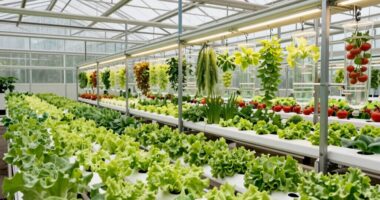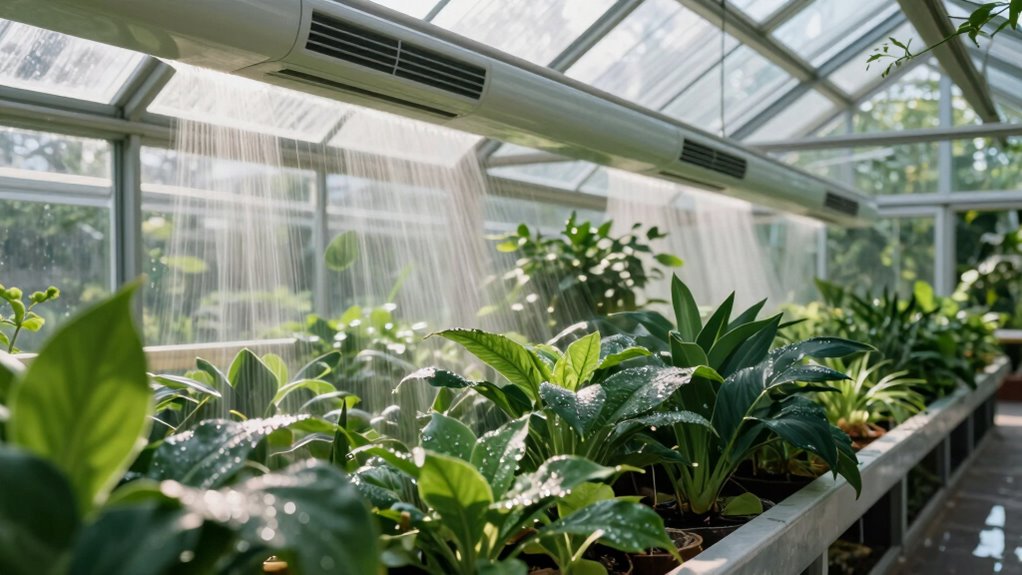

To stop guessing your greenhouse ventilation, use the simple rule of exchanging the entire air volume once per minute. Measure your greenhouse’s length, width, and height to calculate total space, then match your fans or vents to move that volume effectively. Regularly check airflow to prevent hot spots or humidity buildup. Keep things balanced, and you’ll create a healthy environment—if you want to master this, more details await you.

Get garden gear delivered free — and shop member deals
- Fast, free delivery on millions of items
- Access to Prime Big Deal Days deals on October 6–7
- Prime Video, Amazon Music and more included
Key Takeaways
- Aim for at least one full air exchange per minute to ensure proper greenhouse ventilation.
- Calculate the total air volume by measuring length, width, and height, then match airflow to this volume.
- Install fans or vents capable of moving the calculated air volume efficiently for optimal airflow.
- Regularly monitor temperature, humidity, and air movement to maintain balanced and consistent airflow.
- Adjust ventilation equipment based on airflow assessments to prevent stagnant air, humidity issues, and hot spots.
As an affiliate, we earn on qualifying purchases.
Why Proper Greenhouse Ventilation Keeps Plants Healthy
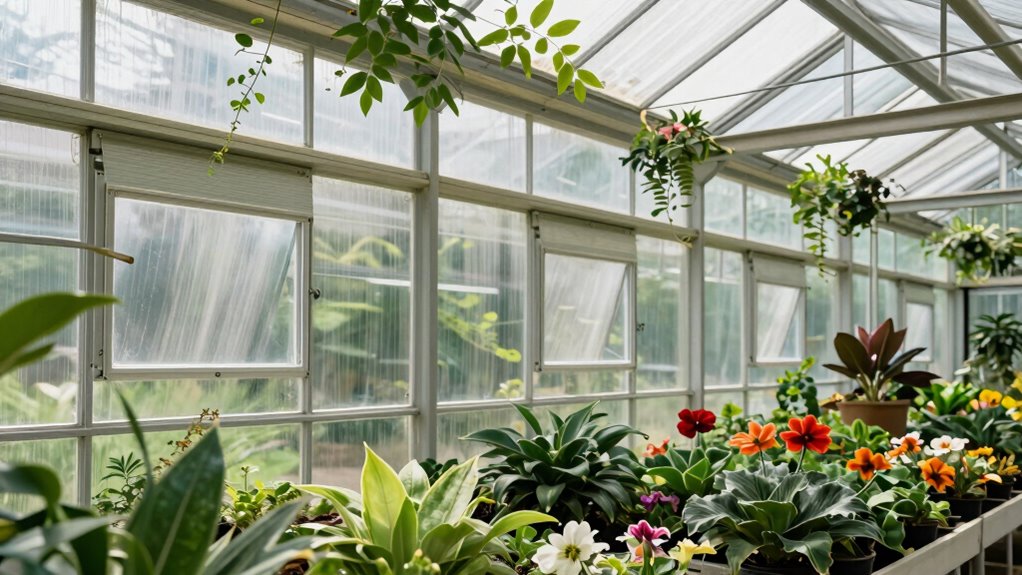
Proper greenhouse ventilation is essential because it helps regulate temperature, humidity, and air quality, all of which directly impact plant health. Good air circulation prevents the buildup of excess moisture, reducing the risk of mold and fungal diseases. It also guarantees fresh air reaches all parts of your greenhouse, promoting uniform growth. By controlling humidity levels, ventilation minimizes stress caused by overly humid conditions, which can hinder nutrient uptake and lead to pests. Consistent airflow helps maintain a stable environment, making your plants less susceptible to temperature fluctuations. In addition, using the right projector technology can help monitor and optimize conditions inside your greenhouse. Implementing ventilation strategies ensures that air exchange remains effective even during extreme weather conditions. Incorporating energy-efficient ventilation systems can further reduce operational costs and environmental impact. Regularly assessing airflow effectiveness using simple tests ensures your ventilation remains optimal. In short, effective ventilation creates an ideal climate that supports healthy development, maximizes photosynthesis, and keeps your plants thriving. Proper airflow and humidity control are the foundation of a productive, disease-free greenhouse.
The Simple Ventilation Rule of Thumb You Can Use Today
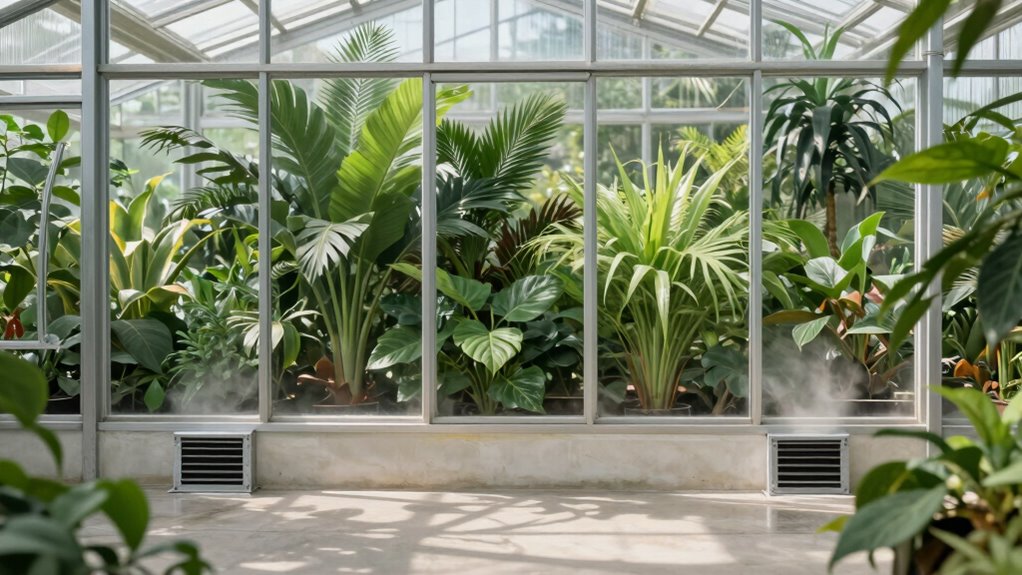
To keep your greenhouse well-ventilated without overcomplicating things, a simple rule of thumb can guide your efforts. Aim for at least one full air exchange per minute, which helps optimize airflow and prevent stagnation. This connected equipment can be monitored and adjusted using smart sensors to ensure consistent performance. Proper ventilation design supports airflow optimization and enhances your ventilation system‘s effectiveness. Additionally, understanding air exchange rates can help you tailor your ventilation to your specific plant needs and environmental conditions. Recognizing airflow patterns is key to maintaining a healthy and productive greenhouse environment. This straightforward approach supports airflow optimization and enhances your ventilation design. You don’t need complex calculations—just assure your ventilation system can replace the entire volume of air in your greenhouse within a minute. Use this as a baseline, adjusting based on plant needs, weather conditions, and greenhouse size. By following this rule, you simplify ventilation management while maintaining a healthy environment for your plants. It’s a practical, easy-to-remember guideline that improves airflow and keeps your greenhouse conditions consistent.
How to Apply the Ventilation Rule Step by Step
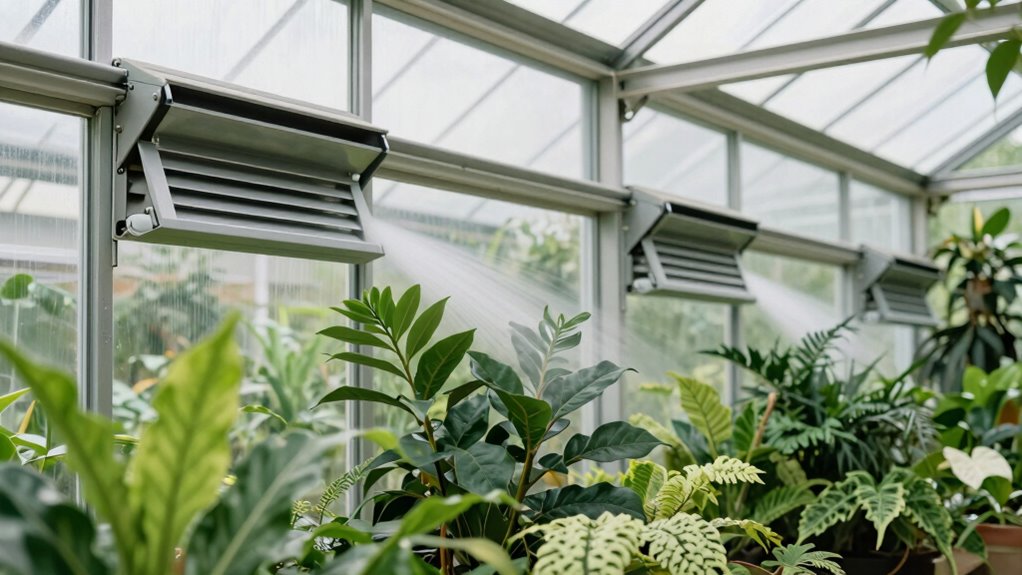
Applying the ventilation rule step by step starts with calculating your greenhouse’s total air volume. Measure its length, width, and height, then multiply these dimensions to find the total cubic footage or meters. Next, determine the recommended airflow rate; for ideal air circulation, aim to exchange the entire volume about once per minute or as needed for your crop. To achieve airflow balance, install fans or vents capable of moving this volume efficiently, avoiding dead zones or stagnant air. Adjust the ventilation setup based on your calculations, ensuring the airflow is evenly distributed throughout the greenhouse. Regularly monitor temperature, humidity, and air movement to maintain steady airflow balance, preventing issues caused by poor ventilation or uneven air circulation.
Common Ventilation Problems and How the Rule Helps You Fix Them
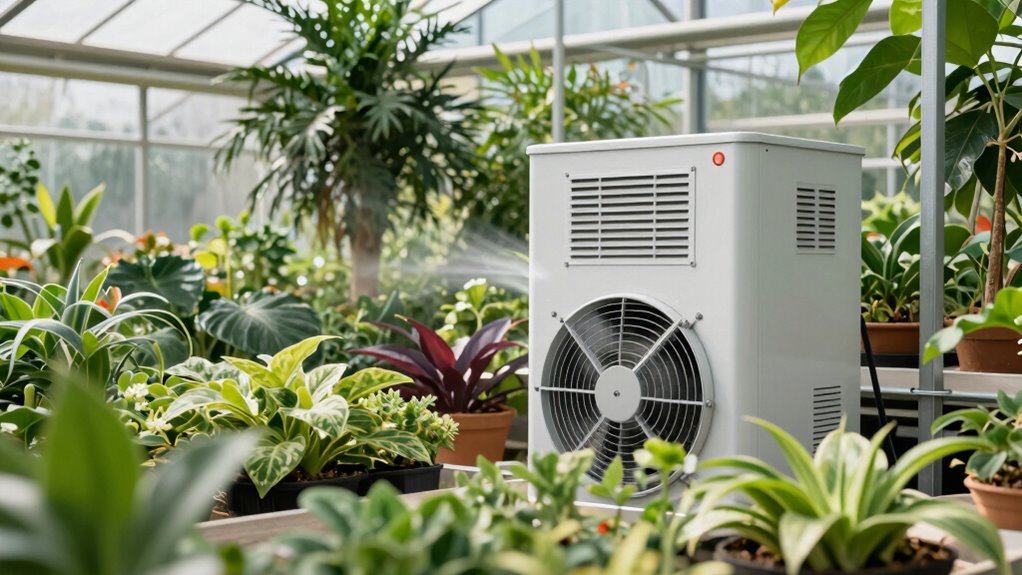
Many common ventilation problems in greenhouses stem from uneven airflow, which can lead to hot spots, humidity buildup, or stagnant air pockets. Without proper airflow optimization, certain areas may become too warm or humid, stressing plants and encouraging disease. The ventilation rule of thumb helps identify if airflow is balanced by ensuring fresh air enters and stale air exits at the right rate. When airflow is uneven, it hampers humidity control, making it harder to maintain ideal moisture levels. Using this rule, you can quickly assess and adjust vents or fans to improve circulation. This simple approach prevents issues like condensation and mold, keeping your greenhouse environment consistent and healthy. Proper airflow management is key to healthy plant growth and effective humidity control. Understanding airflow patterns is essential for troubleshooting and maintaining optimal greenhouse conditions, especially when considering air exchange rates for ideal ventilation.
Tips for Maintaining Consistent Airflow and Healthy Growth
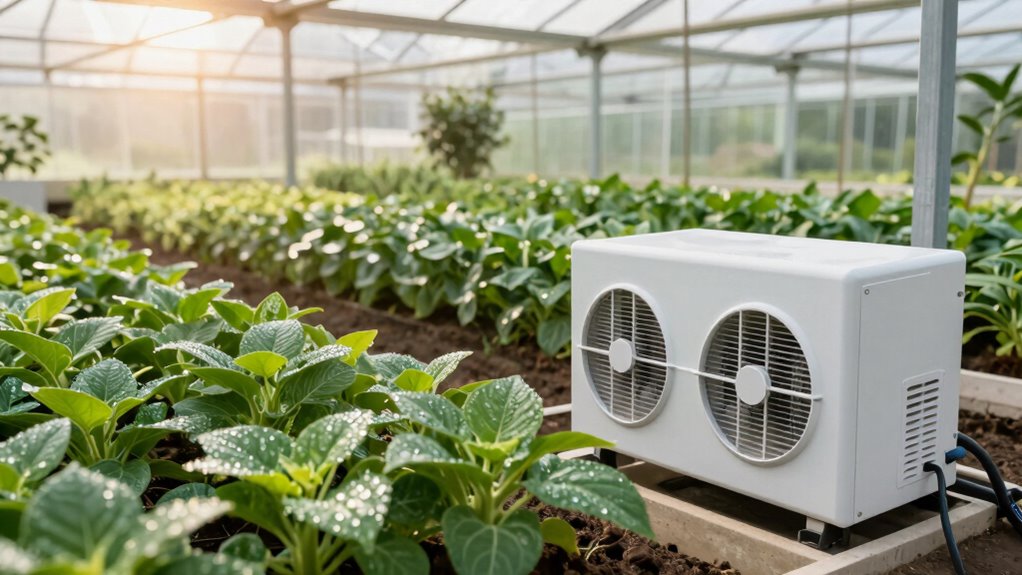
Maintaining consistent airflow is essential for healthy plant growth, and it requires regular attention to your ventilation setup. To achieve proper environmental control, regularly check that fans and vents are functioning correctly and adjust as needed. Focus on maintaining a good airflow balance; too much can dry out plants, while too little can cause humidity buildup and disease. Use the airflow rule of thumb to set your ventilation rate and guarantee steady circulation. Keep an eye on environmental conditions and tweak your system to prevent sudden changes. Consistent airflow helps regulate temperature, humidity, and CO₂ levels, promoting healthy growth. Proper airflow management also involves understanding the Free Floating concept, which emphasizes the importance of natural movement and circulation within your space. By staying proactive and monitoring your setup, you create a stable environment that supports ideal plant development.
Frequently Asked Questions
How Does External Weather Influence Greenhouse Ventilation Decisions?
External weather substantially impacts your greenhouse ventilation decisions. When the weather is hot or humid, you should increase airflow to prevent overheating and maintain ideal conditions. Conversely, during cold or windy days, you might need to limit ventilation to conserve heat and protect plants. Climate considerations, like seasonal changes and prevailing winds, help you adjust ventilation strategies effectively, ensuring your greenhouse stays healthy regardless of weather impact.
Are There Specific Plants That Require Different Ventilation Rates?
Yes, different plants need plant-specific ventilation to optimize their crop growth considerations. For example, tropical plants require higher airflow to prevent humidity buildup, while succulents prefer less ventilation to avoid drying out. You should tailor your ventilation rates based on each crop’s unique needs, ensuring healthy growth and preventing issues like mold or dehydration. Adjusting airflow according to these plant-specific requirements helps you create the ideal environment for every crop.
Can Automation Improve Ventilation Accuracy in Large Greenhouses?
Yes, automation can considerably improve ventilation accuracy in large greenhouses. You can rely on automated sensors to monitor temperature, humidity, and CO2 levels constantly. These sensors feed data into ventilation algorithms that adjust fans and vents in real-time, ensuring ideal airflow. This precision helps maintain your plants’ health, saves energy, and reduces manual effort, making your greenhouse more efficient and better suited to your crops’ specific needs.
What Signs Indicate Ventilation Is Insufficient or Excessive?
You’ll notice insufficient ventilation if humidity levels stay high, leading to mold or pests, while excessive airflow causes drafts, stress plants, and reduces humidity too much. Keep an eye on humidity control and pest prevention signs—like sudden pest infestations or damp spots. Adjust your ventilation accordingly, ensuring the airflow balances moisture levels without creating drafts, so your greenhouse stays healthy and productive.
How Often Should Ventilation Systems Be Inspected and Maintained?
Vigilantly verify ventilation efficiency by scheduling inspections at least monthly, especially during peak growing seasons. Regular maintenance scheduling ensures airflow remains ideal, preventing problems like overheating or humidity buildup. During inspections, check vents, fans, and filters for debris or damage, and clean or repair as needed. Consistent checks help you catch issues early, maintain plant health, and keep your greenhouse’s airflow functioning flawlessly—so your plants thrive.
Conclusion
Now that you know the simple airflow rule, you’ll never guess your greenhouse’s ventilation needs again—it’s like having a secret superpower! With this one easy trick, you’ll effortlessly keep your plants healthier than ever, avoiding disaster and chaos. Say goodbye to guesswork and hello to perfect airflow every time. Get ready to transform your greenhouse into a plant paradise—because with this rule, you’re unstoppable!
Fall Picks
fall essentials
As an affiliate, we earn on qualifying purchases.