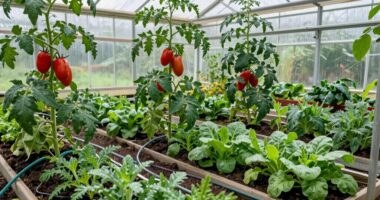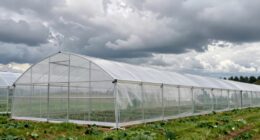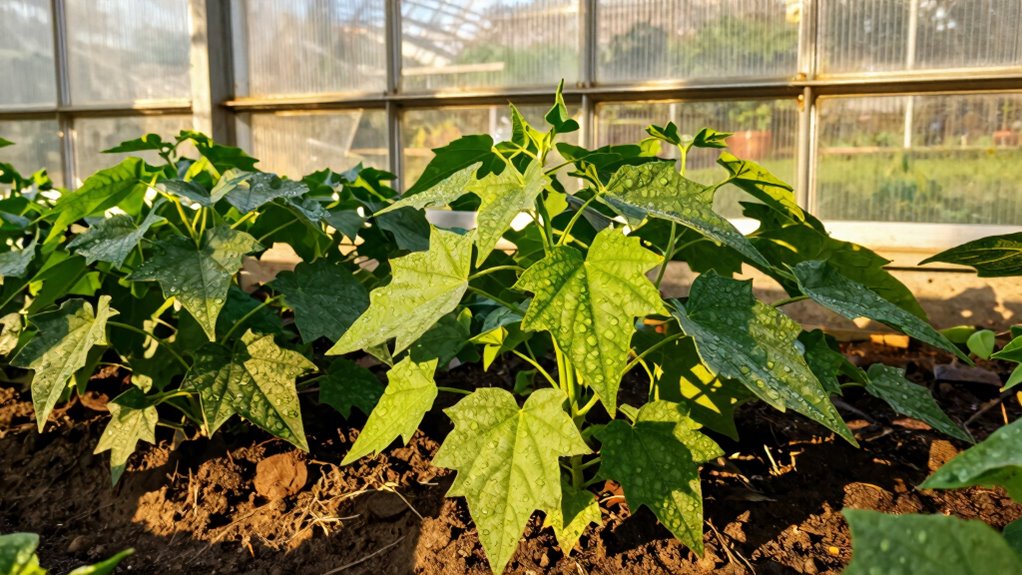
Most new growers miss how vital balancing sunlight is in a greenhouse. Too much solar intensity can scorch leaves and cause water loss, while too little makes plants stretch weakly. Light diffusion ensures even light spread and prevents hotspots that hurt growth. The material you use impacts both how much light enters and how well it’s diffused. If you want healthy plants and better yields, understanding these nuances will make all the difference. Keep exploring to discover how to get it right.
Key Takeaways
- Not all sunlight benefits plants equally; balancing intensity and diffusion is essential for healthy growth.
- Excessive solar intensity can cause leaf scorching and water loss, while too little hampers development.
- Proper light diffusion prevents hotspots and ensures even light distribution across plants.
- Greenhouse materials influence how sunlight is transmitted and diffused, affecting plant health.
- Achieving a balanced environment requires managing both solar intensity and light diffusion effectively.
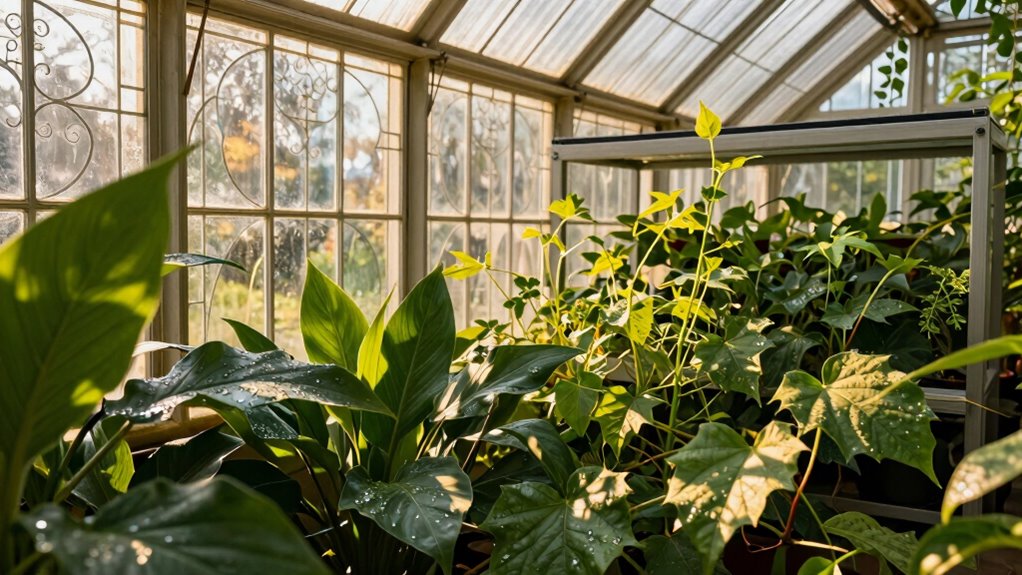
Have you ever wondered if the sunlight inside a greenhouse truly benefits your plants? It’s a question many new growers overlook, but understanding the nuances of sunlight can make a big difference in your gardening success. The truth is, not all sunlight is equal, and how it interacts with your greenhouse matters more than you might think. Two essential factors come into play here: solar intensity and light diffusion. Solar intensity refers to the strength of sunlight reaching your plants, while light diffusion is about how evenly that light spreads throughout the space. Both play pivotal roles in plant growth, yet many beginners focus only on the amount of light, neglecting how these elements influence plant health.
Understanding solar intensity and light diffusion is key to healthy, balanced plant growth in your greenhouse.
When you think about solar intensity, it’s tempting to assume more sunlight always equals healthier plants. But in reality, excessive solar intensity can cause stress, scorching leaves, or increasing water loss. Conversely, if the sunlight is too weak, plants may stretch out in search of light, leading to weak stems and poor yields. Striking the right balance is essential, and that’s where understanding how your greenhouse handles solar intensity becomes indispensable. You might notice that certain areas receive more direct, intense sunlight, while others are shaded or less exposed. Adjustments like shading screens or positioning your plants strategically help manage this, ensuring your plants aren’t overwhelmed or starved for light. Recognizing and managing solar distribution is key to creating an effective environment. Additionally, considering how greenhouse ventilation affects temperature and airflow can further influence the overall light environment, impacting plant health.
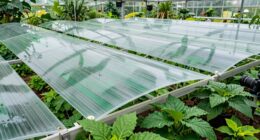
Light diffusion, on the other hand, affects how evenly sunlight reaches every part of your plants. If the sunlight is harsh and direct, it can create hotspots and uneven growth, which isn’t ideal. Proper light diffusion softens this harshness, spreading light more evenly across your plants. This not only prevents damage but also encourages uniform growth, leading to healthier, more productive plants. Many new growers overlook the importance of light diffusion, focusing solely on the amount of sunlight coming in. However, even with ample solar intensity, poor light diffusion can result in uneven growth patterns, affecting overall yield and plant vitality. Additionally, choosing the right greenhouse materials can significantly influence how sunlight is diffused and transmitted, further impacting plant health.
In addition, understanding the interaction of sunlight with greenhouse materials can help you optimize both solar intensity and light diffusion effectively. In essence, a well-balanced greenhouse environment considers both solar intensity and light diffusion. You want enough light to fuel photosynthesis without causing stress, and you want that light to be distributed evenly to avoid weak spots and uneven development. Recognizing this balance helps you optimize your greenhouse conditions, leading to healthier plants and better harvests. Most new growers miss this subtlety, but once you understand how these factors interplay, you’ll be better equipped to create an ideal environment for your plants to thrive.

LED Light Diffuser Board Diffusion Cover Sheet Anti-Glare for Soften Ceiling Light LED Downlight, Spotlight, Led Panel, Track Light (11.8×11.8×0.039in)
PC Light Diffuser Board 11.8×11.8in — Designed for LED light homogenization, this diffuser sheet effectively scatters light, eliminates…
As an affiliate, we earn on qualifying purchases.
As an affiliate, we earn on qualifying purchases.
Frequently Asked Questions
How Does Sunlight Intensity Vary Throughout the Year Inside a Greenhouse?
Sunlight intensity inside your greenhouse varies throughout the year, decreasing during winter and increasing in summer. To manage this, you can use shade cloth to reduce excess light during peak months and enhance light diffusion to distribute sunlight evenly. These strategies help maintain ideal light levels, preventing plants from getting too much or too little sunlight, ensuring healthy growth year-round regardless of seasonal changes.
What Are the Best Window Orientations for Maximum Sunlight Exposure?
For maximum sunlight exposure, you should orient your windows to face south if you’re in the Northern Hemisphere, as this optimizes sunlight throughout the day. East- and west-facing windows also help with sunlight, especially in the mornings and afternoons. Proper window orientation is key for sunlight optimization, ensuring your greenhouse receives consistent, ample light year-round. Adjust window placement based on your location to boost plant growth and energy efficiency.
How Can I Measure the Actual Sunlight My Greenhouse Receives?
You can measure the actual sunlight your greenhouse receives with a light meter that detects the full sunlight spectrum, including UV and infrared. Place it at plant level to monitor how much light is available, considering light diffusion effects from your glazing material. Regular readings help you understand variations in sunlight exposure throughout the day and seasons, ensuring *best* conditions for your plants’ growth and health.
Does Artificial Light Supplementation Affect Plant Growth Differently?
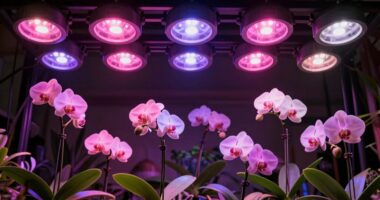
Artificial light supplementation can dramatically boost your plant growth, almost like turning a dim room into daylight! LED spectrum lights are designed to optimize Photosynthesis efficiency, ensuring your plants use light more effectively. This means faster growth, healthier plants, and better yields. By adjusting the spectrum, you can mimic natural sunlight perfectly, making your greenhouse thrive even on cloudy days or during winter, giving your plants the perfect light they need to flourish.
What Are Common Mistakes in Managing Sunlight in a Greenhouse?
You often make mistakes in managing sunlight by neglecting proper shade management and light diffusion. Too much direct sunlight can scorch plants, so you should use shade cloths or strategic venting to control intensity. Also, poor light diffusion can cause uneven growth; installing diffusers or adjusting the placement of plants helps spread light evenly. Regularly monitoring and adjusting these factors ensures your plants receive ideal sunlight for healthy growth.

Lewisia 10W Solar Powered Fan with Timer & Temperature Control IPX5 Weatherproof Dual Fan Solar Exhaust Intake Cooling Ventilation for Chicken Coop Greenhouse Shed Pet House Garage
✅ **Dual Fan System** – Features two powerful ventilation fans with both exhaust and intake functionality, perfect for…
As an affiliate, we earn on qualifying purchases.
As an affiliate, we earn on qualifying purchases.
Conclusion
Think of your greenhouse as a solar-powered engine—you need just the right sunlight to keep it running smoothly. When I first started, I underestimated how much light plants truly need; my tomatoes struggled despite my efforts. Now I know that understanding sunlight’s intensity and timing is like tuning a finely crafted instrument. With proper sunlight, your greenhouse becomes a thriving oasis, just like a well-tuned orchestra, where every element works in perfect harmony for lush growth.

90% Blackish Green Shade Cloth, 6.5x10FT Resistant Garden Sun Shade Net, Durable Mesh Shade Tarp with Reinforced Grommets for Greenhouse, Plant, Chicken Coop, Pergola, Swimming, Canopy,Patio,Garden
【High Quality】Sunblock Shade Mesh Tarp is made of High-Density Polyethylene (HDPE) material, breathable and durable, knit construction resists…
As an affiliate, we earn on qualifying purchases.
As an affiliate, we earn on qualifying purchases.

PROMORE Greenhouse Plastic Sheeting 6 Mil 12×25 FT, Clear Plastic Sheeting Heavy Duty, Polyethylene Film, UV Resistant, Tear-Proof, for Garden, Agriculture, Painting Floor Protection
6Mil Heavy-duty Plastic Sheeting: Engineered from industrial-grade polyethylene, this 6 mil thick heavy-duty polyethylene plastic sheeting offers exceptional…
As an affiliate, we earn on qualifying purchases.
As an affiliate, we earn on qualifying purchases.