Vapor Pressure Deficit (VPD) is the moisture difference between the air’s capacity and its actual water content, which plants instinctively regulate to stay healthy. When VPD is high, plants close their stomata to conserve water; when it’s low, they open them to breathe and grow. Keeping VPD balanced helps prevent stress, dehydration, or overwatering. If you want to discover the secret, you’ll find practical tips on maintaining the right moisture rule.
Key Takeaways
- VPD reflects the moisture difference between air capacity and actual humidity, guiding plant water loss.
- Plants subconsciously regulate their transpiration based on VPD to maintain hydration and prevent stress.
- Proper VPD levels help humans optimize indoor environments for plant health and growth.
- Monitoring humidity and temperature allows humans to control VPD, supporting plant moisture balance.
- Maintaining VPD within an ideal range prevents plant dehydration, drooping, and other stress signs.
What Is Vapor Pressure Deficit (VPD), and Why Does It Matter?

Have you ever wondered how moisture moves between the air and your skin or plants? Vapor Pressure Deficit (VPD) explains this exchange. VPD measures the difference between the moisture the air can hold and how much it actually contains. When the air is dry, VPD is high, pulling moisture from plants during processes like plant respiration. Soil moisture also plays a role because it influences how much water plants can access and transpire. If soil moisture drops, plants struggle to maintain their water balance, affecting their health. VPD helps us understand these moisture dynamics, revealing how plants respond to environmental conditions. Keeping VPD in check ensures plants stay healthy, and it highlights the importance of balancing air humidity and soil moisture for ideal growth. Additionally, understanding the color accuracy of your environment can influence how well plants perceive and respond to their surroundings.
How Do Plants Use VPD to Manage Moisture and Prevent Stress?

Plants actively regulate moisture through transpiration, which helps them stay healthy and avoid stress. They control this process by adjusting their stomata based on VPD levels, balancing water loss and intake. Understanding this mechanism shows how plants keep moisture in check and thrive even in changing conditions. This regulation is essential for plant health and is a key part of how they adapt to their environment.
Transpiration Regulation Mechanism
When the vapor pressure deficit (VPD) increases, plants actively adjust their transpiration rates to prevent water loss from exceeding their intake. This transpiration regulation is a key part of plant adaptation and humidity control. They modify leaf temperature through evaporative cooling, reducing water loss. They alter leaf orientation or turgor to minimize exposed surface area. They produce internal signals that prompt stomatal responses, balancing moisture retention with necessary gas exchange. Additionally, plants utilize innovative cloud-based sensing systems to monitor environmental conditions and optimize their moisture regulation strategies.
VPD and Stomatal Control
As VPD rises, plants actively regulate their stomata to maintain internal water balance and prevent stress. They adjust stomatal behavior by closing or opening pores based on moisture demand, optimizing water conservation. When VPD increases, stomata tend to close to reduce water loss, preventing dehydration. Conversely, lower VPD encourages opening to maximize gas exchange. Understanding this balance helps you see how plants respond dynamically to environmental changes:
| High VPD (Dry Air) | Stomata close, conserving water |
|---|---|
| Low VPD (Humid Air) | Stomata open, enhancing photosynthesis |
| Ideal VPD | Balanced stomatal activity for health |
This control mechanism keeps plants resilient, ensuring they don’t dry out or waste resources unnecessarily. Recognizing how stomatal regulation functions is key to understanding plant stress responses and overall health.
Moisture Balance Optimization
To effectively manage moisture and prevent stress, plants actively monitor and respond to VPD levels by adjusting their water use strategies. They do this to enhance plant hydration and maintain stable soil moisture. Here are three ways they achieve moisture balance:
- Regulating stomatal opening—closing when VPD is high to reduce water loss.
- Adjusting root activity—increasing absorption during ideal VPD conditions.
- Controlling transpiration rates—matching water vapor release with soil moisture availability.
Plants also use environmental feedback to fine-tune their responses and optimize water use efficiency under varying conditions.
What’s the Science Behind VPD and Plant Water Balance?
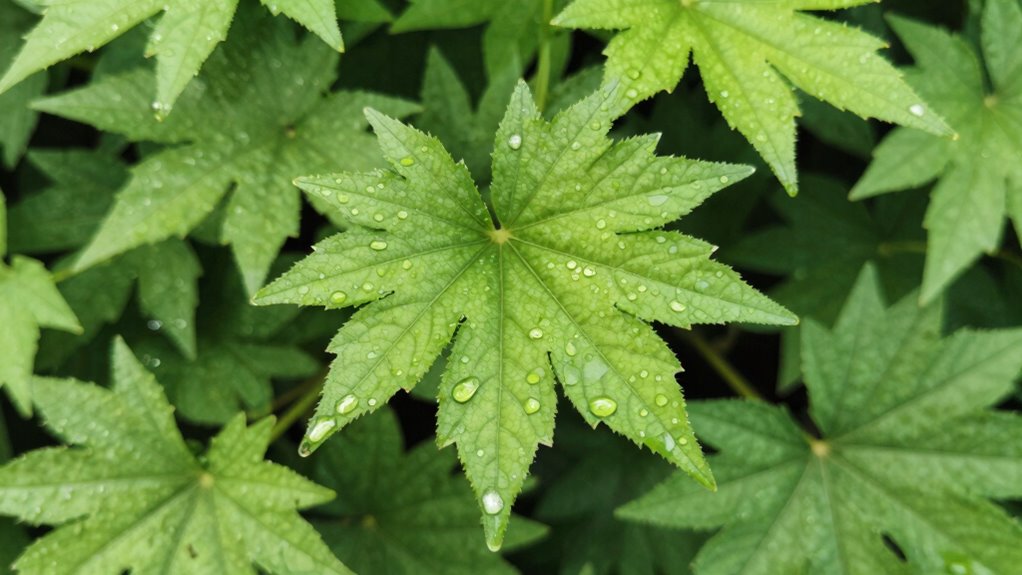
Understanding how vapor pressure difference drives transpiration helps you see how plants move water from roots to leaves. Humidity influences this process by affecting the vapor pressure, which in turn controls water loss. When humidity drops, plants lose more water; when it rises, they hold onto it better. Recognizing the importance of Vapor Pressure Deficit in plant health can help you optimize watering and environmental conditions for your plants.
Transpiration and Water Movement
Transpiration is the process by which water vapor exits plants through tiny openings called stomata, playing a essential role in maintaining water balance. This process is critical for plant adaptation, allowing plants to regulate moisture levels efficiently. As water moves from roots to leaves, it helps cool the plant and facilitates nutrient transport. Here’s how it works:
- Water uptake occurs through roots, driven by moisture regulation needs.
- It travels upward via capillary action and cohesion within xylem vessels.
- Water vapor exits through stomata, influenced by environmental factors like humidity and VPD.
- Understanding the moisture regulation process can help optimize plant health and growth conditions.
Vapor Pressure Difference
As water moves from the roots to the leaves, its evaporation through stomata depends heavily on the difference in vapor pressure between the inside of the leaf and the surrounding air. This vapor pressure difference (VPD) drives transpiration, balancing water loss with soil moisture availability. Leaf adaptations, like thicker cuticles or sunken stomata, help regulate this process by minimizing excessive water loss. When soil moisture is high, VPD remains manageable, supporting healthy transpiration. Conversely, dry soil lowers water supply, increasing VPD and risking plant stress. Understanding this balance helps you optimize watering and environment. Additionally, plant respiration influences how plants respond to VPD by regulating internal water use. Here’s a simplified view:
| Soil Moisture | VPD Effect | Leaf Adaptation |
|---|---|---|
| High | Low VPD, steady transpiration | Protecting water loss |
| Moderate | Balanced VPD | Optimal transpiration |
| Low | High VPD, stress risk | Leaf resilience needed |
Humidity’s Role in Plants
Have you ever wondered how humidity influences a plant’s water balance? Plant humidity plays a vital role in maintaining leaf hydration and overall health. When the air is humid, moisture loss from your plant slows down because the moisture gradient between leaf and air decreases. Conversely, low humidity accelerates water evaporation. Here’s how humidity impacts your plant:
- Controls water loss: Higher humidity keeps leaves hydrated longer, reducing stress.
- Affects transpiration: Low humidity increases transpiration rate, risking dehydration.
- Regulates VPD: Ideal humidity ensures vapor pressure difference stays balanced for healthy water uptake.
Understanding this science helps you manage humidity levels, ensuring your plants stay well-hydrated and vibrant.
How Can I Measure VPD at Home or in My Garden?

Measuring VPD at home or in your garden is straightforward with a few simple tools. To do this accurately, you’ll want to understand basic plant physiology and use environmental sensors like a hygrometer and thermometer. These devices measure humidity and temperature, key factors in calculating VPD. Place the sensors in your plant’s environment, ideally at leaf level, to get precise readings. Record the humidity percentage and temperature, then use an online calculator or VPD chart to determine the vapor pressure deficit. Keeping these measurements consistent helps you monitor your plants’ moisture needs. Additionally, understanding plant moisture requirements can help you interpret the VPD readings more effectively. With a little practice, you can easily track VPD and optimize conditions to promote healthy growth without complex equipment. This simple approach makes managing plant health accessible for any gardener.
How Do I Adjust Humidity and Temperature to Maintain Ideal VPD?

To maintain the perfect VPD, you need to actively manage both humidity and temperature within your growing environment. Start by adjusting the temperature to facilitate leaf cooling, which helps prevent excessive transpiration and keeps your plant’s moisture balance in check. Next, monitor and control humidity levels to promote ideal root hydration; too low can cause stress, while too high hampers transpiration. Additionally, understanding the concept of vapor pressure deficit allows you to optimize environmental conditions for plant health. Lastly, use a hygrometer and thermometer to fine-tune your environment, ensuring humidity stays within the perfect range for your plant’s growth stage. Remember, small adjustments can greatly impact VPD, so keep a close eye on your plants’ response and adapt accordingly. Proper management helps your plants stay healthy, vibrant, and thriving.
What Are the Signs That My Plants Are Off-Balance Because of VPD?
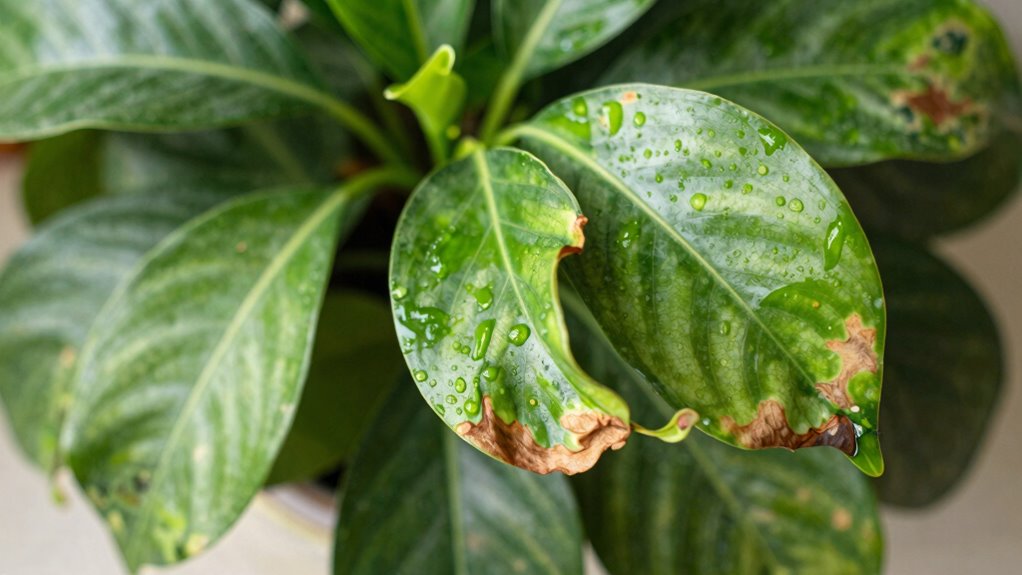
When VPD levels are off-balance, your plants often show clear signs of stress or discomfort. You might notice wilting leaves despite adequate watering, indicating poor soil moisture management and disrupted plant nutrient interactions. Drooping foliage can also signal excessive moisture loss, leading to dehydration. Conversely, if the leaves appear dry, crispy, or develop brown edges, it suggests VPD is too high, causing rapid moisture loss. Stunted growth or leaf curling may also occur, reflecting an imbalance in humidity and temperature. These symptoms are your plant’s way of warning you that environmental conditions are affecting their ability to absorb nutrients properly. Monitoring these signs helps you adjust humidity, temperature, and watering practices to restore balance and promote healthy growth.
How Can I Keep the VPD in the Right Range and Keep My Plants Healthy?

Maintaining the right VPD range involves actively managing environmental factors like humidity and temperature to create ideal conditions for your plants. Proper humidity control is key to reducing plant stress and supporting healthy growth. To keep VPD in the best zone:
- Regularly monitor humidity and temperature levels using a reliable gauge.
- Adjust humidity with humidifiers or dehumidifiers as needed, especially during temperature shifts.
- Ensure proper air circulation to prevent humidity pockets and maintain consistent moisture levels.
Frequently Asked Questions
Can VPD Levels Vary Between Different Plant Species?
Yes, VPD levels can vary between different plant species because of species variation and plant adaptation. You’ll notice some plants tolerate higher VPDs, thriving in dry conditions, while others need lower VPDs and more humidity. This variation helps plants adapt to their native environments, so understanding each species’ specific VPD needs allows you to optimize growth conditions and prevent stress, ensuring healthier, more productive plants.
How Does VPD Influence Flowering and Fruiting Stages?
Like a master chef adjusting flavors, you influence flowering and fruiting stages through VPD. If you keep VPD ideal, you promote healthy plant transpiration and humidity control, encouraging robust blooms and fruit development. Too high or low VPD can stress plants, delaying or reducing flowering and fruiting. By maintaining precise VPD levels, you help your plants thrive during these critical growth phases, ensuring a bountiful harvest.
Are There Specific Tools for Automated VPD Regulation?
Yes, there are specific tools for automated VPD regulation. You can use sensor calibration devices to guarantee accurate humidity and temperature readings. Automated controllers then adjust environmental conditions based on these sensors, maintaining ideal VPD levels for plant health. These systems streamline climate management, reduce manual effort, and help you achieve precise control over humidity and temperature, ensuring your plants stay in the optimal moisture range for flowering and fruiting.
How Does VPD Interact With Soil Moisture Levels?
You should understand that VPD interacts with soil moisture levels by influencing evaporation dynamics and plant transpiration. When VPD is high, the air pulls moisture from the soil more rapidly, increasing evaporation and transpiration rates. Conversely, low VPD slows this process, helping retain soil moisture. Maintaining a balance is key to ensuring your plants stay healthy, as VPD directly affects how efficiently they can absorb water through their roots.
Can VPD Be Too Low or Too High for Indoor Plants?
Imagine vapor pressure as a dance between humidity and temperature—when it’s too low, your plants suffer humidity stress, like a dry wind pulling away their importance; too high, they drown in excess moisture. VPD that’s too high or too low can harm your indoor plants, disrupting their growth. Striking the right balance keeps their moisture management smooth, ensuring they thrive without stress or dehydration.
Conclusion
By mastering VPD, you open a secret language your plants use to thrive. When you fine-tune humidity and temperature, you’re not just maintaining balance—you’re unlocking their full potential. But beware—small changes can tip the scales, risking stress or decline. Will you catch the signs in time? Stay vigilant, adjust wisely, and watch your garden flourish in ways you never imagined. The power to keep your plants perfectly balanced is in your hands—will you seize it?