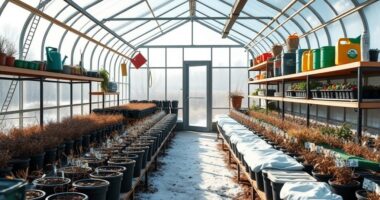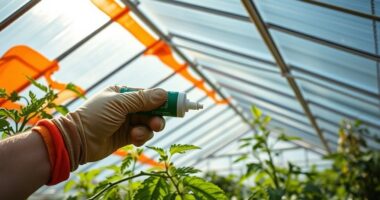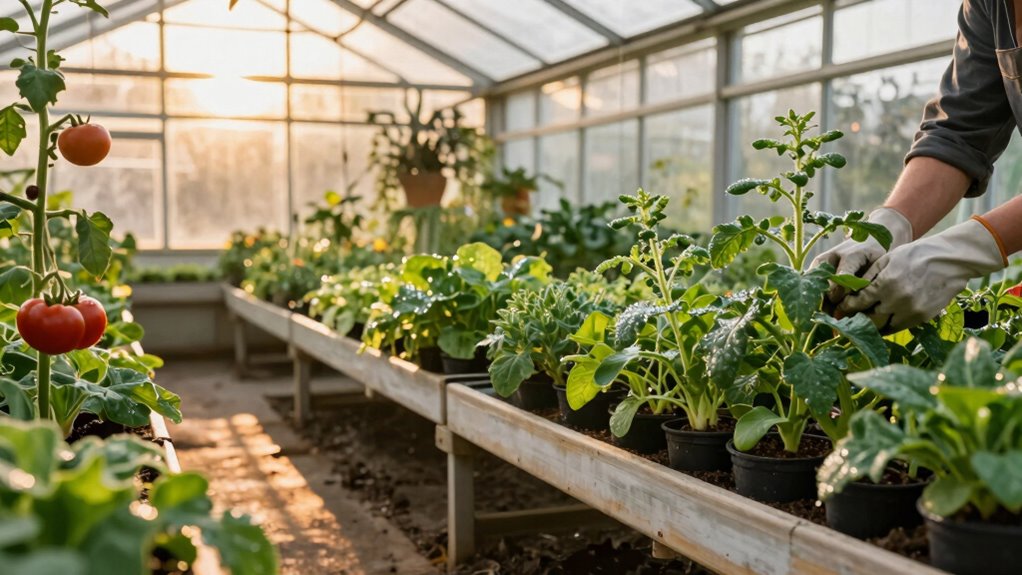

At the end of each day, you should perform a thorough greenhouse check to prevent surprises. Carefully examine plants for pests, disease symptoms, or stress signs. Inspect equipment like irrigation, ventilation, and lighting for irregularities. Organize tools and clean your workspace to maintain efficiency. Using sensors or monitoring tools can help catch issues early. Consistently following these steps keeps your plants healthy and your system running smoothly—if you want to know more, there’s much more to uncover.

Get garden gear delivered free with Prime
- Fast, free delivery on millions of items
- Prime Video, Amazon Music and more included
- Member-only deals all year
Key Takeaways
- Conduct thorough plant inspections to identify early signs of pests, diseases, or stress before they worsen.
- Verify all equipment functions properly, including irrigation, lighting, and ventilation systems, to ensure optimal conditions.
- Organize and inspect tools and supplies, performing minor repairs to maintain efficiency and prevent contamination.
- Use sensors and monitoring apps to detect issues remotely and facilitate timely interventions.
- Record findings and updates daily to track recurring problems and inform proactive maintenance strategies.
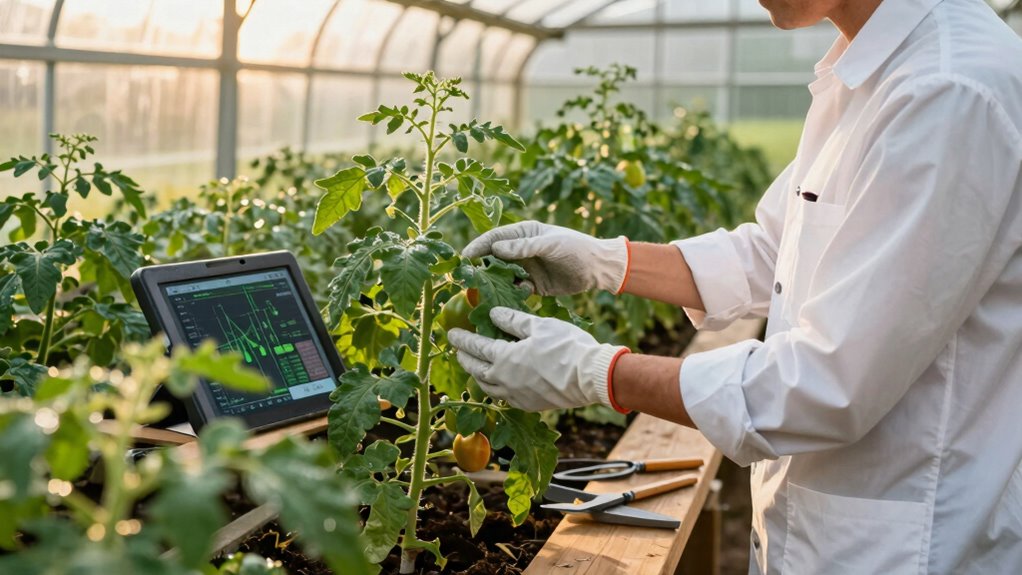
As the day winds down, conducting an end-of-day greenhouse check guarantees your plants stay healthy and thriving. This routine step isn’t just about spotting problems; it’s about preventing surprises that could threaten your entire operation. When you take time to examine your plants closely, you get a clear picture of their overall health and can catch issues before they escalate. Consistently monitoring plant health helps you understand how your plants respond to daily conditions, ensuring you provide ideal care. It also allows you to identify pests, disease symptoms, or signs of stress early enough to intervene effectively. By establishing a habit of daily checks, you create a proactive approach that minimizes risks and keeps your greenhouse running smoothly.
Daily greenhouse checks prevent problems and keep plants healthy through proactive care and early issue detection.
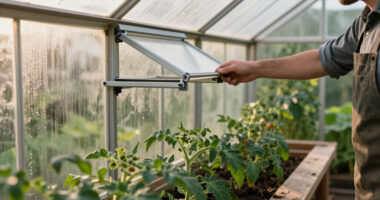
Equally important is inspecting your equipment during this check. Equipment maintenance might seem secondary, but neglecting it can lead to costly breakdowns or inefficiencies. As you review your systems—irrigation, ventilation, heating, and lighting—look for irregularities like leaks, blockages, or worn-out parts. Guaranteeing your equipment functions properly means your plants receive consistent care, whether it’s the right amount of water, proper airflow, or adequate lighting. Regular maintenance during your end-of-day check keeps machinery in top shape, reducing downtime and preventing small issues from turning into major repairs. This vigilance saves time, money, and effort in the long run, and it helps you sustain ideal growing conditions. Additionally, understanding how your caffeine science impacts plant growth can inform more effective care routines. Incorporating technology tools, such as sensors or monitoring apps, can further enhance your ability to catch potential problems early. Performing routine equipment inspections also helps you familiarize yourself with your systems, making future troubleshooting faster and more efficient. Regularly reviewing your biodiversity practices can also support healthier plant development and resilience against pests or diseases. Moreover, maintaining a detailed record-keeping system allows you to track recurring issues and optimize your care strategies over time.
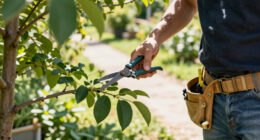
During this routine, don’t forget to check your tools and supplies. Sharp pruning shears, clean trays, and fresh fertilizers should all be ready for the next day’s work. Keeping your equipment clean and well-maintained improves plant health by avoiding the spread of disease and ensures your tools work effectively. If you notice any equipment that’s malfunctioning or parts that need replacement, note it down so you can address it promptly. Taking a few minutes to tidy up and perform minor repairs at the end of each day can go a long way toward avoiding disruptions later. Plus, it fosters a more organized workspace, making your daily tasks more efficient.
In short, your end-of-day greenhouse check is a critical practice that safeguards plant health and keeps your equipment in check. It’s a simple habit that pays off by preventing surprises, reducing risks, and promoting a healthy, productive environment. By dedicating time each evening to this routine, you’re actively supporting the growth and vitality of your plants while maintaining the reliability of your equipment. This small daily effort leads to big improvements in your greenhouse’s overall success.
greenhouse pest inspection tools
As an affiliate, we earn on qualifying purchases.
As an affiliate, we earn on qualifying purchases.
Frequently Asked Questions
How Long Should the End-Of-Day Check Take?
You should spend about 5 to 10 minutes on the end-of-day check. During this time, focus on evaluating plant health and water levels. Quickly inspect each plant for signs of stress or pests, ensuring they’re healthy. Check water levels in all containers, topping off as needed. This routine helps prevent surprises tomorrow, keeping your greenhouse plants thriving and well-maintained without taking up too much of your evening.
What Tools Are Needed for the Check?
You’ll need basic tools like a clipboard, pen, and flashlight for the check. Having your maintenance schedule handy helps guarantee you cover all tasks, and a pest prevention kit is essential to spot signs early. Use the flashlight to inspect plants closely, especially in dark corners. Regularly reviewing your tools and supplies keeps your end-of-the-day check efficient, allowing you to catch issues before they escalate and keep your greenhouse healthy.
Should I Record the Greenhouse Conditions Daily?
You should definitely record the greenhouse conditions daily; it’s the best way to keep an eye on plant health and pest prevention. Think of it as staying one step ahead of trouble—if you spot issues early, you can act swiftly. Regular logs help identify patterns, monitor humidity and temperature, and catch pests before they spread. Plus, consistent records make troubleshooting much easier, giving you peace of mind that everything’s under control.
How Do I Handle Unexpected Issues Found During the Check?
When you find unexpected issues during your greenhouse check, act quickly with troubleshooting. Identify the root cause and prioritize immediate fixes, like adjusting vents or watering. Use your knowledge to implement quick problem solving, preventing minor issues from escalating. Keep a record of these surprises to refine your routine and avoid future surprises. Staying proactive and attentive guarantees your greenhouse stays healthy and productive, even when surprises arise.
Can This Check Be Automated or Is It Manual Only?
They say, “Don’t put all your eggs in one basket,” but with automation potential, you can streamline your greenhouse check to reduce surprises. While the manual process offers accuracy, automating parts of this check is possible with sensors and software that monitor conditions in real time. Automation increases efficiency, minimizes human error, and guarantees you stay ahead. However, some aspects may still need manual oversight for the most thorough results.
Conclusion
By performing your end-of-day greenhouse check, you’re like a vigilant guardian ensuring everything stays on track. This simple habit helps you catch issues early and prevents surprises tomorrow. Just as a lighthouse guides ships safely to shore, your nightly inspection keeps your plants healthy and your greenhouse running smoothly. Make it a routine, and you’ll enjoy a more productive, worry-free gardening experience. Consistency is key—your plants will thank you for it.
Fall yard work Picks
leaf blowers
As an affiliate, we earn on qualifying purchases.