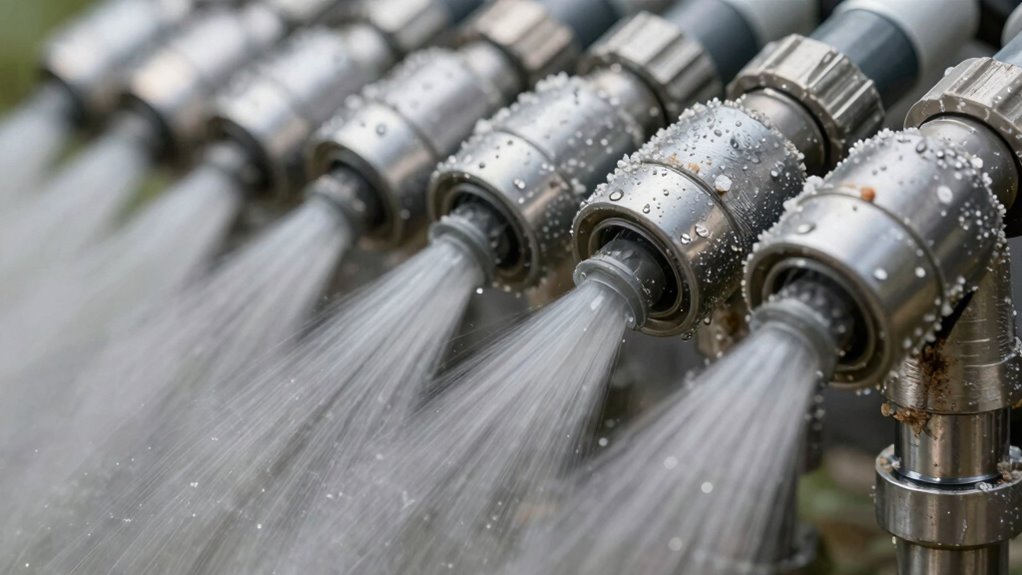

If your misting nozzles aren’t misting properly, mineral buildup could be the hidden issue. Over time, deposits from hard water can crust over the openings, reducing spray and causing uneven misting. To fix this, turn off the system, remove the nozzles, and soak them in vinegar or lemon juice to dissolve deposits. Regular cleaning can prevent buildup and keep your misting system functioning smoothly — keep exploring to learn more about effective maintenance techniques.

Get garden gear delivered free — and shop member deals
- Fast, free delivery on millions of items
- Access to Prime Big Deal Days deals on October 6–7
- Prime Video, Amazon Music and more included
Key Takeaways
- Mineral deposits cause blockages, reducing mist output; inspect nozzles regularly for crusty residues.
- Soak clogged nozzles in vinegar-water solution to dissolve mineral buildup effectively.
- Use soft brushes or pins to gently remove stubborn deposits without damaging the nozzle.
- Install water filters or softeners to prevent mineral accumulation and prolong nozzle lifespan.
- Routine flushing with descaling solutions helps maintain clear nozzles and consistent misting.
As an affiliate, we earn on qualifying purchases.
What Are the Signs of Mineral Buildup on Your Misting Nozzles?
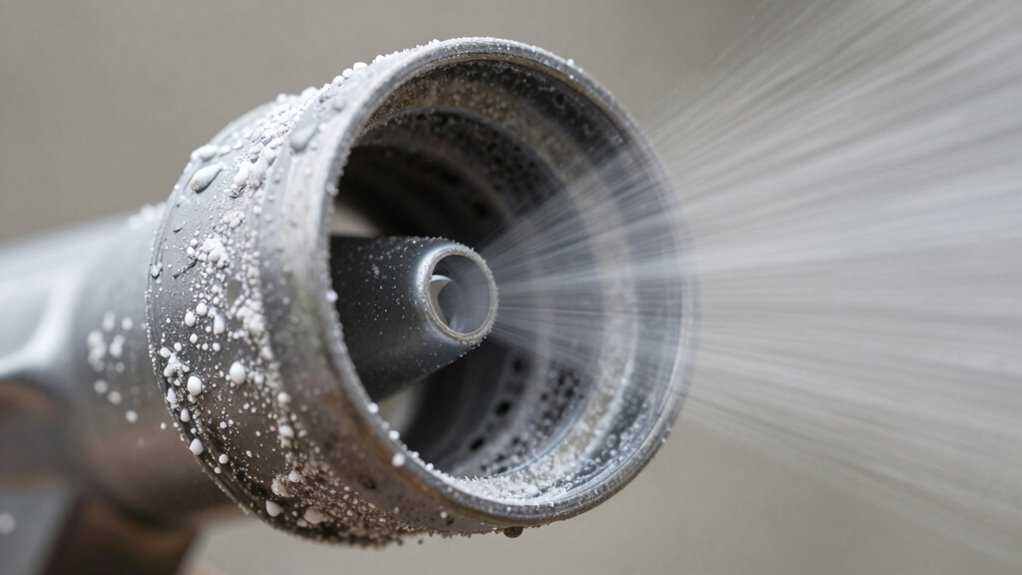
Mineral buildup on your misting nozzles often shows up through reduced spray patterns or uneven misting. You might notice that your plants aren’t getting the right amount of water, which could be due to clogged nozzles. Changes in watering frequency can also signal buildup, as the system struggles to deliver consistent mist. The nozzle material plays a role—metal nozzles are more resistant to mineral deposits than plastic ones, but both can clog over time. Look for visible deposits or a weak, inconsistent spray. If the mist feels sparse or dribbles out unevenly, mineral buildup is likely the culprit. Understanding how different projector technology materials react can help you catch these signs early and keep your misting system functioning effectively. Regularly inspecting your nozzles and understanding how different materials react can help you catch these signs early and keep your misting system functioning effectively.
How to Identify Mineral Deposits and Clogged Nozzles
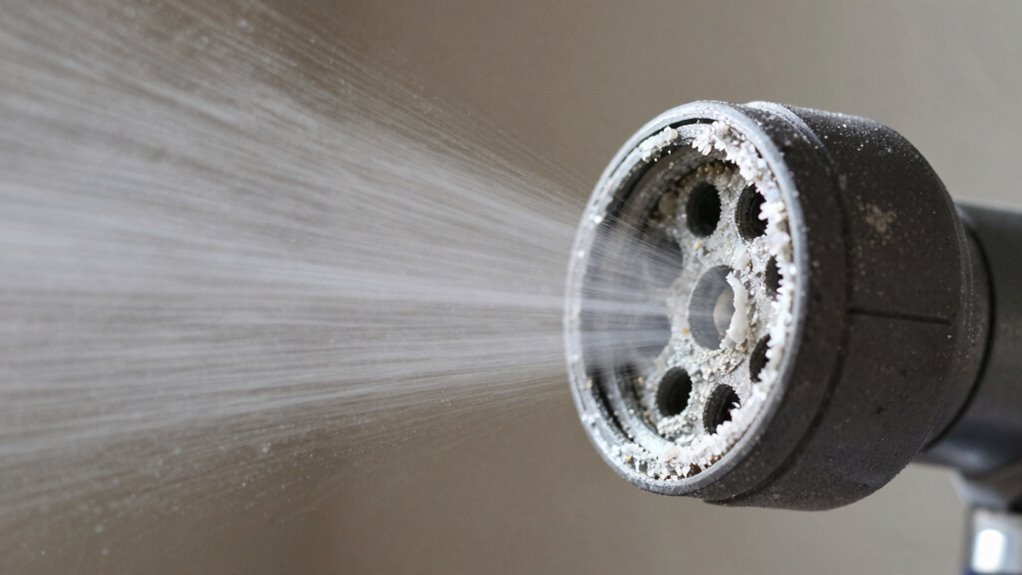
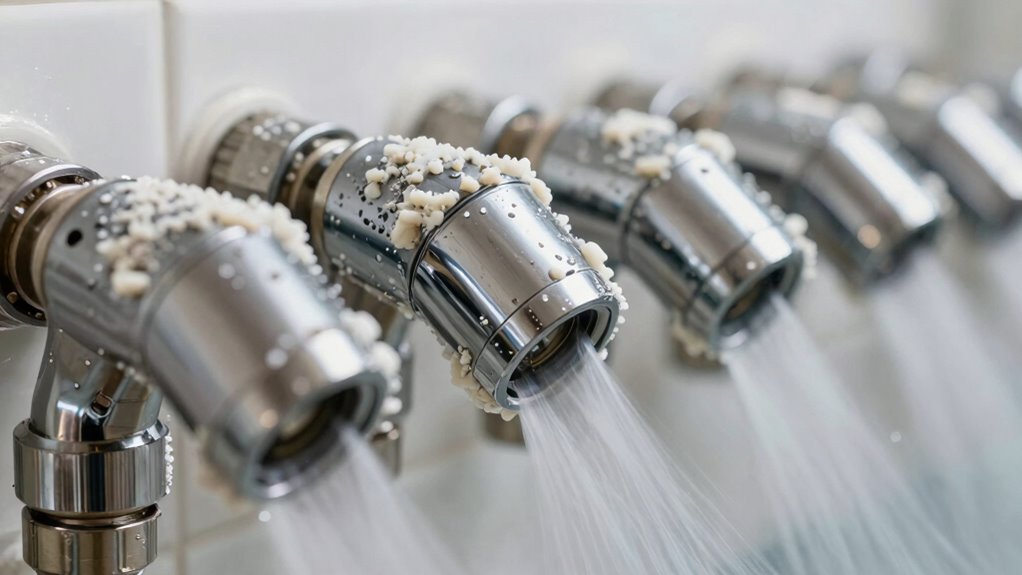
To effectively identify mineral deposits and clogged nozzles, start by inspecting the spray pattern closely. A weak or uneven spray often indicates buildup or blockages. Water quality plays a significant role, as hard water contains minerals that deposit inside the nozzle. Check if the mist is inconsistent or if droplets are larger than usual. Examine the nozzle design—some models have small openings more prone to clogging. Remove the nozzle and observe for white or crusty deposits around the opening. If mineral buildup is present, it will be visible as a residue that restricts water flow. Regularly inspecting your nozzles and understanding how water quality impacts clogging will help you catch issues early and maintain exceptional misting performance. Additionally, using water softening methods can help reduce mineral deposits and prolong the lifespan of your nozzles.
Why Mineral Buildup Causes Misting Nozzles to Fail
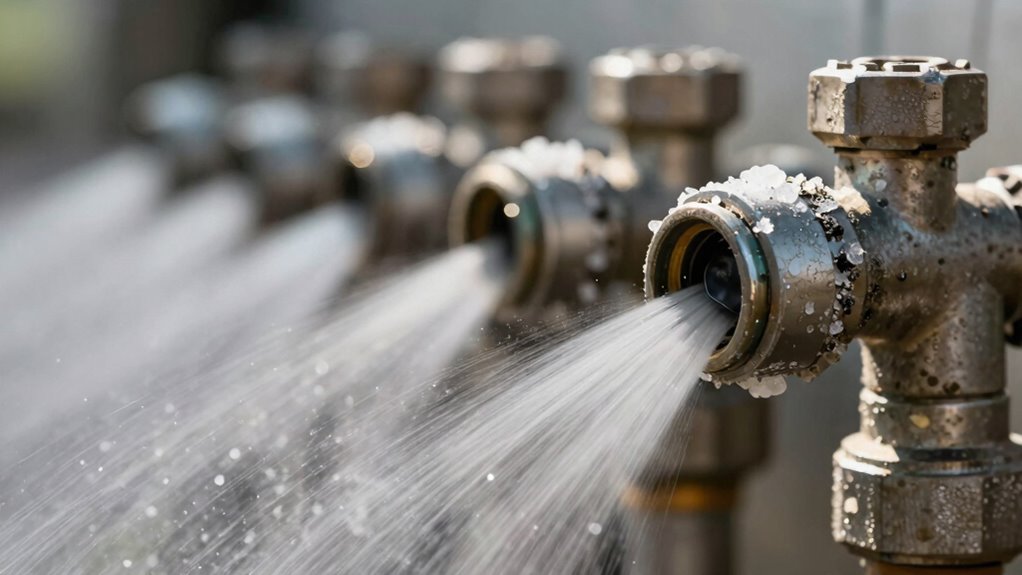
When mineral deposits build up inside misting nozzles, they create a barrier that blocks or restricts water flow. Poor water quality, especially high mineral content, accelerates this buildup, leading to clogs and uneven spray patterns. The nozzle design also plays a role—smaller or more intricate nozzles are more prone to clogging because they trap minerals more easily. Over time, these deposits harden and form a crust that prevents water from passing through as intended. As a result, you notice reduced mist, inconsistent spray, or total failure of the nozzle. This buildup not only diminishes performance but can also damage the nozzle permanently, making it essential to understand how water quality and nozzle design contribute to mineral buildup and subsequent failure. Proper maintenance techniques can help prevent these issues and extend the lifespan of your misting nozzles.
Step-by-Step: How to Clean Mineral Deposits From Misting Nozzles
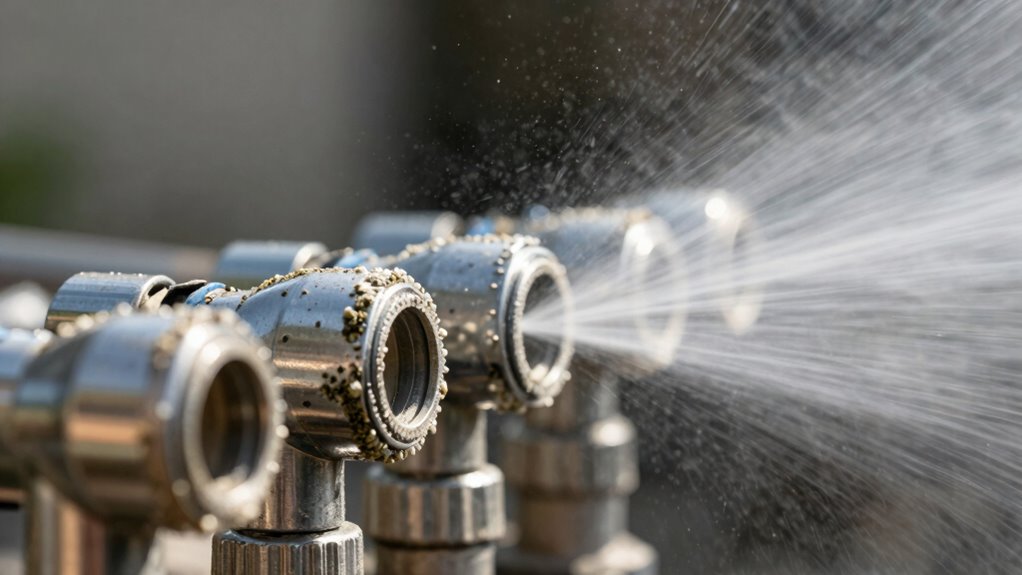
Cleaning mineral deposits from misting nozzles is a straightforward process that can restore their ideal performance. Start by turning off your system and removing the nozzle. Check the water quality, as hard water increases mineral buildup, and consider switching to softer water if possible. Next, soak the nozzle in a mixture of equal parts vinegar and water for 15-30 minutes; this dissolves mineral deposits effectively. For stubborn buildup, gently scrub the nozzle tip with a soft brush, paying attention to the nozzle design features that may trap debris. Rinse thoroughly with clean water afterward to remove any residual vinegar. Reattach the nozzle, turn the system back on, and test the mist. Regular cleaning prevents future mineral buildup, maintaining optimal misting performance. Incorporating sound vibrations during cleaning can also help loosen stubborn deposits and improve the process.
Tools and Solutions for Removing Mineral Buildup Effectively
Using the right tools and solutions can make removing mineral buildup from misting nozzles much more effective. Start by gathering simple cleaning essentials to save time and effort. A small brush or old toothbrush helps scrub stubborn deposits without damaging your nozzles. Vinegar or lemon juice are natural solutions that dissolve mineral buildup and are safe for your garden and lawn care. A pipette or syringe can help apply cleaning solutions precisely. A soft cloth or microfiber towel makes wiping easy, while a needle or pin clears clogged nozzles quickly. For larger jobs, consider an ultrasonic cleaner to loosen deposits efficiently. These gardening tips ensure your misting system works at its best, keeping your lawn lush and healthy without unnecessary hassle. Incorporating Free Floating techniques can also help maintain an even distribution of water and reduce buildup issues over time.
How to Prevent Mineral Deposits in Your Misting System
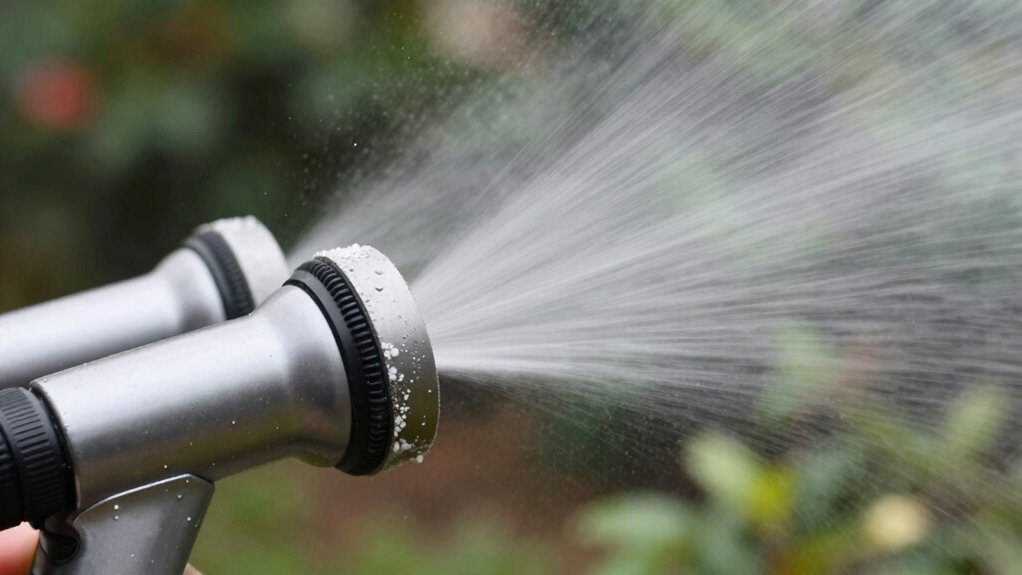
To prevent mineral deposits from forming in your misting system, regular maintenance and water management are essential. Start by evaluating your water quality; using filtered or softened water reduces mineral content that causes buildup. Additionally, pay attention to nozzle design—choose nozzles with smooth, clog-resistant features that minimize mineral accumulation. Schedule routine cleaning to remove any early deposits before they harden, and consider flushing the system periodically with vinegar or a descaling solution. Proper water management, such as turning off the system when not in use or during periods of low demand, also helps prevent mineral buildup. Incorporate glycolic acid products into your cleaning routine to effectively exfoliate and remove residues that can contribute to deposits. By maintaining ideal water quality and selecting the right nozzles designed to resist deposits, you’ll keep your misting system functioning efficiently and misty.
When to Replace Nozzles Versus Cleaning for Best Performance

Deciding whether to clean or replace your misting nozzles depends on the extent of the buildup and their overall condition. If mineral deposits are minor and the nozzles still spray fine, cleaning is usually enough to restore performance. However, if water quality is poor and mineral buildup is severe, replacing the nozzles may be more cost-effective, especially considering nozzle lifespan.
- Minor buildup with good spray quality
- Persistent clogging after cleaning
- Nozzle damage or corrosion
- Water quality issues causing rapid buildup
- Nozzle lifespan exceeded or performance decline
If cleaning doesn’t improve spray or if the nozzles show signs of damage, replacement is your best bet. Regularly assess your system to maintain ideal misting and avoid frequent clogging.
Frequently Asked Questions
Can Mineral Buildup Occur in All Types of Misting Nozzles?
Mineral buildup can occur in all types of misting nozzles, regardless of their type or nozzle material. Whether you have plastic, brass, or stainless steel nozzles, minerals in your water can accumulate over time, clogging the tiny orifices. Regular maintenance and using filtered or softened water can help prevent this buildup and keep your misting system functioning efficiently. Don’t overlook the importance of cleaning your nozzles periodically.
How Often Should I Clean My Misting Nozzles to Prevent Buildup?
Don’t wait until you’re caught between a rock and a hard place—clean your misting nozzles regularly. Aim for a cleaning schedule of every 2-4 weeks, depending on water quality and usage. Regular nozzle maintenance prevents mineral buildup, ensuring a consistent mist. By staying on top of cleaning, you keep your system running smoothly and avoid costly repairs down the line. It’s better to be proactive than reactive.
Are There Specific Water Treatments to Reduce Mineral Deposits?
Yes, you can use water softening and filtration systems to reduce mineral deposits in your misting nozzles. Water softeners replace calcium and magnesium ions that cause buildup with sodium, preventing scale formation. Filtration systems, like reverse osmosis or sediment filters, eliminate impurities and minerals before they reach the nozzles. Regular maintenance of these systems guarantees your misting nozzles stay clear and misty, saving you time and costly repairs.
Will Using Filtered or Distilled Water Eliminate Mineral Buildup?
Think of your misting system as a delicate garden hose, where water purity acts like a gentle rain that keeps it clear. Using filtered or distilled water is like giving your nozzle a pure, clean shower—greatly reducing mineral buildup. However, regular nozzle maintenance remains essential; even pure water can leave residues over time. Keep both in check for consistently misty, trouble-free performance.
What Are the Long-Term Effects of Ignoring Mineral Deposits on Nozzle Performance?
Ignoring mineral deposits can lead to nozzle corrosion and spray inconsistency over time. As deposits accumulate, they corrode the metal parts, weakening the nozzle structure. This results in uneven misting, reduced spray distance, and eventual nozzle failure. Long-term neglect worsens performance issues, increases maintenance costs, and shortens the lifespan of your equipment. Regular cleaning and using filtered water can prevent these problems and keep your nozzles functioning efficiently.
Conclusion
Think of your misting system as a delicate garden fountain, where mineral buildup is like stubborn algae clogging the flow. With proper cleaning and prevention, you keep the waters flowing clear and misty, like a gentle rain nourishing your plants. Ignoring these deposits is like letting weeds choke your garden’s beauty. Stay vigilant, clean regularly, and your misting nozzles will continue to sprinkle life and freshness, turning your system into a thriving oasis.
Fall Picks
fall essentials
As an affiliate, we earn on qualifying purchases.