
In a greenhouse, you often see disease spread through contaminated soil, insects like aphids, contaminated tools, and water. Soil can harbor pathogens for long periods, especially if not sterilized or rotated. Insects such as whiteflies transfer bacteria and viruses between plants, while tools can carry spores if not disinfected. Poor water management also fosters fungal growth and spreads disease. Knowing these common pathways helps you prevent outbreaks—stay with us to discover more effective strategies.
Key Takeaways
- Disease spreads through contaminated soil, tools, or runoff water, creating a persistent infection source.
- Insect vectors like aphids and whiteflies transmit bacteria, viruses, and fungi between plants.
- Tools used for pruning or harvesting can transfer pathogens if not properly sanitized.
- Overwatering and poor drainage promote fungal growth and facilitate waterborne disease spread.
- Infected plant material and equipment can introduce pathogens into healthy plants within the greenhouse.
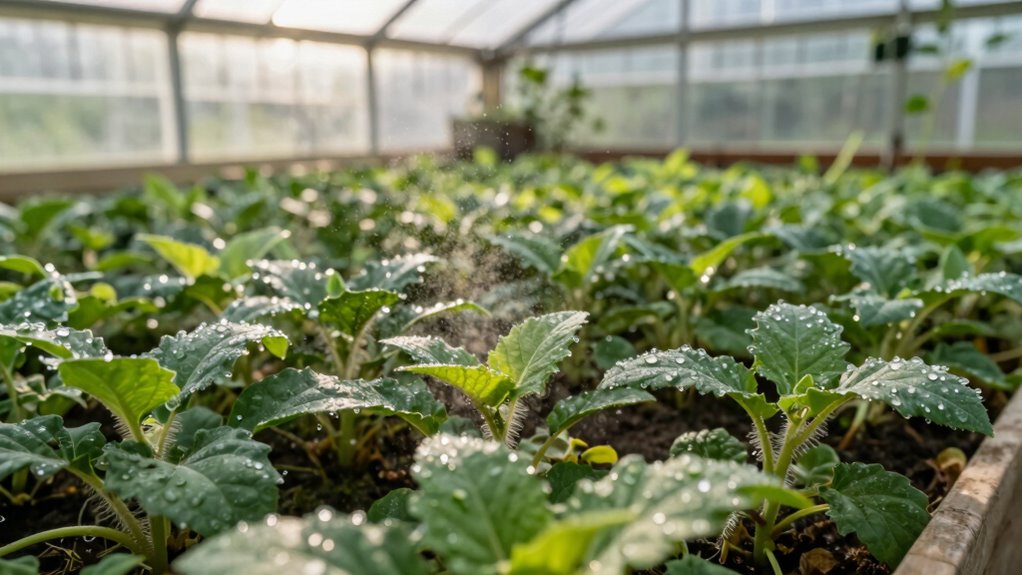
Greenhouses create ideal conditions for plant growth, but they also facilitate the rapid spread of diseases. Because of the warm, humid environment and close plant proximity, pathogens can spread quickly if you’re not cautious. One of the most common ways diseases move through a greenhouse is through soil contamination. If infected soil isn’t properly managed, it can harbor harmful fungi, bacteria, and viruses. When you plant new seedlings or transplant mature plants into contaminated soil, you’re risking introducing diseases directly into your healthy crops. Soil can become contaminated through previous plant infections, contaminated tools, or even runoff water carrying pathogens from outside sources. Once these pathogens are in the soil, they can persist for long periods, making it difficult to eliminate them without proper sterilization or soil replacement. Proper soil sterilization methods can help minimize this risk effectively. Additionally, rotating crops and avoiding planting susceptible species in contaminated soil can further reduce disease persistence. Implementing soil testing can also help identify contaminated areas before planting.
Soil contamination in greenhouses can harbor persistent pathogens, risking disease spread to healthy crops.
Another important route for disease transmission involves insect vectors. Insects such as aphids, whiteflies, and thrips are more than just pests; they are active carriers of disease-causing organisms. As these insects move from plant to plant, they inadvertently transfer bacteria, viruses, and fungi that can cause widespread infections. You might notice an infestation of insects, but what’s more concerning is their unseen role in transmitting diseases. For example, aphids can carry viruses that infect many crops, and whiteflies are known to spread bacterial infections. If you ignore pest control, you open the door for these vectors to accelerate disease spread throughout your greenhouse. Regular monitoring and integrated pest management strategies are essential to reduce this risk.
Contaminated tools also play a vital role in disease transmission. Every time you prune, repot, or harvest, there’s a risk of transferring pathogens if tools aren’t properly sanitized. Disease spores or bacteria can cling to blades or pruning shears and jump from one plant to another. Regular disinfection of your tools is essential to prevent this mode of transmission. Using proper sanitation practices for your gardening tools can significantly cut down on the spread of disease through contact. Additionally, implementing sterilization protocols after each use can further decrease the chance of cross-contamination. Maintaining a routine of disinfecting tools between tasks ensures minimal pathogen transfer.
Lastly, water management impacts disease movement greatly. Overwatering or poorly drained soil creates moist conditions that favor fungal growth and root rot. If infected water or runoff reaches healthy plants, it can spread diseases rapidly. Keeping water sources clean and ensuring proper drainage can help reduce this risk. Additionally, monitoring water quality and avoiding contaminated sources are critical components of effective greenhouse disease control. Proper water testing and treatment can also help detect and eliminate pathogens before they infect your crops. Incorporating water testing as part of your routine maintenance can help identify potential issues early.
greenhouse soil sterilization kit
As an affiliate, we earn on qualifying purchases.
As an affiliate, we earn on qualifying purchases.
Frequently Asked Questions
Can Pests Spread Diseases in Greenhouses?
Yes, pests can spread diseases in greenhouses. They act as pathogen vectors, transmitting bacteria, viruses, or fungi from infected plants to healthy ones. Pests often serve as disease reservoirs, harboring pathogens without showing symptoms, which makes them even more dangerous. By feeding or moving across plants, pests facilitate disease spread, so controlling their population is essential to prevent outbreaks and protect your plants’ health.
How Does Humidity Affect Disease Spread?
Humidity levels directly influence disease spread by creating a moist environment that promotes fungal and bacterial growth. When humidity is high, air circulation often decreases, trapping moisture and encouraging pathogens to thrive. To reduce disease risk, you should maintain proper air circulation and control humidity levels, ensuring the environment doesn’t become overly damp. Proper ventilation and monitoring humidity help keep disease outbreaks at bay in your greenhouse.
Are Contaminated Tools a Major Transmission Source?
Think of contaminated tools as silent disease vectors, lurking like hidden traps. Yes, they’re a major transmission source, transferring pathogens from plant to plant with each cut or touch. When you don’t disinfect tools properly, you’re unknowingly opening the door for disease to spread rapidly. Always sterilize your tools between uses, especially after working on infected plants, to prevent these sneaky vectors from turning your greenhouse into a disease hotspot.
Can Plants Recover From Disease Infections?
Plants can recover from disease infections if their plant immunity and disease resistance are strong enough. You can boost their chances by providing ideal growing conditions, proper nutrition, and timely treatment. While some diseases may cause permanent damage, many plants bounce back with proper care. Keep an eye on symptoms, remove infected parts, and consider natural or chemical treatments to support their recovery and strengthen their disease resistance over time.
What’s the Role of Watering Practices in Disease Spread?
Poor watering practices can profoundly spread disease in your greenhouse. For example, overwatering can cause soil contamination, creating a breeding ground for pathogens. Additionally, excessive watering can splash infected soil onto healthy plants, transmitting diseases. It also encourages airborne spores to settle on leaves and surfaces. To prevent this, water only when necessary and avoid wetting foliage, helping keep disease spread minimal and maintaining healthier plants.
Conclusion
Understanding how diseases spread in greenhouses is vital for keeping your plants healthy. Did you know that over 70% of greenhouse diseases are caused by poor sanitation and insect vectors? By practicing good hygiene, monitoring your plants regularly, and controlling pests, you can drastically reduce these risks. Staying vigilant and proactive guarantees your greenhouse thrives and minimizes crop losses. Protect your investment—healthy plants start with understanding disease pathways and taking preventive action.