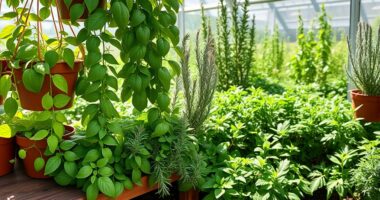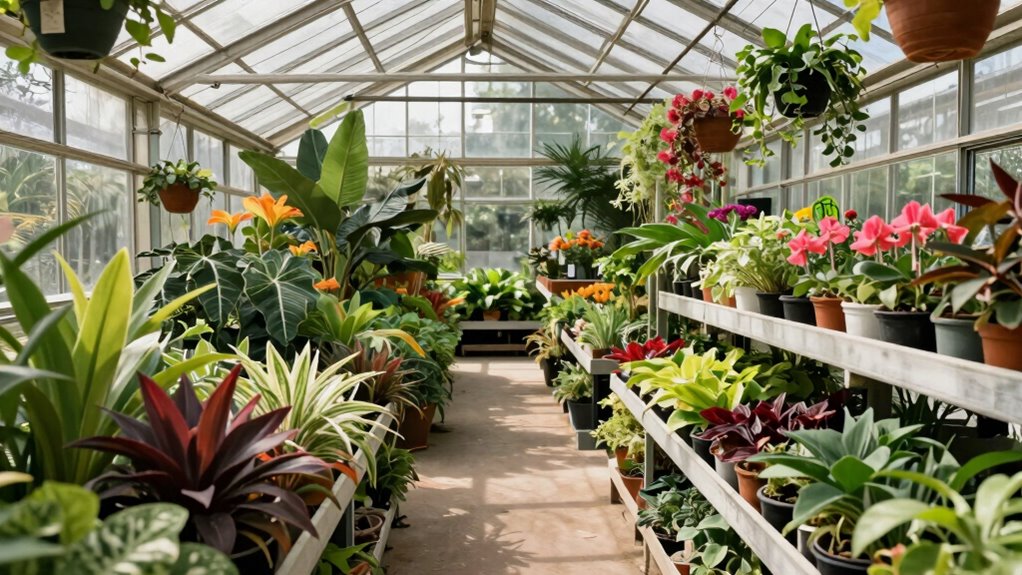
To keep your greenhouse plants accessible without crowding, organize with vertical shelving and hanging baskets to maximize space. Allocate ground areas for larger plants and create wide pathways for easy movement. Regularly prune plants and maintain proper spacing to improve airflow and ease maintenance. Use adjustable lighting and proper ventilation to keep environments comfortable and accessible. For more tips on optimizing your greenhouse layout and plant care, keep exploring ways to make your space work effectively.
Open a free Amazon Business account
Business pricing, bulk buying and tax-exempt orders.
As an affiliate, we earn on qualifying purchases.
Key Takeaways
- Use vertical shelving and hanging baskets to maximize space and prevent overcrowding.
- Allocate wide pathways for easy access and maintenance around plants.
- Select appropriately sized containers to allow growth without blocking access.
- Regularly prune and space plants to improve airflow and reduce congestion.
- Install adjustable lighting and proper ventilation to enhance accessibility and plant health.
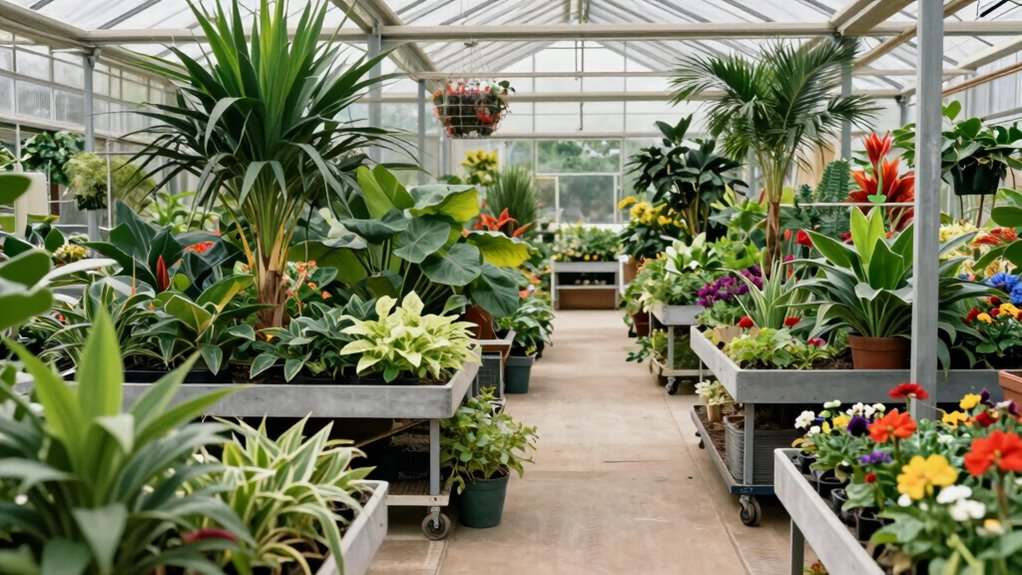
Maintaining easy access to your greenhouse plants is essential for healthy growth and simple maintenance, yet overcrowding can make this challenging. When plants are too tightly packed, it becomes difficult to tend to them properly, check for pests, or provide adequate indoor lighting. To keep your greenhouse accessible, start by planning your layout carefully. Use vertical space smartly with shelves and hanging baskets, freeing up ground space for larger plants or pathways. This approach not only maximizes your growing area but also guarantees you can move easily between different sections without disturbing your plants.
Plan your layout carefully, using vertical space and pathways for easy access and healthier greenhouse plants.
Choosing the right container sizes is crucial. Larger pots give plants ample room to grow and reduce the need for frequent repotting, but they also take up more space. Smaller, appropriately sized containers allow more plants to fit within your greenhouse while maintaining adequate spacing. When arranging these, keep pathways clear and wide enough for easy movement. Regularly pruning your plants helps prevent overgrowth, which can block access and hinder airflow, promoting healthier plants and making maintenance tasks more straightforward. Additionally, proper plant spacing enhances air circulation and reduces disease risk, further contributing to accessibility.
Lighting is a key factor in keeping your greenhouse plants thriving and accessible. Proper indoor lighting ensures that even plants positioned at the back or in shaded corners receive enough light to grow vigorously. Installing adjustable grow lights can compensate for low natural light, especially during winter months. Position these lights to evenly distribute brightness, avoiding shadows that can obscure access to plants. When plants are well-lit, they grow more uniformly, reducing the need for frequent thinning or repositioning, which keeps your space neat and accessible. Additionally, utilizing smart lighting systems can optimize light distribution and energy efficiency, making maintenance even easier. Incorporating proper ventilation can also help improve airflow and reduce humidity, which benefits plant health and accessibility. Proper ventilation also helps prevent excess humidity, which can lead to mold and plant diseases, further supporting a healthy environment.

Panana 4 Tier Garden Greenhouse Steel Staging Shelving Plant Stand Garden Shelving Unit Garage Storage Racking, 2 Pack Plant Racks
- Pack Size: 2 Pack Garden Shelving Units
- Number of Tiers: 4 Tiers per Unit
- Color: Green Finish
As an affiliate, we earn on qualifying purchases.
As an affiliate, we earn on qualifying purchases.
Frequently Asked Questions
How Do I Choose the Right Pathways for My Greenhouse?
Choose pathways that balance accessibility and space, considering your lighting arrangement and ventilation strategies. Select wide, unobstructed routes to easily reach plants without crowding. Position pathways to maximize natural light exposure and guarantee good airflow, enhancing plant health. Use durable materials like gravel or pavers for stability. Keep pathways clear of clutter, and plan their placement based on your greenhouse’s layout, allowing smooth movement while supporting ideal lighting and ventilation.
What Materials Are Best for Adjustable Plant Shelves?
You’d think choosing shelf material options is straightforward, but the real trick is finding something durable yet flexible. Metal, plastic, or wood all work; metal offers strength, plastic resists moisture, and wood adds charm. Adjustable shelving benefits include easy height changes and maximizing space. Ironically, the best choice depends on your greenhouse’s needs—so pick wisely, and your plants will thank you with thriving growth and easy access.
How Can I Prevent Pests While Maintaining Accessibility?
To prevent pests while keeping your greenhouse accessible, focus on natural pest control methods like introducing beneficial insects or using organic sprays. Select pest-resistant plants to reduce infestations. Keep pathways clear for easy inspection and maintenance, and regularly monitor plants for early signs of pests. Maintaining good airflow and cleanliness also helps prevent pests from settling, ensuring your greenhouse stays accessible and healthy without overcrowding.
What Are Space-Saving Watering and Fertilizing Techniques?
Think of your greenhouse like a symphony; every element must work in harmony. Use space-saving drip irrigation and fertigation systems to deliver water and nutrients efficiently, reducing clutter and ensuring accessibility. These systems allow you to water multiple plants simultaneously, maximizing space and minimizing mess. By automating your watering and fertilizing, you free up room and time, creating a more organized environment where every plant thrives without crowding.
How Do I Organize Tools to Maximize Space Efficiency?
To organize your tools efficiently, dedicate a wall or corner for a tool station with hooks for your pruners, trowels, and gloves. Keep a small compost bin nearby for organic waste, and use labeled plant tags to quickly identify plants. Store less frequently used items in labeled bins or shelves, freeing up space. Regularly declutter to maintain easy access and prevent overcrowding, ensuring your workspace stays functional and tidy.
Conclusion
So, next time you think crowding your greenhouse is the way to go, remember: the best way to keep plants accessible is to give them space to breathe. Ironically, creating room actually makes maintenance easier and plants healthier. Instead of squeezing everyone together, let them breathe—and you’ll find tending your greenhouse becomes a lot less of a chore. After all, a little space goes a long way in keeping your plants happy and your sanity intact.
Grilling season Picks
grills
As an affiliate, we earn on qualifying purchases.