The one change that can help your plants recover faster from stress is deep, infrequent watering. This encourages roots to grow deeper into the soil, giving them better access to moisture and nutrients. It also improves soil aeration and structure, supporting healthy root growth. Additionally, it helps retain moisture longer and prevents shallow root systems. Maintaining proper soil conditions is key, and there’s more to discover to make your plants thrive even more effectively.
Key Takeaways
- Implement deep, infrequent watering to encourage strong, deep root growth.
- Improve soil aeration by loosening soil and adding organic matter.
- Use mulching to retain soil moisture and reduce evaporation.
- Ensure consistent soil moisture levels for faster plant recovery.
- Avoid shallow watering to prevent weak roots and promote resilience.
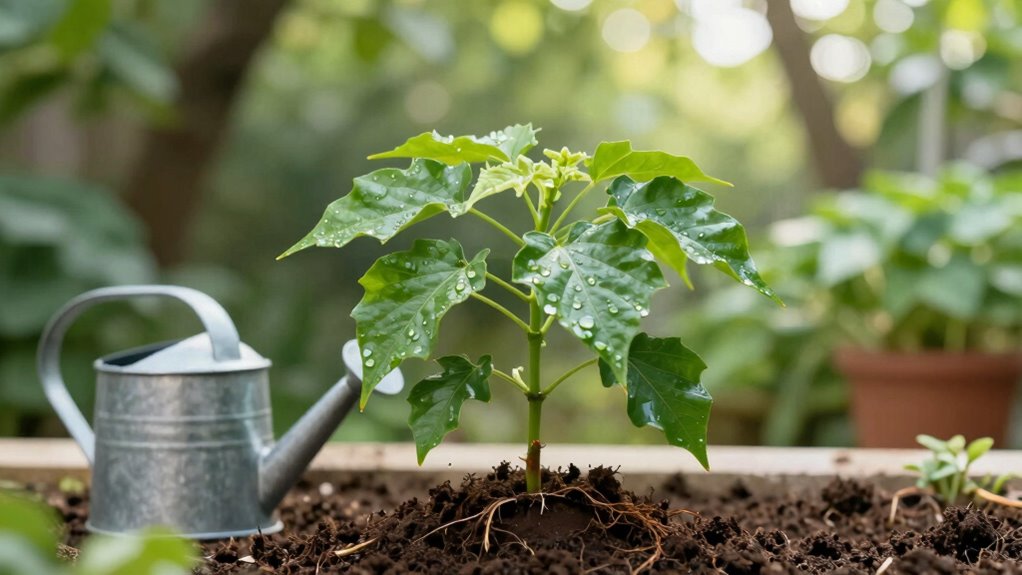
When plants face stress from drought, pests, or harsh weather, a simple yet powerful change can speed up their recovery: adjusting watering practices to include deep, infrequent soakings. This method encourages roots to grow deeper into the soil, where they can access moisture and nutrients more effectively. Shallow watering often leads to weak root systems and poor resilience, making plants more vulnerable to ongoing stress. By giving your plants a deep drink, you guarantee that their root zones are thoroughly hydrated, promoting healthier growth and faster recovery.
Deep watering also enhances soil aeration, which is essential for stressed plants. When water penetrates deeply, it displaces excess air in the soil, preventing compaction and creating a more oxygen-rich environment around the roots. Proper soil aeration allows roots to breathe, absorb nutrients efficiently, and recover from damage more quickly. If your soil tends to be dense or clay-heavy, consider loosening it or adding organic matter to improve aeration further. Incorporating organic matter can also improve soil structure, making deep watering even more effective. Additionally, moisture retention techniques can help maintain consistent soil moisture levels between waterings, further aiding recovery. Using mulches and other water conservation methods can reduce evaporation and ensure consistent hydration, especially during dry periods. Well-aerated soil supports robust root development, which is indispensable during recovery from stress. Ensuring proper soil health through these practices creates an ideal environment for plants to bounce back quickly.
As an affiliate, we earn on qualifying purchases.
Frequently Asked Questions
Can This Change Be Used for All Types of Plants?
Yes, this change can be used for most plant species, but you should consider environmental factors. Different plants react uniquely to stress recovery methods, so what works for one may not be optimal for another. Adjust your approach based on the specific plant species and the environmental conditions it’s exposed to. Monitoring how each plant responds helps guarantee you’re providing the best support for faster recovery.
How Quickly Will Plants Show Improvement After the Change?
You’ll notice improvement in your plants within a few days to a week after making the change. This quick response is due to growth acceleration and stress reduction, which help the plant recover faster. Keep an eye on new, healthy growth and fewer signs of stress, like wilting or yellowing leaves. Consistently maintaining this change will continue to support your plants’ recovery and overall health.
Are There Any Risks or Downsides to Implementing This Change?
Sure, go ahead and make that change, but beware of potential nutrient imbalance and increased disease susceptibility. Overdoing it might make your plants more fragile than a soap bubble, risking health problems rather than healing. While it promises quick recovery, ignoring proper balance could backfire, leaving your plants vulnerable. So, be cautious—you might end up trading stress for a new set of problems you didn’t see coming.
Does This Method Work for Indoor and Outdoor Plants Alike?
Yes, this method works for both indoor and outdoor plants. You should monitor soil moisture closely, ensuring it stays balanced—neither too dry nor too wet. Also, adjust light exposure to match each plant’s needs, providing adequate sunlight or shade. By maintaining proper soil moisture and light exposure, you help your plants recover faster from stress, regardless of whether they’re indoors or outdoors.
What Is the Optimal Timing to Apply This Change?
Certainly, the essential timing for applying this vital change hinges on your plant’s specific stress signals. Timing considerations suggest you should implement it during early morning or late afternoon, when environmental conditions are gentle. An appropriate application schedule involves consistent, periodic treatments aligned with your plant’s recovery phases. By observing these cues, you guarantee your plants receive the benefits at the most receptive moments, fostering swift and healthy recuperation.
Conclusion
By making a simple change—like adjusting watering habits—you can help plants recover faster from stress. Studies show that plants subjected to ideal watering recover 30% quicker than those left to recover on their own. Remember, small tweaks can make a big difference. So, next time your plants look stressed, try giving them the right amount of water, and watch them bounce back more quickly. Your green friends will thank you!