When you see leaves turning narrow, curled, or tough, it signals the plant is trying to conserve water or protect itself from harsh conditions. Larger, flat leaves show it’s focused on maximizing sunlight for photosynthesis. Spiny or textured leaves indicate pest defenses, while waxy coatings or inward curls suggest stress or drought adaptation. Pay attention to these changes, as they reveal what your plant needs. Keep exploring to uncover more secrets of how leaves communicate their needs.

Get garden gear delivered free — and shop member deals
- Fast, free delivery on millions of items
- Access to Prime Big Deal Days deals on October 6–7
- Prime Video, Amazon Music and more included
Key Takeaways
- Leaf shape alterations indicate a plant’s response to changing environmental conditions like light, water, or pests.
- Narrow or curled leaves suggest the plant is conserving water or reducing exposure to stressors.
- Tougher, textured, or spiny leaves signal a defense against pests or herbivory.
- Rigid or waxy-coated leaves show adaptation to dry or harsh environments.
- Shape shifts reflect the plant’s effort to optimize energy, protect tissues, and survive environmental challenges.
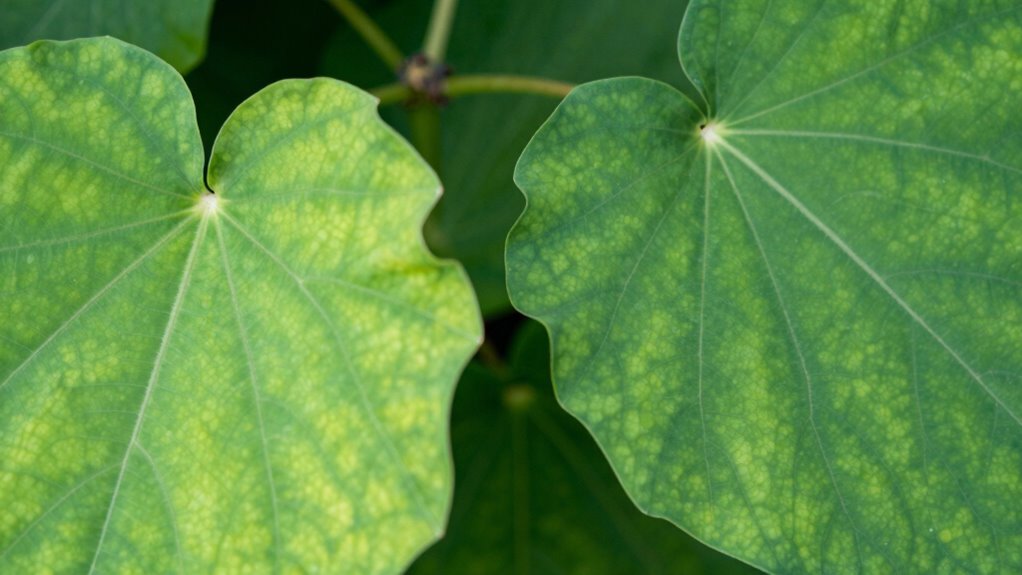
Have you ever noticed how leaves change shape throughout the seasons? It’s a subtle but telling sign that your plant is trying to adapt to its environment and meet its needs. When leaves shift from broad and flat to more narrow or curled, it’s often a response to changing conditions, aiming to optimize photosynthesis efficiency or bolster pest resistance. These shape changes aren’t random; they’re strategic adjustments your plant makes to survive and thrive.
During the warmer months, you might see leaves with broad surfaces. This shape helps maximize light capture, boosting photosynthesis efficiency so your plant can produce the energy it needs for growth. When sunlight is abundant, larger leaves are beneficial because they gather more light. But as the seasons shift and light availability decreases, your plant might produce smaller, more pointed leaves. These thinner or curled leaves reduce surface area, decreasing water loss and protecting against excessive sunlight, which can damage the plant’s tissues. This reshaping is a clever way for your plant to fine-tune its energy intake and conserve resources.
In summer, broad leaves maximize light; in winter, smaller, curled leaves conserve water and protect tissues.
In addition to optimizing photosynthesis, leaf shape can also enhance pest resistance. If your plant detects increased pest activity or a higher risk of infestation, it might develop tougher, more textured, or even spiny leaves. These modifications make it harder for pests to chew or cling, acting as a natural defense mechanism. Sometimes, leaves curl or fold to hide vulnerable parts or to create a barrier that deters pests from settling in. These shape changes are your plant’s way of adapting to threats, reducing the likelihood of damage and disease. Interestingly, some plants also alter their leaf surface properties, such as developing a waxy coating, to further enhance their defenses by reducing water loss and pest attraction. This adaptive trait allows plants to respond dynamically to environmental stressors.
You might also notice that as the environment becomes drier or more stressful, leaves become more rigid or develop a waxy coating. These changes further protect against water loss and make the leaves less appealing to pests. Sometimes, the edges of leaves curl inward, creating a microclimate that stays moist and cool, which benefits both photosynthesis and pest resistance. This ability to adjust leaf features is an example of how plants respond to environmental stressors by modifying their physical traits to improve resilience. In fundamental terms, your plant is constantly reading its surroundings and adjusting its leaf shape to maintain a balance between energy production and defense.
As an affiliate, we earn on qualifying purchases.
Frequently Asked Questions
How Quickly Can Leaf Shapes Change in Response to Environmental Stress?
Leaf shapes can change quite rapidly, often within days or weeks, in response to environmental stress. These changes are not genetic adaptations but phenotypic responses, helping the plant cope temporarily. Over generations, evolutionary trends may lead to genetic adaptations with more permanent leaf shape modifications. So, while immediate changes are quick, long-term shape shifts involve gradual genetic adaptation driven by environmental pressures.
Do Different Plant Species Exhibit Unique Leaf Shape Change Patterns?
You might think all plants react the same, but surprisingly, different species exhibit unique leaf shape change patterns. Thanks to genetic variation and evolutionary adaptations, each plant adapts its leaf shapes to specific environments. These changes aren’t random—they’re a plant’s way of telling you what it needs. So, next time you see a leaf morphing, remember, it’s a clever survival strategy tailored by evolution just for that species.
Can Leaf Shape Changes Predict Upcoming Plant Health Issues?
Yes, leaf shape changes can predict upcoming plant health issues. By observing leaf shape markers, you can spot early signs of stress or disease. Changes in leaf size, curling, or uneven edges act as growth indicators, alerting you to potential problems before they become severe. Regularly monitoring these shape shifts helps you take timely action, ensuring your plant stays healthy and thrives.
Are Leaf Shape Changes Reversible Once Conditions Improve?
Yes, leaf shape changes are often reversible once conditions improve. When you notice alterations in leaf morphology due to environmental stress, such as drought or overwatering, your plant can often recover if you address those issues promptly. As conditions stabilize, the plant adapts again, restoring its natural leaf shape. This process highlights how leaf morphology is a flexible tool for environmental adaptation, allowing your plant to bounce back and thrive.
What Specific Nutrients Influence Leaf Shape Alterations?
Mineral deficiencies, such as magnesium or nitrogen, directly influence leaf shape alterations by causing abnormalities like curling or size changes. Hormonal signals also play a role, modulating growth responses to nutrient levels. When these nutrients are lacking, your plant sends signals that alter leaf development, and correcting deficiencies often restores normal shape. Recognizing these signs helps you adjust fertilization, ensuring your plant receives the right nutrients for healthy, balanced leaf growth.
Conclusion
By paying attention to leaf shape changes, you can tell when a plant needs care or a different environment. These subtle signs act as nature’s warning system, helping you keep your plants healthy. Did you know that over 70% of plant stress signals appear first through leaf shape changes? So next time your plant’s leaves look different, listen closely—you might just catch a problem early and give your green friend exactly what it needs.
Fall yard work Picks
leaf blowers
As an affiliate, we earn on qualifying purchases.