
TL;DR
Summer pruning of fruit trees, particularly after harvest, enhances tree health and productivity for this year and future seasons. Experts recommend specific techniques for cherries, apricots, peaches, plums, and trained trees.
Pruning fruit trees during summer, particularly in August after harvest, can lead to improved yields and healthier trees for both this season and the next. Experts highlight that appropriate summer pruning helps prevent diseases and encourages better fruit development, making it a vital part of orchard management.
According to horticultural sources, August is an ideal time for pruning stone fruits such as cherries, apricots, peaches, and plums, as it reduces the risk of fungal and bacterial infections like silver leaf and canker. Pruning during this period involves removing dead, diseased, or damaged wood, as well as selectively thinning branches to improve light penetration and air circulation.
For cherries, summer pruning helps maintain a compact shape and balance between old and new growth, with sweet cherries fruiting on older wood and sour cherries on the previous year’s growth. Apricots and peaches also benefit from summer pruning by encouraging the development of new, productive wood and controlling tree size. Experts emphasize that heavy pruning should be avoided, with no more than 25% of branches removed at once.
Trained fruit trees, such as espaliers and cordons, require specific summer trimming to promote fruit ripening and future bud development. For example, side shoots on apple and pear espaliers should be cut back to three or four leaves, while shoots on stone fruits should be pruned to one leaf to optimize sunlight exposure and fruit quality.
Summer Pruning Fruit Trees Can Improve Harvests This Year and Next
A careful post-harvest trim can reduce disease pressure, open the canopy to sunlight and encourage productive new wood. Here are five fruit-tree groups to prune in August—and the limits that keep the work safe.
Five to trim now
Stone fruits are especially suited to summer work because warm, drier conditions help cuts heal and may reduce exposure to silver leaf, canker and other infections.
Cherries
Thin crowded, damaged and crossing shoots while maintaining a compact, balanced framework.
Apricots
Remove unhealthy growth and selectively open the canopy to light without stripping the tree.
Peaches
Control vigorous shoots and keep a structure that supports replacement fruiting wood.
Plums
Prune after harvest, concentrating on dead, diseased, damaged, crossing or inward-growing branches.
Espaliers & cordons
Shorten side shoots to expose fruit and direct energy toward ripening and future bud formation.
Inspect first. Cut second.
Summer pruning should be selective rather than structural. Work from obvious problems toward small canopy adjustments, stopping well before the tree looks sparse.
Inspect the canopy
Identify dead, diseased, damaged, rubbing and inward-growing wood.
Sanitize tools
Use sharp, clean secateurs, loppers or a pruning saw suited to the cut.
Open selectively
Thin only enough to improve sunlight and airflow through the canopy.
Observe the response
Monitor healing, vigor and new growth before adjusting next year’s approach.
The non-negotiable limit
Remove no more than one quarter of the branches in a single session. Heavy cuts can stress the tree, trigger excessive regrowth and reduce the productive wood available for future fruit.
Match the cut to the crop
The right technique varies by fruiting habit, tree age, variety and climate. Use this as a practical starting point, then refine it through observation.
| Tree group | Primary target | Fruiting consideration | August fit | Avoid |
|---|---|---|---|---|
| Sweet cherry | Congested and damaged growth | Preserve productive older wood | ✓Strong | Removing too much established wood |
| Sour cherry | Spent and crowded shoots | Protect the previous year’s growth | ✓Strong | Stripping young fruiting shoots |
| Apricot | Diseased, crossing and dense wood | Promote healthy replacement growth | ✓Strong | Large, unnecessary structural cuts |
| Peach | Vigorous shoots and crowded centers | Retain sufficient young fruiting wood | ✓Strong | Over-thinning the next crop’s wood |
| Plum | Dead, damaged and inward growth | Keep a balanced, open framework | ✓Strong | Heavy dormant-season-style pruning |
| Trained apple or pear | Side shoots beyond the framework | Shorten to three or four leaves | ~Targeted | Cutting established main arms |
| Weak or stressed tree | Dead or clearly diseased material only | Prioritize recovery over shaping | ✗Delay | Routine thinning during stress |
Four gains from one light trim
August pruning connects immediate canopy improvements with longer-term fruiting potential. The value comes from several modest benefits working together.
Relative pruning priorities
A practical emphasis guide—not a universal prescription. Local conditions and individual tree health still matter.
What the tree gains
Each benefit supports fruit quality, disease management or future productivity.
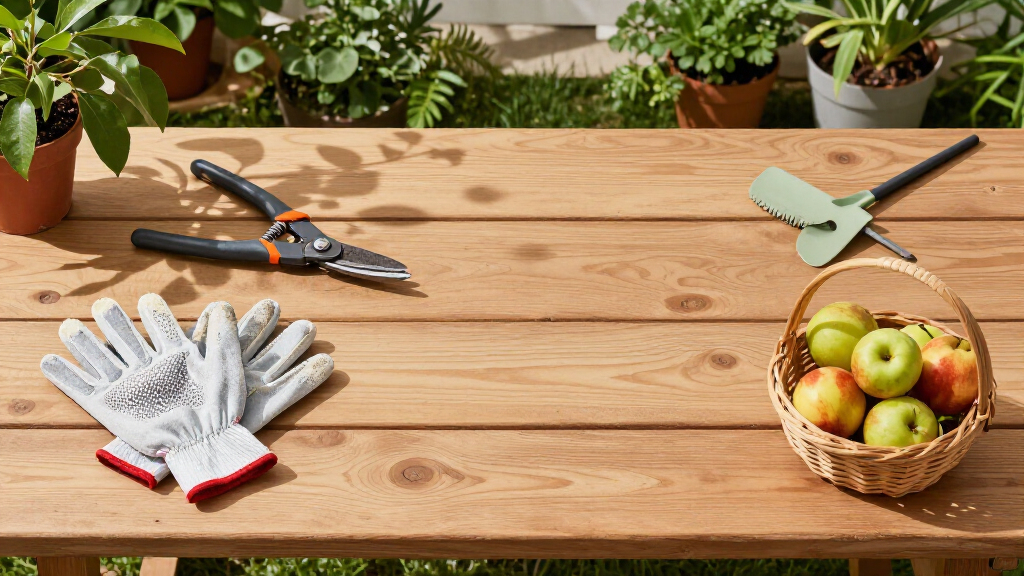
Clean-cut toolkit
- Sharp bypass pruning shears for small live shoots
- Loppers for branches beyond comfortable secateur capacity
- A clean pruning saw for larger, carefully selected cuts
- Disinfectant for cleaning blades between suspect branches
- Gloves and eye protection for controlled, safe work
Plant-care guide shelf
How one cut reaches next year’s crop
The effect is cumulative: selective pruning changes the canopy environment, which influences tree health, fruit development and future productive growth.
Before you make the first cut
Use broad guidance cautiously. Weather, variety, maturity and existing stress can all change what is appropriate for a particular tree.
Is summer pruning safe for every fruit tree?
Many fruit trees benefit, particularly stone fruits, but timing and intensity should be adapted to variety, climate and tree condition.
Can it improve next year’s harvest?
Yes. Selective pruning can support new fruit-bearing wood, better tree health and improved light conditions for future buds.
Does it prevent fungal disease?
It may reduce risk by improving airflow and allowing wounds to heal during warmer conditions, but it does not guarantee prevention.
What should be removed first?
Prioritize dead, diseased, damaged, rubbing, crossing and inward-growing branches before making any optional shaping cuts.
Where the guidance remains uncertain
The ideal amount and exact method vary among sources and may depend on tree age, cultivar, vigor and local climate. Treat light annual pruning as an adaptive practice: document the cuts, watch the tree’s response and refine the approach over time.
Why Summer Pruning Is Key to Better Fruit Production
Proper summer pruning directly impacts the health and productivity of fruit trees, leading to higher yields and better fruit quality. It helps prevent common diseases, reduces tree size for easier management, and encourages the growth of new, fruit-bearing wood. For growers and home gardeners alike, adopting these practices can ensure a more bountiful harvest both this year and in future seasons.

DECERK® 8.5" Professional Pruning Shears – Cuts 4X Easier with Ultra Sharp Japanese Steel Titanium Blade, Arthritis Friendly Garden Scissors & Plant Clippers, Effortlessly Prunes 3/4" Branches
- Blade Material: Japanese SK5 steel with titanium coating
- Durability: Coated with 3-layer titanium alloy for corrosion resistance
- Handle Material: Anodized aluminum handles
As an affiliate, we earn on qualifying purchases.
Timing and Techniques for Effective Summer Pruning
Traditionally, many fruit trees are pruned in winter, but recent advice highlights the advantages of summer pruning, especially for stone fruits. August is considered optimal because it allows wounds to heal quickly and reduces fungal spore presence, which is more prevalent in fall and winter. This approach aligns with integrated disease management practices and aims to sustain tree vigor.
Previous studies and expert opinions have emphasized that light, annual pruning is preferable over heavy cuts, which can stress the tree. The focus is on removing diseased or crossing branches and opening up the canopy to improve airflow and light penetration, essential for fruit development and disease prevention.
“Summer pruning in August helps reduce disease risk and promotes healthier, more productive trees for the coming season.”
— Horticultural Expert John Smith
Uncertainties Around Extent and Methods of Summer Pruning
While experts agree on the benefits of summer pruning, specific guidelines regarding how much to cut and which branches to target vary among sources. The optimal extent of pruning may depend on tree age, variety, and local climate conditions. Further research is needed to establish standardized protocols for different fruit types and regions.
Next Steps: Monitoring and Adjusting Pruning Practices
Gardeners and orchard managers should observe how their trees respond to summer pruning and adjust techniques accordingly. Future studies and expert updates may refine best practices, especially as climate conditions change. Additionally, integrating summer pruning into regular orchard management can help improve long-term productivity.
Key Questions
Is summer pruning safe for all fruit trees?
Most fruit trees benefit from summer pruning, especially stone fruits like cherries, apricots, peaches, and plums. However, the specific timing and extent should be tailored to each variety and local conditions, and over-pruning should be avoided.
What tools are recommended for summer pruning?
Sharp, clean pruning shears, loppers, and pruning saws are essential for effective and safe cuts. Using appropriate tools helps minimize damage and promotes quick healing of wounds.
Can summer pruning improve next year’s harvest?
Yes, summer pruning encourages the growth of new, fruit-bearing wood and improves tree health, which can lead to better yields in the following season.
How much of the tree should I prune in summer?
Experts recommend removing no more than 25% of the branches at one time, focusing on diseased, crossing, or inward-growing branches to maintain a balanced and healthy canopy.
Does summer pruning prevent fungal diseases?
Yes, pruning in summer reduces the presence of fungal spores and allows wounds to heal quickly, lowering the risk of infections like silver leaf and canker.
Source: Homes & Gardens