
TL;DR

Get garden gear delivered free with Prime
- Fast, free delivery on millions of items
- Prime Video, Amazon Music and more included
- Member-only deals all year
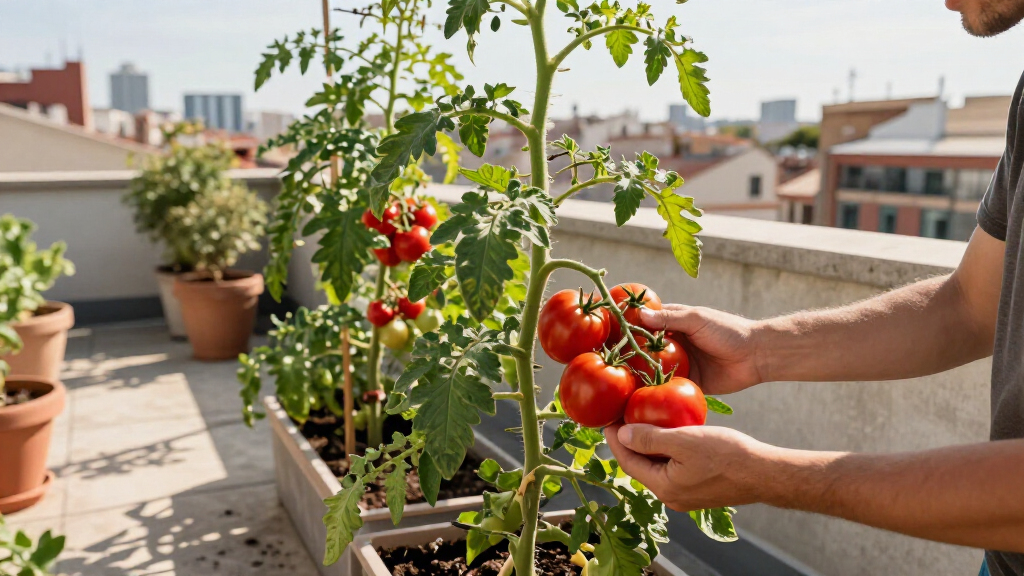
Research indicates that rooftops across Barcelona could produce up to 31% of the tomatoes consumed in the city. This development highlights urban agriculture’s potential to improve food sustainability but remains in early assessment stages.
Barcelona’s municipal rooftops could produce up to 31% of the tomatoes consumed within the city, according to a recent study by the Autonomous University of Barcelona. This suggests significant potential for urban agriculture initiatives aimed at increasing local food self-sufficiency and reducing supply chain reliance, making it a noteworthy development for city planners and sustainability advocates.
The study, conducted by researchers at the Autonomous University of Barcelona, analyzed the rooftops of municipal buildings across the city to estimate their capacity for tomato cultivation. It found that, under optimal conditions, these rooftops could produce approximately 31% of the tomatoes currently consumed by Barcelona residents.
While the research is still in preliminary stages, it highlights the feasibility of integrating urban farming into city infrastructure. The study considered factors such as available rooftop space, sunlight exposure, and irrigation needs, concluding that a substantial portion of the city’s tomato demand could be met through rooftop cultivation.
City officials and urban agriculture advocates see this as a promising step toward sustainable food systems. However, experts caution that actual implementation will require addressing challenges like building structural capacity, pest control, and community engagement. The study emphasizes that further detailed feasibility assessments and pilot projects are necessary before large-scale deployment.
Potential Impact on Urban Food Security and Sustainability
This development could significantly enhance urban food security by reducing dependency on external supply chains for fresh produce. It aligns with broader sustainability goals, including lowering transportation emissions and promoting local self-sufficiency. If scaled successfully, rooftop tomato farms could serve as a model for other cities seeking to optimize unused urban spaces for food production.
Moreover, integrating agriculture into city infrastructure might foster community engagement, create green jobs, and improve urban biodiversity. The initiative also aligns with Barcelona’s commitments to climate resilience and sustainable urban development, potentially setting a precedent for similar projects worldwide.
As an affiliate, we earn on qualifying purchases.
Urban Agriculture Initiatives and Barcelona’s Sustainability Goals
Barcelona has been actively exploring urban agriculture as part of its sustainability and climate adaptation strategies. Previous initiatives have included community gardens and green rooftops for various crops, but large-scale rooftop farming remains largely experimental. The city aims to reduce its carbon footprint and promote local food production, especially in densely populated areas where space is limited.
The idea of rooftop farming gained momentum amid rising interest in sustainable urban living and food resilience. The recent study by the Autonomous University of Barcelona builds on these efforts, providing a scientific basis for expanding urban agriculture. Historically, Barcelona has faced challenges related to food supply logistics, which this approach could help mitigate.
While the concept is promising, it is still in early stages of evaluation, and practical hurdles—such as building regulations, structural safety, and maintenance—must be addressed before widespread adoption.
Implementation Challenges and Practical Feasibility Questions
While the study presents promising estimates, it remains unclear how quickly and effectively these rooftop farms can be developed at scale. Key questions include structural safety of existing buildings, the economic costs of establishing and maintaining such farms, and community acceptance. Additionally, the actual yield may vary based on local microclimates and unforeseen logistical issues. Further pilot projects and detailed feasibility studies are needed to confirm these projections and identify potential barriers.
Next Steps for Urban Farming Expansion in Barcelona
The city and researchers are expected to initiate pilot projects to test rooftop farming methods and assess real-world yields and challenges. These pilots will help refine the estimates and inform policy decisions on urban agriculture. Additionally, Barcelona plans to engage with local communities, building owners, and urban planners to explore practical implementation pathways. A formal plan for scaling rooftop tomato cultivation could be developed within the next 12-24 months, depending on pilot outcomes and funding availability.
Key Questions
How much of Barcelona’s tomato consumption could rooftop farms realistically supply?
Based on current estimates, rooftop farms could supply approximately 31% of the tomatoes consumed in the city, though this depends on successful implementation and ongoing assessments.
What are the main challenges to establishing rooftop tomato farms in Barcelona?
Challenges include structural safety of buildings, the costs of installation and maintenance, pest and disease management, and community acceptance. Further pilot projects are needed to evaluate feasibility.
Could this initiative significantly reduce Barcelona’s carbon footprint?
Potentially, yes. Local food production on rooftops could lower transportation emissions and promote sustainable urban living, aligning with the city’s climate goals.
When might rooftop tomato farms become a common feature in Barcelona?
If pilot projects are successful, scaled implementation could begin within the next 1 to 2 years, but widespread adoption will depend on pilot outcomes and policy support.
Source: local
Columbus Day / Indigenous Peoples' Day Picks
long weekend sales
As an affiliate, we earn on qualifying purchases.