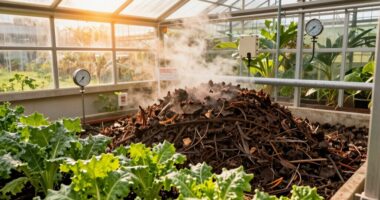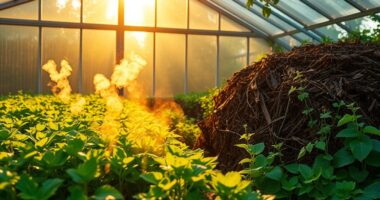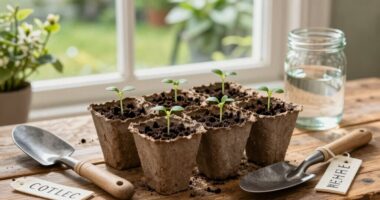
Using mulch inside your greenhouse helps you retain soil moisture and regulate temperatures naturally. By applying an even layer of organic mulch like straw or wood chips, you create a barrier that reduces evaporation and insulates the soil from temperature swings. This creates stable conditions for your plants and minimizes heating or cooling needs. Keep in mind proper application and maintenance are key—discover more tips to optimize your greenhouse setup and boost plant health.
Key Takeaways
- Mulch reduces soil evaporation, maintaining consistent moisture levels essential for healthy greenhouse plant growth.
- Organic mulch layers insulate soil, preventing rapid temperature shifts and stabilizing soil temperatures inside the greenhouse.
- Applying mulch evenly 2-4 inches thick helps regulate soil warmth and moisture, supporting optimal root environments.
- Regular monitoring and adjusting mulch depth prevent issues like mold, pests, and soil temperature fluctuations.
- Combining mulch with soil sensors enhances moisture and temperature management for a stable greenhouse environment.

Back to the Roots 25.7qt (1 Cubic ft) Organic Premium Mulch
100% Organic & Peat-Free: Our organix mulch mix is 100% organic & peat-free. Peat is one of Mother…
As an affiliate, we earn on qualifying purchases.
As an affiliate, we earn on qualifying purchases.
Why Mulching Inside Your Greenhouse Helps Your Plants
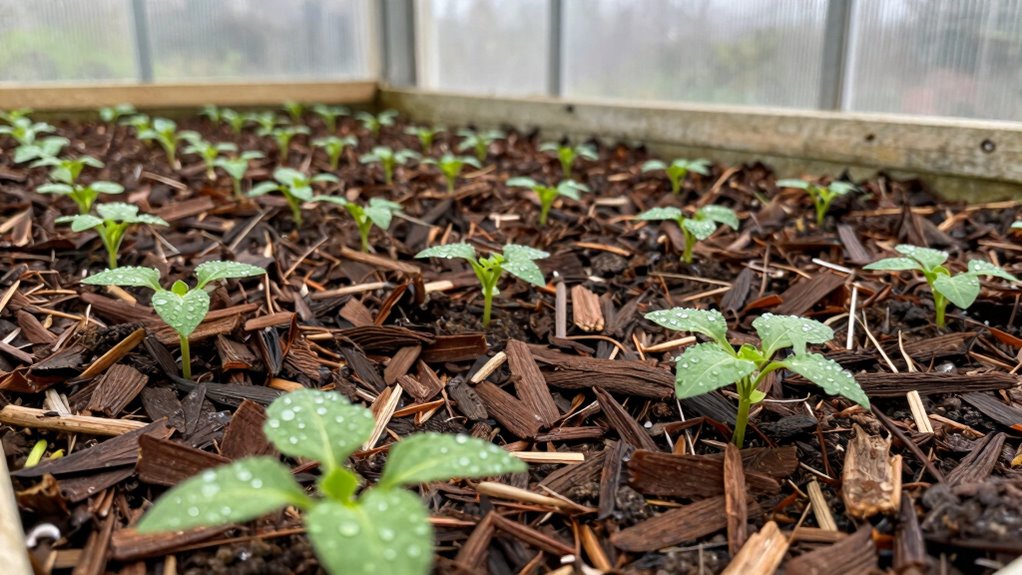
Mulching inside your greenhouse offers several benefits that directly support plant health. It helps regulate watering habits by reducing evaporation, so you don’t have to water as often, and your plants stay consistently moist. This stability prevents stress and encourages healthy growth. Mulch also acts as a barrier against pests, making it harder for insects and soil-borne diseases to reach your plants. By blocking pests’ easy access to the soil and plant stems, you reduce the risk of infestations. Additionally, mulch keeps the soil surface clean, decreasing the chances of mold and fungal growth. Proper mulching can also contribute to creating a calmer, more organized environment that supports your overall gardening success. Overall, mulching creates a healthier environment for your plants, ensuring they thrive with less frequent watering and fewer pest problems.

Nexuslab Wireless Soil Moisture Meter with LCD Receiver – 3‑Probe 3‑in‑1 Sensor (Moisture, Temperature, Light), 230 ft RF Range, Waterproof, Long Battery Life for Indoor/Outdoor Plants and Gardens
【EXPANDABLE 12-ZONE MONITORING SYSTEM】Monitor your entire garden from one convenient indoor screen. Starts with 2 included wireless sensors,…
As an affiliate, we earn on qualifying purchases.
As an affiliate, we earn on qualifying purchases.
Picking the Best Mulch for Your Greenhouse
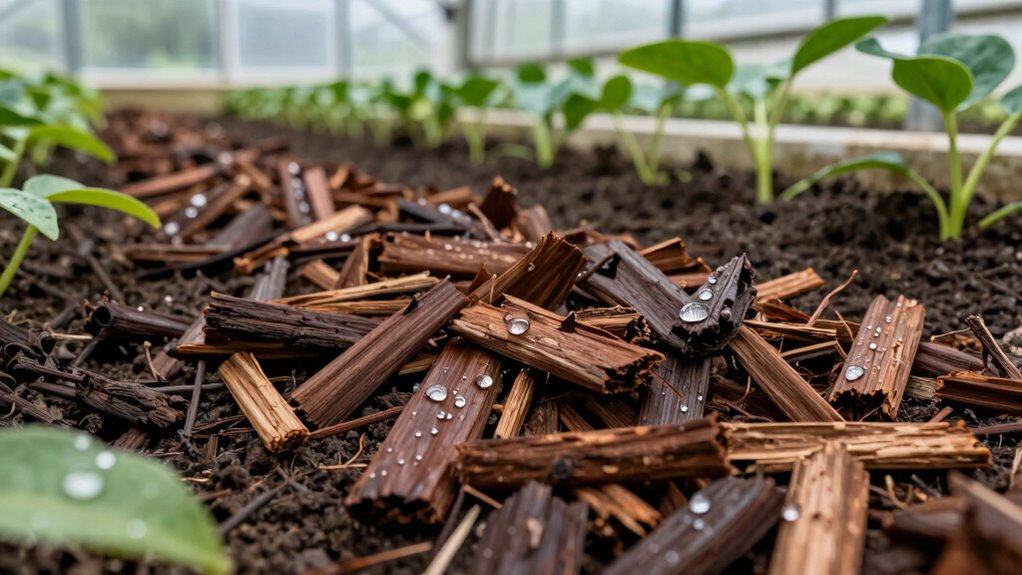
Choosing the right mulch for your greenhouse is essential to promote healthy plant growth and maintain ideal growing conditions. With various mulch types available, you should consider how each influences moisture retention and soil temperature. Organic options like straw, wood chips, or shredded leaves are popular because they enrich the soil as they decompose. Inorganic mulches, such as gravel or black plastic, can also be effective for specific needs. Additionally, mulch color plays a vital role; dark mulches absorb heat and help warm the soil, while lighter colors reflect heat and keep roots cooler. Your choice depends on your plants’ requirements and your climate. By selecting the appropriate mulch type and color, you’ll optimize moisture, temperature, and overall plant health inside your greenhouse. Understanding contrast ratio can also help you choose coverings that improve light absorption and temperature regulation for your plants.

YAMRON 4-in-1 Soil Moisture Meter, Digital Plant Temperature/Soil Moisture Test & PH Meter/Sunlight Intensity, Backlight LCD Display for Gardening, Farming and Outdoor Plants
【4 in 1 function】This is a 4-in-1 multifunctional soil tester.Our soil tester fastly to measure soil moisture, pH,…
As an affiliate, we earn on qualifying purchases.
As an affiliate, we earn on qualifying purchases.
How to Mulch Inside Your Greenhouse Effectively
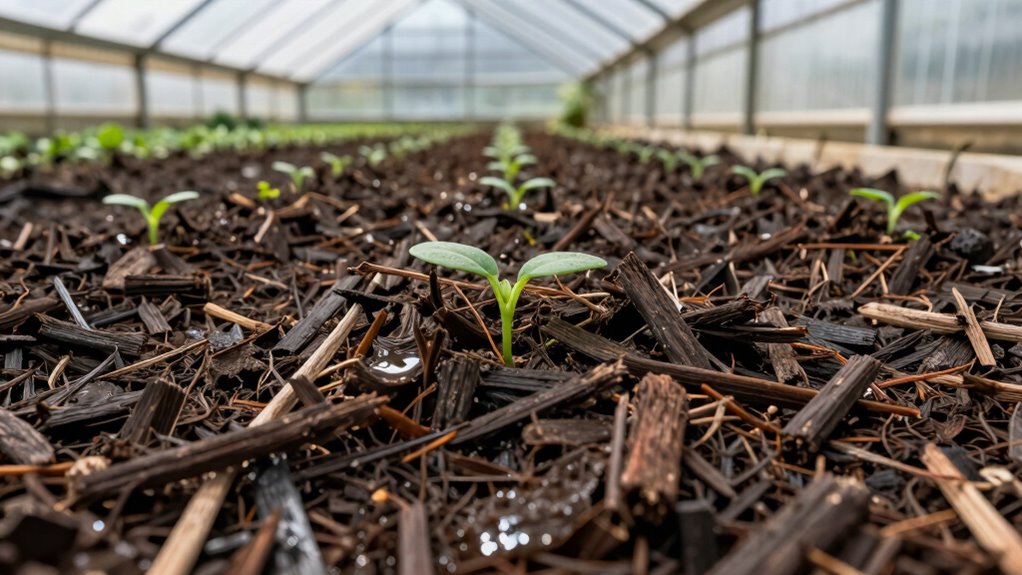
To mulch effectively in your greenhouse, start by choosing the right material that suits your plants and environment. Make sure to apply the mulch evenly without covering stems or vents, and then keep an eye on the layer thickness. Adjust the mulch as needed to maintain ideal moisture and temperature levels for healthy growth. Incorporating energy-efficient solutions can also help optimize environmental control within your greenhouse.
Select Appropriate Mulch Material
Selecting the right mulch material is essential for creating an ideal environment inside your greenhouse. You have both organic options, like straw, wood chips, or compost, and synthetic materials, such as plastic mulch or landscape fabric. Organic mulches improve soil health, retain moisture, and add nutrients as they decompose, making them a popular choice for many growers. Synthetic options, on the other hand, are durable, help control weeds, and can reflect light to boost plant growth. Consider your specific needs—if you want to enrich the soil naturally, go with organic options. If weed suppression and moisture retention are your priorities, synthetic materials might be better. Your choice should align with your greenhouse goals and the plants you’re growing. Additionally, understanding the climate control benefits of different mulches can help you optimize temperature stability inside your greenhouse.
Apply Mulch Properly
Applying mulch properly inside your greenhouse is essential for maximizing its benefits and ensuring healthy plant growth. Start with even mulch application, spreading it around plants without piling it directly against stems or trunks. Proper mulch spacing is key; maintain a few inches of space between the mulch and plant bases to prevent rot and pest issues. Aim for a layer about 2-4 inches thick, enough to retain moisture and stabilize soil temps without suffocating roots. Regularly check the mulch to ensure it stays evenly distributed and avoid compacting it, which can hinder water penetration. Good mulch application helps maintain consistent soil moisture and temperature, supporting healthy plant development while reducing weeds and watering needs. Additionally, using effective mulch can contribute to soil temperature stabilization, which is beneficial for plant health.
Monitor and Adjust Layers
How can you guarantee your mulch layer remains effective over time? The key is diligent layer management through regular monitoring and adjustments. Check your mulch layering frequently to ensure it stays even and not too thin, which can reduce its insulating and moisture-retaining properties. If the mulch has decomposed or settled, add a fresh layer to maintain optimal coverage. Remove any weeds or debris that may have infiltrated the mulch. Adjust the depth based on seasonal changes—deeper in winter for warmth, shallower in summer to prevent overheating. Consistent monitoring helps you identify issues early, keeping your mulch effective at stabilizing soil temperatures and moisture levels. Proper layer management ensures your greenhouse environment remains ideal for plant growth year-round. Environmental factors can influence how often you need to reassess your mulch layers.

Brut Organic Aspen Mulch 10 QT – Natural Moisture Retainer & Root Protector – Odor-Free, Nutrient-Rich Bark Mulch for Landscaping, Garden Beds & Potted Plants
NATURAL GARDEN COVER: Creates a clean, polished garden surface while helping minimize weed growth naturally. This organic mulch…
As an affiliate, we earn on qualifying purchases.
As an affiliate, we earn on qualifying purchases.
Controlling Soil Temperature With Mulch
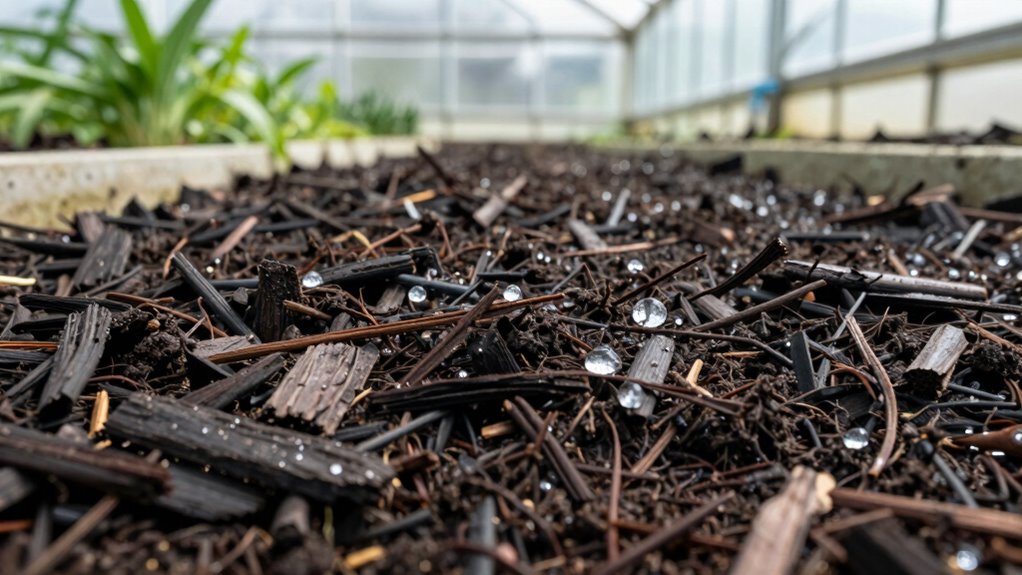
Mulch plays a crucial role in maintaining ideal soil temperature inside a greenhouse. It provides excellent soil insulation, helping to prevent rapid temperature fluctuations that can stress plants. By acting as a thermal barrier, mulch moderates soil temperature, keeping it cooler during hot days and warmer during cooler nights. This stability allows roots to develop more efficiently, promoting healthy growth. Using organic mulch like straw, bark, or compost can enhance this effect, as they absorb and slowly release heat. Proper mulch layers also prevent heat loss, reducing the need for additional heating or cooling measures. Additionally, space‑heating basics can be complemented by mulch to create a more energy-efficient environment. With effective temperature moderation, your greenhouse environment remains consistent, supporting your plants’ overall health and productivity.
Maintaining Moisture Levels Using Mulch
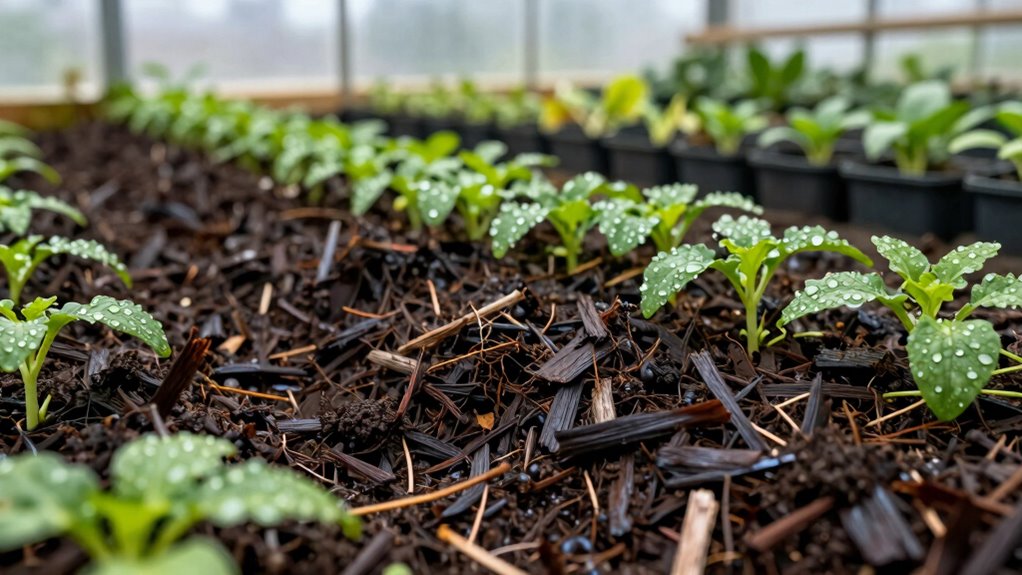
Because mulch acts as a natural barrier, it helps retain moisture in the soil by reducing evaporation. This keeps your greenhouse soil consistently moist, promoting healthy plant growth. Mulch also encourages better soil aeration by preventing compaction, which allows roots to breathe and access oxygen more easily. Additionally, it aids in nutrient retention by slowing leaching, so essential minerals stay available for plants. When you apply mulch properly, you create a stable environment that minimizes watering frequency and helps maintain ideal moisture levels. This consistency supports strong root development and overall plant health. By controlling moisture with mulch, you ensure your plants have the right conditions to thrive, making your greenhouse easier to manage and more productive. Understanding art and care can also inform how you create nurturing environments for your plants.
Troubleshooting Common Mulching Problems

Even with proper application, mulching can sometimes lead to issues that affect your greenhouse’s plant health. One common problem is pests hiding in the mulch, which can threaten your plants. To prevent this, choose pest-resistant mulch and keep it from touching plant stems. Overmulching or using decomposing mulch can encourage mold and rot, disrupting soil temperature regulation. Regularly inspect and replace mulch if it becomes compacted or moldy. Mulch composting is another concern; composting within mulch can produce excess heat and attract pests. To avoid this, ensure your mulch is properly aged and free of weeds or diseased plant material. Modern gardening techniques emphasize the importance of proper mulch management to optimize plant health. Troubleshooting these issues promptly helps maintain healthy soil conditions and prevents pest prevention problems from escalating.
Combining Mulch With Other Soil Care Techniques
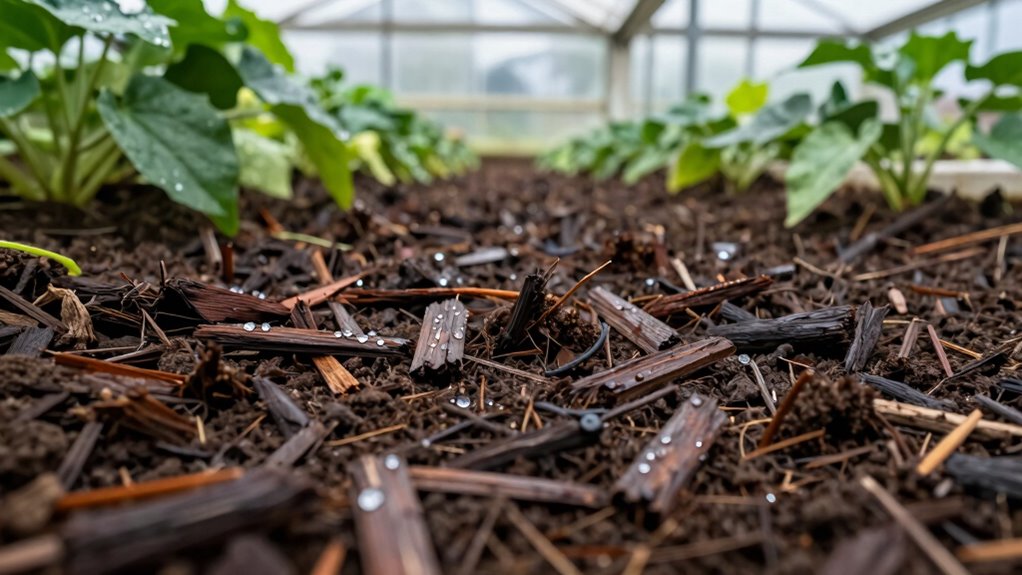
Combining mulch with other soil care techniques enhances your greenhouse’s plant health and soil importance. You can boost soil vitality by applying compost teas, enriching nutrients and beneficial microbes. Using mulch as a pest barrier helps prevent insects and diseases from reaching your plants. For optimal results, integrate these methods:
| Technique | Benefit |
|---|---|
| Compost Teas | Boosts microbial activity and nutrient availability |
| Pest Barriers | Reduces pest intrusion and soil contamination |
| Mulching | Moisture retention, temperature stabilization |
| Cover Crops | Improves soil structure and nitrogen fixation |
| Organic Amendments | Enhances fertility and soil health |
Integrating mulch with additional soil management practices creates a resilient, nutrient-rich environment that promotes healthy plant growth and sustainable soil management.
Monitoring and Adjusting Your Mulching System
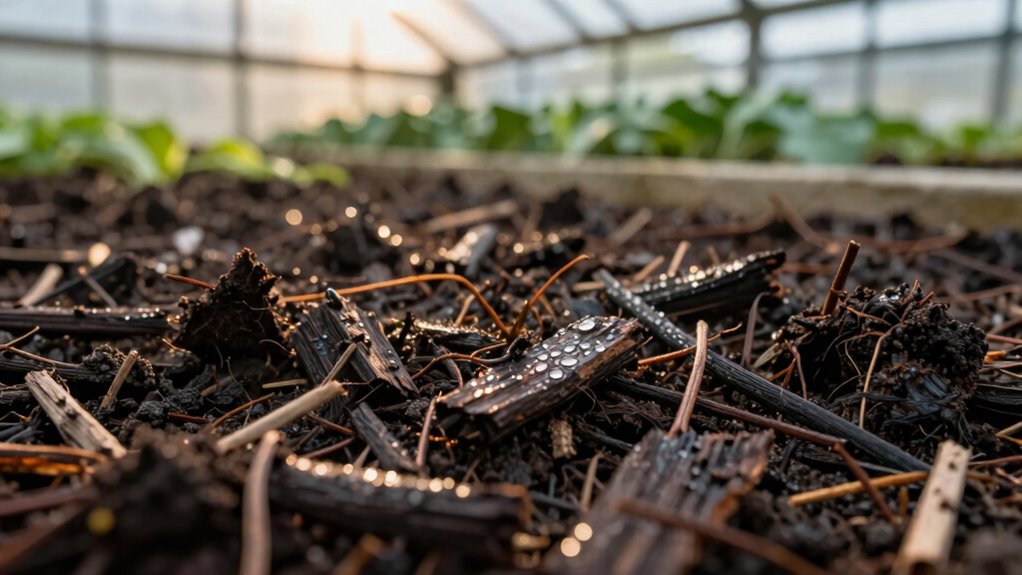
To keep your mulch working effectively, you need to regularly check soil moisture levels and adjust as needed. You might also need to change the mulch depth or use soil sensors to obtain accurate readings. Staying attentive ensures your greenhouse plants stay healthy and thrive.
Regular Moisture Checks
Regular moisture checks are essential to guarantee your mulch inside the greenhouse remains effective and doesn’t cause problems like mold or plant stress. Consistently monitoring moisture levels helps maintain ideal moisture retention and soil stabilization. By doing so, you prevent overwatering or drying out, ensuring plants stay healthy.
To stay on top of this, you should:
- Check moisture levels daily, especially during hot or dry weather.
- Feel the mulch’s surface for dampness—not too wet or dry.
- Adjust watering or add more mulch if moisture retention isn’t consistent.
Regular checks help you respond quickly to changing conditions, keeping your soil stabilized and preventing issues that can arise from improper moisture balance. This keeps your greenhouse environment stable and productive.
Adjust Mulch Depth
Have you checked if your mulch layer is the right depth for ideal plant growth? The optimal mulch depth typically ranges from 2 to 4 inches, ensuring it retains moisture without suffocating the soil. Too thick a layer can hinder soil aeration, limiting oxygen to roots and promoting mold or pests. Conversely, a layer that’s too thin may not provide enough insulation or moisture retention. Regularly monitor your mulch depth and adjust as needed, especially after heavy watering or mulch decomposition. Proper depth promotes healthy roots and consistent soil temperatures. Keep your mulch even and avoid piling it against plant stems to prevent rot. By maintaining the right mulch depth, you’ll maximize soil conditions and support vibrant plant growth inside your greenhouse.
Use Soil Sensors
Using soil sensors provides real-time data on moisture levels, helping you fine-tune your mulching system for ideal plant health. By using soil sensors, you can monitor moisture monitoring closely and make precise adjustments to your mulch application. This guarantees your plants get consistent moisture without overwatering or dehydration. Here are three ways to maximize soil sensors:
- Place sensors at different soil depths to get accurate readings.
- Regularly check sensor data to identify trends and patterns.
- Adjust mulch thickness or watering schedules based on sensor feedback.
With these tools, you can maintain excellent soil moisture and temperature stability. Soil sensors empower you to create a more efficient, responsive mulching system, leading to healthier plants and a more productive greenhouse environment.
Frequently Asked Questions
Can Mulch Inside a Greenhouse Prevent Pests and Diseases?
Yes, mulch inside a greenhouse can help prevent pests and diseases. By acting as a barrier, it suppresses pests like soil-borne insects and reduces their access to your plants. Mulch also promotes disease prevention by keeping soil moist and preventing splashing, which spreads pathogens. Regularly applying mulch and maintaining it properly can create a healthier environment, making it harder for pests and diseases to thrive.
How Often Should I Replace or Replenish Mulch in My Greenhouse?
You should replace or replenish mulch in your greenhouse every one to two years, depending on its mulch longevity. Regularly check for signs of decay, mold, or pests, and top off with fresh mulch as needed. Maintaining a consistent replacement schedule helps keep soil healthy, retains moisture, and prevents pests. Staying attentive ensures your mulch continues to support ideal growing conditions and prevents the buildup of harmful pathogens.
Is There an Ideal Thickness for Mulch Layers Inside a Greenhouse?
Imagine wrapping your plants in a cozy blanket—that’s what the ideal mulch depth does. For most greenhouses, the *best* thickness is about 2-3 inches. This mulch depth provides enough insulation to stabilize soil temps and retain moisture without suffocating roots. Keep it too thick, and airflow diminishes; too thin, and it won’t protect or regulate effectively. Find that perfect layer, and your plants stay happy and healthy.
What Types of Mulch Are Best for High Humidity Environments?
For high humidity environments, you should choose mulch with light color and coarse texture, like shredded bark or straw. Light-colored mulch reflects heat, preventing excessive moisture buildup, while coarse textures promote airflow, reducing mold and rot. Avoid dark, fine-textured mulches that can absorb and retain moisture too well. Opt for those that help regulate humidity and keep your greenhouse environment balanced and healthy.
How Does Mulch Affect Greenhouse Ventilation and Air Circulation?
You might think mulch’s role is just about moisture, but it can also influence airflow obstruction and humidity regulation. Mulch can block airflow if piled too high, leading to poor ventilation. To keep air circulating, spread mulch evenly and avoid covering vents. This helps prevent excess humidity buildup, reducing mold risk, and ensures your greenhouse stays well-ventilated, creating a healthy environment for your plants to thrive.
Conclusion
Just as Daedalus carefully crafted his labyrinth to create a balanced refuge, your mulching approach stabilizes your greenhouse’s environment. By mastering moisture and temperature control, you craft a thriving sanctuary for your plants. Stay vigilant, adapt your techniques as needed, and let your greenhouse become a demonstration to the harmony of nature and nurture. With consistent effort, you’ll open the secret to lush, healthy growth—turning your greenhouse into a modern-day paradise.