Using collected rainwater to water your greenhouse is a smart, eco-friendly choice. First, install a filtration system to guarantee water isn’t contaminated with debris or pollutants, keeping your plants healthy. Choose suitable storage tanks, considering size, material, and placement. Proper system planning, including gutters, diverters, and possibly pumps, ensures efficient flow. This approach reduces water bills, avoids chemicals, and supports sustainable gardening. Keep exploring to learn how to set up a reliable rainwater harvesting system for your greenhouse.
Key Takeaways
- Implement effective rainwater filtration to ensure clean water for greenhouse irrigation.
- Choose appropriate storage tanks based on size, material, and placement to optimize water availability.
- Plan system components like gutters, diverters, and pumps for efficient rainwater collection and distribution.
- Use rainwater to reduce reliance on municipal water, lowering costs and avoiding harmful chemicals.
- Maintain proper system management to ensure sustainable, cost-effective watering and healthy greenhouse environments.

Have you ever considered how rainwater harvesting can help you conserve water and reduce utility bills? If you’re looking to make your greenhouse more sustainable, collecting rainwater is a smart move. The process begins with rainwater filtration, which is essential to guarantee the water you use isn’t contaminated with debris, leaves, or other pollutants. Proper filtration systems can range from simple mesh screens to advanced multi-stage filters, depending on the quality of water you need for your plants. Clean, filtered rainwater not only keeps your plants healthy but also minimizes the risk of disease caused by contaminated water.
Rainwater filtration ensures clean, healthy water for your plants and reduces disease risk in your greenhouse.
Once filtered, the next step involves selecting the right storage tank options. Storage tanks come in various sizes and materials, like plastic, concrete, or metal, and choosing the right one depends on your space, budget, and water needs. Smaller tanks work well for hobbyist greenhouses, while larger ones suit commercial operations. You should consider tanks with secure lids to prevent mosquito breeding and debris entry, and those that are UV-resistant to withstand sunlight exposure. Positioning your tank in a shaded spot can help maintain water quality and reduce algae growth.
Installing an efficient rainwater harvesting system involves more than just collecting water; it requires careful planning to maximize efficiency. When choosing storage tank options, think about how you’ll connect your system to your greenhouse’s watering setup. Gravity-fed systems are simple and cost-effective, but if your greenhouse is on higher ground, you might opt for a pump to ensure consistent water flow. Incorporating a first flush diverter can divert the initial dirty runoff, improving overall water quality. This device directs the initial rainfall away from your storage tank, ensuring cleaner water for your plants.
Using collected rainwater for your greenhouse is an eco-friendly way to lower your reliance on municipal water supplies. It can lead to significant savings on water bills, especially during dry seasons when water demand peaks. Plus, rainwater is generally free of chemicals like chlorine and chloramine, which are common in tap water and can harm sensitive plants. By setting up a well-designed rainwater harvesting system with effective rainwater filtration and suitable storage tank options, you create a sustainable, cost-effective watering solution. This approach not only benefits your plants but also helps you contribute to water conservation efforts. Overall, investing in these components guarantees your greenhouse remains lush and productive while reducing your environmental footprint.
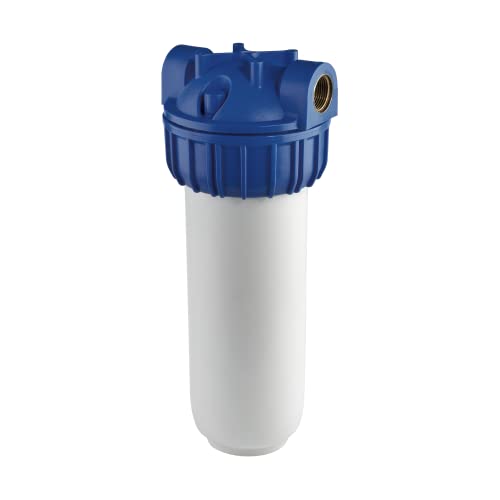
Rain Harvesting Triple Action Filtration System, 10" Slimline
- Appliance Protection: Protects appliances from sediment and stains
- Triple Action Filtration: Removes sediment, color, odor, and chlorine
- Durable Construction: UV-resistant, heavy-duty housing for longevity
As an affiliate, we earn on qualifying purchases.
As an affiliate, we earn on qualifying purchases.
Frequently Asked Questions
How Much Rainwater Can I Realistically Collect Annually?
The amount of rainwater you can realistically collect annually depends on rainfall variability and your collection system’s efficiency. You’ll need to take into account local weather patterns, as some years bring more rain than others. Your collection efficiency, influenced by factors like roof size and gutter condition, also impacts your yield. By optimizing these factors, you can maximize your rainwater harvest and guarantee a steady water supply for your greenhouse needs.
What Are the Best Storage Containers for Rainwater?
Did you know that over 80% of rainwater can be effectively stored with the right containers? For ideal rainwater quality, choose storage containers made from food-grade plastic, concrete, or metal. These materials resist contamination and prevent algae growth. Make certain your containers are sealed, opaque, and durable to keep the water clean and safe for your greenhouse plants. Proper storage ensures you maximize your rainwater harvesting system efficiently.
Is Rainwater Safe for All Types of Plants?
You might wonder if rainwater is safe for all your plants. Generally, it’s a good choice because it’s free of pesticides runoff and soil contamination often found in tap water. However, if rainwater collects pollutants from nearby surfaces or air pollution, it could harm sensitive plants. To guarantee safety, consider filtering or testing your rainwater regularly, especially if your plants are delicate or edible.
How Often Should I Clean My Rainwater Harvesting System?
Ever wondered how clean your rainwater harvesting system stays? You should inspect your system at least quarterly to catch any buildup or debris. Regular filter maintenance is essential—clean or replace filters as needed to prevent clogs and guarantee water purity. Don’t forget to check for leaks or damage during your inspections. Keeping a routine helps you maintain safe, fresh rainwater for your greenhouse, ensuring healthy plants and an efficient system.
Can I Use Rainwater Harvesting in Urban Areas?
Yes, you can definitely use rainwater harvesting in urban areas. Urban infrastructure often faces water scarcity issues, so collecting rainwater helps you conserve water and reduce reliance on municipal supplies. Installing a system in your city home or building allows you to capture rainwater efficiently, supporting water conservation efforts and making sustainable use of available resources, even in densely populated environments.
Conclusion
By collecting rainwater, you create a gentle, shimmering supply that nurtures your greenhouse’s lush growth. Each drop, sparkling like tiny jewels, flows effortlessly from your catchment system, feeding your plants with pure, natural hydration. This simple act transforms your space into a vibrant oasis, where the rhythm of rain becomes a soothing symphony of life. Embrace rainwater harvesting, and watch your greenhouse flourish under the tender touch of nature’s replenishing gift.