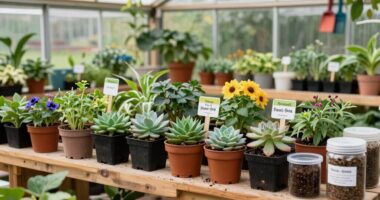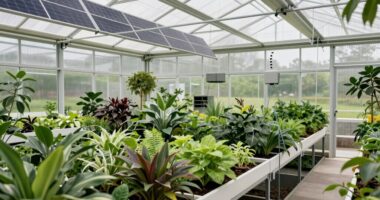
Sustainable greenhouses rely on better systems rather than perfection because ongoing improvements lead to lasting success. By focusing on small, consistent adjustments—like upgrading to solar power, improving water efficiency, or diversifying ecosystems—you can steadily reduce costs and minimize environmental impact. Perfection is unnecessary; progress matters more. Keep refining your practices, and you’ll find sustainable growth becomes more achievable over time. If you want to know how to keep evolving your greenhouse sustainably, this guide will show you more.

Get garden gear delivered free — and shop member deals
- Fast, free delivery on millions of items
- Access to Prime Big Deal Days deals on October 6–7
- Prime Video, Amazon Music and more included
Key Takeaways
- Continuous system improvements lead to long-term sustainability, rather than waiting for perfect solutions.
- Incremental upgrades, like solar and water efficiency, enhance resilience over time.
- Flexibility allows greenhouses to adapt to new technologies and environmental challenges.
- Emphasizing better systems encourages ongoing learning and ecological balance.
- Small, consistent adjustments prevent costly overhauls and support sustainable growth.
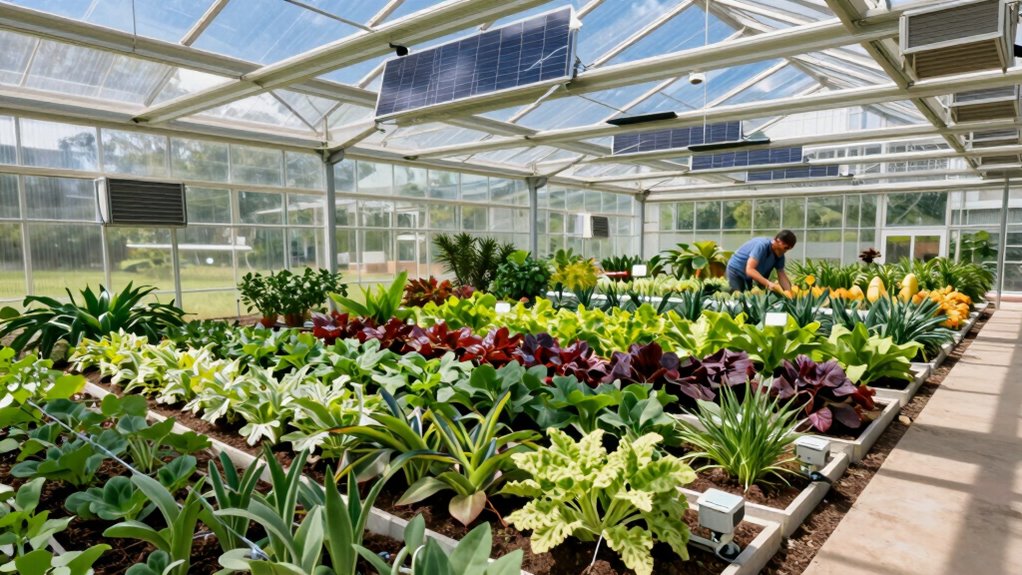
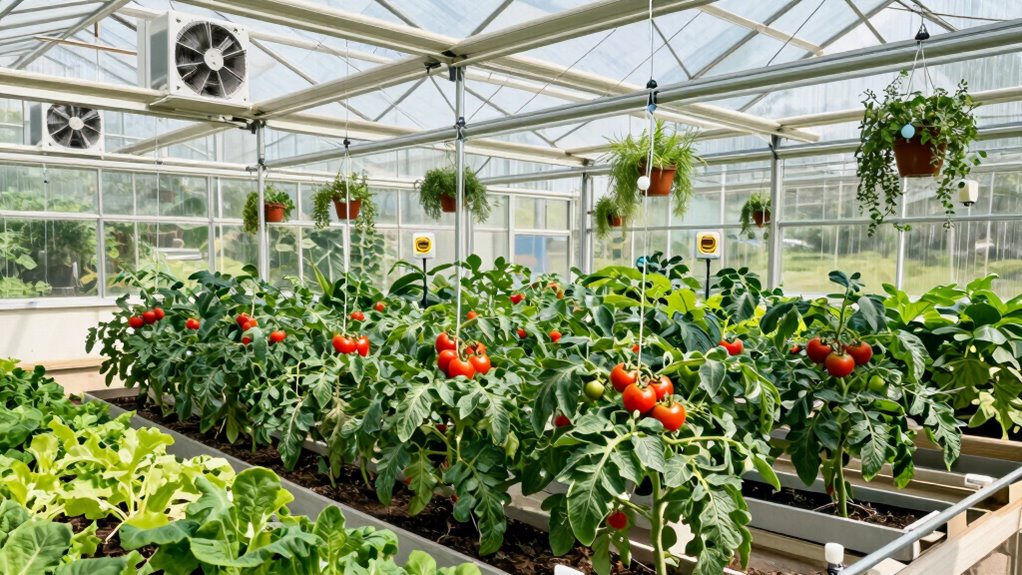
While the idea of creating a completely sustainable greenhouse might seem intimidating, the goal isn’t perfection but continuous improvement. You don’t need to overhaul every aspect of your setup overnight. Instead, focus on implementing better systems that progressively reduce your environmental impact. For example, integrating renewable energy sources, like solar panels, can power your greenhouse more sustainably. Solar energy not only cuts down on electricity costs but also decreases reliance on fossil fuels, which is essential for long-term sustainability. It’s about making smarter choices that contribute to your greenhouse’s efficiency over time, rather than chasing flawlessness from the start. Embracing biodiversity within your greenhouse can also enhance resilience and productivity, creating a more balanced ecosystem. Water conservation plays an important role in sustainable greenhouse design. You might find that capturing rainwater or recycling greywater helps greatly reduce your water footprint. Installing drip irrigation systems ensures that water goes directly to the plants’ roots, minimizing waste. Every effort counts, and small adjustments can lead to substantial savings in the long run. Additionally, implementing water management techniques can optimize resource use and support your sustainability goals. These systems not only conserve water but also create a more resilient environment for your plants. Incorporating energy-efficient appliances and lighting can further lower your greenhouse’s energy consumption. Your focus on better systems encourages a mindset of adaptability and learning. As you experiment with renewable energy and water-saving techniques, you’ll discover what works best for your specific climate and plant needs. For instance, understanding climate-specific challenges can help tailor your sustainability strategies effectively. Remember, sustainability isn’t a fixed endpoint; it’s a journey of continuous refinement. You can start with simple measures like shading screens to reduce cooling energy demand or installing rainwater collection barrels. Over time, you can upgrade to more sophisticated solutions like solar-powered ventilation or automated watering systems. Keeping sustainable practices in mind throughout your journey will help ensure steady progress rather than stagnation. The key is to keep evolving your practices rather than striving for an unattainable perfect system from the outset.
As an affiliate, we earn on qualifying purchases.
Frequently Asked Questions
How Do Sustainable Greenhouses Compare Cost-Wise to Traditional Ones?
Sustainable greenhouses often have higher upfront costs than traditional ones due to investments in renewable energy and water conservation systems. However, in the long run, you save money through reduced energy bills and water usage. These eco-friendly features make your greenhouse more efficient and sustainable, ultimately lowering operating costs and providing financial benefits over time. So, while initial expenses are higher, your ongoing savings make them worth the investment.
What Are the Most Common System Failures in Greenhouses?
Like Icarus flying too close to the sun, you might face system failures in your greenhouse that threaten its stability. Common issues include water management problems, leading to overwatering or drought stress, and pest control failures, which can devastate crops. Addressing these vulnerabilities requires continuous monitoring and adaptive systems, ensuring your greenhouse operates smoothly without the illusion of perfection. Focus on improvement, not flawlessness, to sustain success.
How Quickly Can Greenhouses Adapt to Climate Changes?
Greenhouses can adapt to climate changes quickly when you implement adaptive technology and prioritize climate resilience. By integrating smart sensors, automated ventilation, and climate control systems, you can respond swiftly to temperature shifts and weather variations. This proactive approach allows you to maintain ideal conditions, reduce stress on plants, and improve yields. With continuous system upgrades, your greenhouse becomes more flexible, ensuring better resilience against unpredictable climate changes.
Are There Specific Crops Best Suited for Sustainable Greenhouses?
You’ll find that leafy greens, herbs, and strawberries thrive in sustainable greenhouses. Notably, crop diversity enhances resilience, reducing pest issues without heavy chemicals. These crops adapt well to controlled environments, making pest management easier and more effective. By focusing on versatile, high-yield plants, you optimize space and resources, ensuring sustainable growth. Choosing the right crops helps you build a resilient, eco-friendly greenhouse that meets your nutritional needs efficiently.
What Training Is Needed to Operate Advanced Greenhouse Systems?
You need thorough staff training to operate advanced greenhouse systems effectively. Focus on automation integration, ensuring your team understands how to manage automated watering, climate control, and lighting systems. Hands-on training helps staff troubleshoot issues quickly and optimize system performance. Regular updates and refresher courses are essential to keep everyone skilled with evolving technology, making your greenhouse more efficient and sustainable while reducing reliance on manual labor.
Conclusion
Remember, a sustainable greenhouse isn’t a flawless glass dome but a living garden that adapts and grows. Like a steady heartbeat, it thrives on better systems—circulating life, energy, and hope—rather than perfection’s unyielding shine. Embrace the imperfect symphony of your greenhouse’s rhythm, knowing that each small improvement is a seed planted for a resilient future. With patience and care, you nurture not just plants, but a future rooted in sustainability’s enduring promise.
Fall yard work Picks
leaf blowers
As an affiliate, we earn on qualifying purchases.