To create a DIY upcycled greenhouse using salvaged materials, start by repurposing plastic bottles as transparent panels or walls, overlapping them for insulation and sunlight passage. Use wooden pallets to build sturdy frames, walls, or shelving, promoting good airflow. Combine these elements into a hybrid structure, reinforcing with scrap metal or nails for durability. Incorporate recycled roofing for better runoff and insulation. With clever reuse, you can design an eco-friendly greenhouse that’s functional and budget-friendly—discover more innovative ideas below.
Key Takeaways
- Use cut plastic bottles for lightweight, transparent panels that provide insulation and sunlight passage.
- Build sturdy frames with recycled wooden pallets for walls, shelving, or doors.
- Combine salvaged materials like scrap metal and old nails to reinforce and weatherproof the structure.
- Layer plastic bottles and pallets to create eco-friendly, cost-effective, and insulated greenhouse walls.
- Incorporate recycled roofing materials and simple access points to enhance durability and functionality.
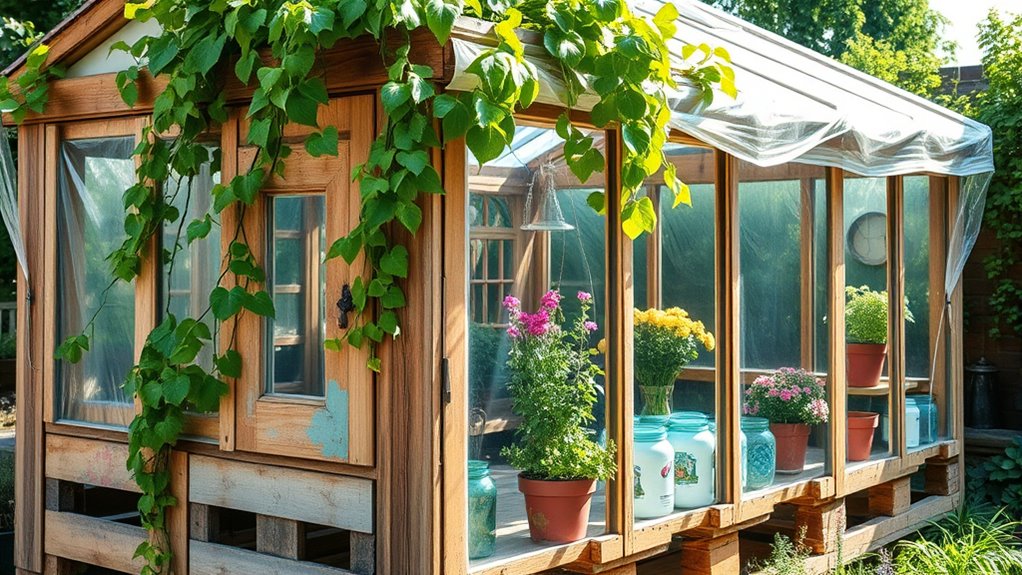
If you’re looking to extend your growing season without breaking the bank, creating an upcycled greenhouse is a smart and eco-friendly solution. You can turn everyday salvaged materials into a functional, cost-effective structure that protects your plants and reduces waste. Recycling plastic bottles is a popular way to build transparent panels or walls. Simply cut the bottoms off large plastic bottles and attach them in overlapping rows to form a greenhouse cover. This method allows sunlight to pass through while creating a barrier against wind and cold. It’s lightweight, easy to assemble, and makes excellent use of bottles you might otherwise toss away. Plus, the layered plastic provides insulation, helping your plants stay warm during chilly nights.
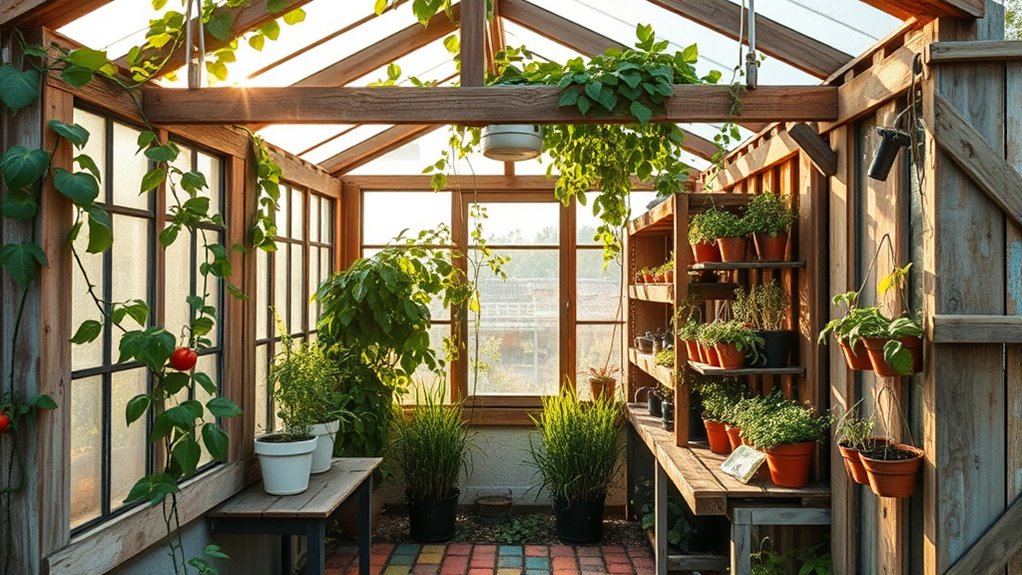
Repurposing wooden pallets is another fantastic approach to building a sturdy frame for your greenhouse. You can stack pallets to create walls or construct shelving units inside the structure. Pallets are durable, widely available, and often free from local warehouses, grocery stores, or online classifieds. By disassembling or reusing whole pallets, you save money and give new life to materials that would otherwise be discarded. Their slatted design allows for good airflow, and when arranged properly, they form a solid base for a small greenhouse or cold frame. You can also use pallets to make a simple door or window frames, adding aesthetic appeal while maintaining functionality.
Combining these salvaged elements makes your project even more sustainable. For example, frame your plastic bottle walls with a wooden pallet skeleton, creating a hybrid greenhouse that’s both transparent and robust. Keep in mind that proper sealing and reinforcement improve durability, so consider using scrap metal or old nails to secure everything tightly. You might also add a sloped roof made from repurposed materials like scrap metal or additional plastic bottles, ensuring rainwater runoff and better insulation. These upcycled ideas not only cut costs but also give you a sense of achievement, as you’re transforming waste into something valuable.
Frequently Asked Questions
What Are the Best Salvaged Materials for Greenhouse Framing?
You should use reclaimed wood and recycled metal for greenhouse framing because they’re durable and eco-friendly. Reclaimed wood offers strength and a rustic look, perfect for a sturdy frame, while recycled metal provides excellent support and weather resistance. Combining these materials makes your greenhouse both sustainable and resilient, ensuring it lasts through seasons. Plus, repurposing salvaged materials adds character and reduces waste, making your project environmentally responsible.
How to Ensure Proper Insulation With Upcycled Materials?
Think of your greenhouse like a cozy cabin; insulation is key. To make certain proper insulation with upcycled materials, focus on effective insulation techniques and careful material selection. Use salvaged bubble wrap, foam boards, or old blankets layered to trap heat. Seal gaps with weatherstripping or caulk, and insulate seams thoroughly. These steps help keep your greenhouse warm, maximizing your upcycled project’s efficiency and sustainability.
Are There Safety Concerns When Working With Reclaimed Glass?
Yes, there are safety concerns when working with reclaimed glass. You should always wear safety glasses to protect your eyes from shards, especially during handling and installation. Handle glass carefully to avoid cuts, and use gloves when necessary. Be cautious of sharp edges and broken pieces, and work on a stable surface. Properly disposing of or storing leftover glass also helps prevent accidents later.
How Can I Improve Ventilation in an Upcycled Greenhouse?
Did you know that proper ventilation can boost plant growth by up to 30%? To improve airflow in your upcycled greenhouse, consider adding adjustable vents or windows for natural ventilation. Installing small fans can also enhance air circulation, reducing humidity and preventing mold. Combining these ventilation options ensures fresh air reaches your plants, creating a healthier environment. Regularly opening and closing vents allows you to control airflow and optimize conditions effectively.
What Maintenance Is Required for Upcycled Greenhouse Structures?
You need to regularly inspect your upcycled greenhouse for structural integrity, checking for rust, loose fittings, or damage. Clean and maintain your greenhouse watering systems to prevent clogs and guarantee efficient irrigation. Incorporate sustainable pest control methods, like natural predators or organic repellents, to keep pests at bay. Additionally, clear ventilation openings to promote airflow, helping to regulate temperature and humidity, which reduces maintenance needs and supports plant health.
Conclusion
So, there you have it—your very own upcycled greenhouse, built from yesterday’s leftovers and tomorrow’s green dreams. Who knew that salvaged windows and old pallets could turn into a lush paradise? Now, sit back, sip that homemade tea, and marvel at your eco-chic masterpiece. Because nothing says “I care about the planet” like turning junk into jungle. Happy gardening—your recycled revolution is officially in full bloom!