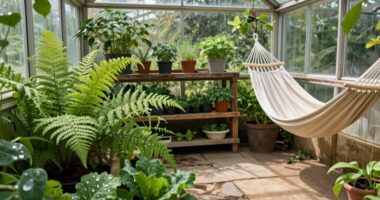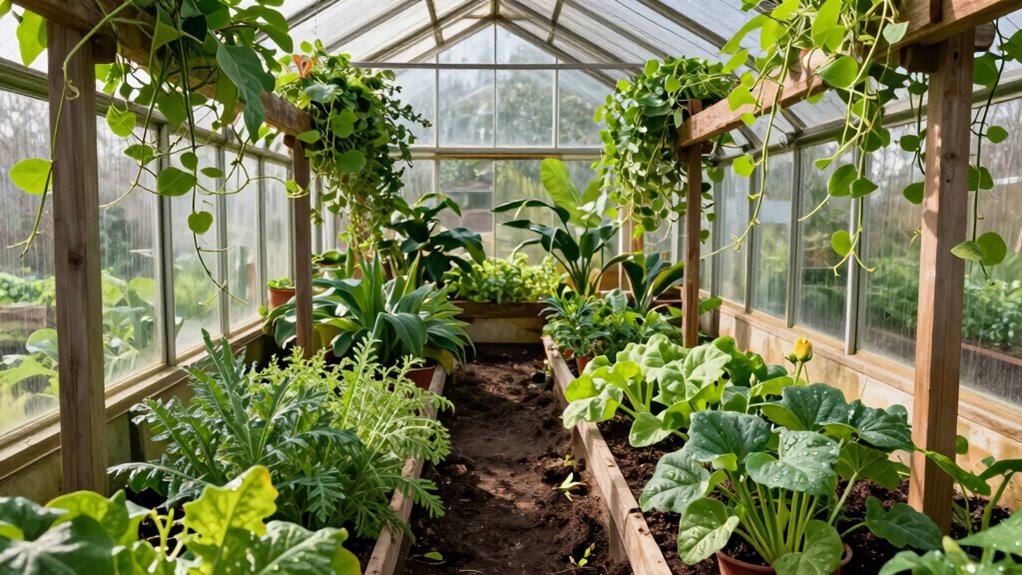

A greenhouse teaches you to maximize small spaces through vertical gardening, container planting, and rooftop setups, reducing reliance on store-bought produce. It shows how integrating solar panels and renewable energy can cut your carbon footprint. You’ll learn water-saving techniques like rainwater harvesting and composting, fostering a closed-loop system. Emphasizing biodiversity and healthy soil highlights the importance of natural resources. Keep exploring to discover how these simple changes can power a more sustainable, eco-friendly lifestyle.

Get garden gear delivered free with Prime
- Fast, free delivery on millions of items
- Prime Video, Amazon Music and more included
- Member-only deals all year
Key Takeaways
- Efficient space utilization through vertical gardens and container planting promotes sustainable urban food production.
- Incorporating renewable energy sources like solar panels reduces reliance on fossil fuels and lowers carbon footprints.
- Rainwater collection and composting exemplify resource conservation and closed-loop systems for eco-friendly living.
- Promoting plant diversity and healthy soil supports ecological balance and chemical-free gardening practices.
- Greenhouses serve as microcosms for sustainable habits, inspiring resourcefulness, innovation, and intentional living choices.

A greenhouse offers more than just a controlled environment for plants; it also provides valuable lessons in sustainable living. When you step into a greenhouse, you quickly realize how managing resources wisely can make a significant impact. One of the most important lessons you learn is the power of urban gardening. Even in small city spaces, a greenhouse demonstrates that you can grow fresh vegetables, herbs, and flowers without relying on large plots of land. It shows you that urban gardening isn’t just possible but practical, encouraging you to maximize limited space with vertical gardens, container planting, or rooftop setups. This approach reduces your dependency on store-bought produce, cuts down on food miles, and promotes local food systems, all integral to a sustainable lifestyle.
A greenhouse teaches urban gardening, resource management, and sustainable practices for eco-friendly living.
Inside the greenhouse, you also see firsthand how renewable energy can be harnessed to support sustainable practices. Many greenhouses incorporate solar panels or wind turbines to generate power, illustrating how renewable energy sources can reduce reliance on fossil fuels. You observe how natural sunlight heats the space, minimizing the need for electric or gas-powered heating systems, which are often significant energy drains. By designing a greenhouse that leverages natural light and renewable energy, you learn how to lower your carbon footprint. This knowledge encourages you to adopt similar strategies at home—installing solar panels or using passive solar heating techniques—making your daily life more eco-friendly.
Furthermore, a greenhouse teaches you about resource efficiency and closed-loop systems. Water management becomes a focal point, prompting you to collect rainwater or recycle greywater for irrigation. This sustainable approach reduces water waste and emphasizes the importance of conserving essential resources. Composting organic waste into nutrient-rich soil is another lesson, showing how waste can become a valuable input rather than a problem. These practices underline how small, deliberate changes in your routine can lead to significant environmental benefits. Additionally, the concept of renewable energy within a greenhouse demonstrates how harnessing natural resources can power sustainable systems effectively. Learning about water conservation techniques in a greenhouse environment can inspire you to implement similar methods in your daily routine, further enhancing your sustainability efforts. Embracing energy efficiency strategies can amplify your positive environmental impact and help create a more resilient lifestyle.
The greenhouse also exemplifies the importance of plant diversity and biodiversity in supporting ecological balance, which can be applied in your own garden or community efforts. It highlights the significance of soil health in maintaining productive and sustainable gardens, showing how healthy soil supports plant growth without excessive chemical inputs. Ultimately, the greenhouse functions as a microcosm of sustainable living. It demonstrates that with intentional planning, resourcefulness, and innovation, you can create a more eco-conscious lifestyle. Whether it’s through urban gardening to grow your own food or harnessing renewable energy to power your space, the lessons learned within a greenhouse are clear and actionable. They remind you that sustainability isn’t about perfection but about making smarter choices that benefit both the planet and your well-being. By embracing these lessons, you take meaningful steps toward a more resilient and environmentally responsible way of living.
vertical garden planters for small spaces
As an affiliate, we earn on qualifying purchases.
As an affiliate, we earn on qualifying purchases.
Frequently Asked Questions
How Do Greenhouses Reduce Overall Environmental Impact?
Greenhouses reduce your environmental impact by using eco-friendly materials that minimize waste and pollution. They often incorporate renewable energy sources like solar panels to power heating and lighting, decreasing reliance on fossil fuels. This efficient use of resources allows you to grow plants sustainably, conserve water, and lower carbon emissions. By adopting greenhouses, you contribute to a healthier planet while enjoying fresh, home-grown produce.
Can Greenhouse Practices Be Applied to Urban Living?
Yes, you can definitely apply greenhouse practices to urban living through urban integration and rooftop gardening. By utilizing rooftops for growing vegetables or herbs, you make efficient use of available space while reducing your carbon footprint. Incorporating greenhouse techniques like climate control and sustainable watering systems helps create a micro-ecosystem. These practices promote local food production, improve air quality, and foster a greener, more self-sufficient urban environment.
What Are Common Mistakes in Sustainable Greenhouse Management?
You might overlook soil management, but it’s essential—poor practices can reduce yields by 30%. Common mistakes include neglecting soil health and overusing chemical pest control, which harms beneficial insects. Instead, focus on natural pest control methods and enriching your soil with compost. Regular monitoring and adjusting your techniques will make your greenhouse more sustainable and productive, helping you avoid costly setbacks and supporting healthier plant growth.
How Cost-Effective Are Greenhouses for Sustainable Living?
Greenhouses can be quite cost-effective for sustainable living if you do a thorough cost analysis first. They help you save energy by trapping heat and reducing the need for artificial heating, leading to significant energy savings. While initial setup costs vary, long-term benefits like lower energy bills and fresh produce often outweigh expenses. Proper planning and maintenance make greenhouses a smart, eco-friendly investment for sustainable living.
What Are the Long-Term Benefits of Greenhouse Sustainability Lessons?
You might think sustainability lessons in a greenhouse are short-term, but they offer long-term benefits like improved crop rotation and pest control. These practices help maintain soil health and reduce chemical use, saving you money and protecting the environment over time. By applying these lessons, you build resilience against pests and soil depletion, ensuring a sustainable and productive future for your garden or farm.
Conclusion
Think of a greenhouse as a tiny world of its own, nurturing life with careful balance. By observing its lessons—like conserving water, recycling nutrients, and embracing patience—you harness a powerful blueprint for sustainable living. Just as a greenhouse creates a thriving environment against the odds, your small daily actions can cultivate a more sustainable future. Embrace these lessons, and watch your efforts bloom into lasting change—proof that even the smallest seed can grow into something extraordinary.
Columbus Day / Indigenous Peoples' Day Picks
long weekend sales
As an affiliate, we earn on qualifying purchases.