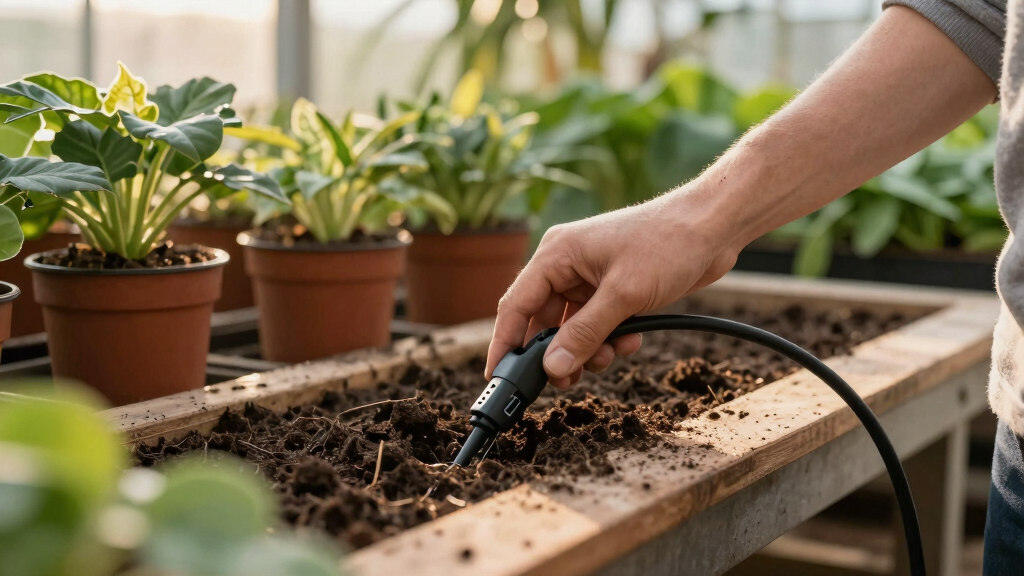

Finding the best soil heating cable for a greenhouse involves balancing performance, ease of installation, and durability. The top pick, the Soil Heating Cable for Greenhouse, offers versatile lengths and compatibility with popular thermostats, making it a reliable all-round choice. For those seeking affordability, the Soil Heating Cable with Thermostat provides straightforward operation at a lower price. Meanwhile, the 200W Electric Carbon Fiber Soil Heat Cable stands out for its advanced heating technology and precision control. The main tradeoffs in this category revolve around cable length, wattage, thermostat integration, and build quality. Keep reading for the full breakdown of these options and how they compare to meet different needs.

Get garden gear delivered free with Prime
- Fast, free delivery on millions of items
- Prime Video, Amazon Music and more included
- Member-only deals all year
Complete the kit


Key Takeaways
- Longer cable lengths, like 120m, are better for covering larger greenhouse beds but often come at a higher price and with more complex installation.
- Cables with built-in thermostats simplify setup and reduce compatibility issues, making them ideal for beginners.
- Higher wattage cables, such as 205W models, deliver faster and more uniform heating but consume more energy and may require dedicated circuits.
- Compatibility with standard greenhouse thermostats is crucial for maintaining consistent soil temperatures and avoiding overheating.
- Durability and build quality vary, with carbon fiber options typically offering longer lifespan and better heat distribution.


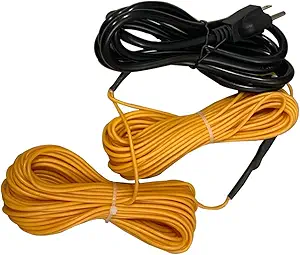


| soil heating cable for greenhouse | Length | Material | Voltage | Power |
|---|---|---|---|---|
| Soil Heating Cable for Greenho | — | — | — | — |
| Soil Heating Cable with Thermo | 50 ft | Carbon fiber and copper nickel-chromium alloy wire | 120 V | 200 W |
| 100 ft Soil Heating Cable for | 100 ft | Carbon fiber and copper nickel-chromium alloy wire | 120 V | 205 W |
| Soil Heating Cable 25 Ft Elect | 25 ft | Nickel alloy, glass fiber braid, silicone rubber | — | — |
| 98Ft Soil Heating Cable for Gr | 98 ft | Carbon fiber | 120 V | 200 W |
| Soil Heating Warming Cable 49f | 49 ft | — | 120V | — |
| 118 ft Thermostatic Soil Heati | 118 ft | High-quality rubber outer layer | — | — |
| 205W Soil Heating Cable with T | 50 ft (7.5 m) | Carbon fiber and copper nickel-chromium alloy wire | 120 V | 200 W |
More Details on Our Top Picks
Soil Heating Cable for Greenhouse – 30m, 50m, 100m, 120m – Compatible with KZX5000 Thermostat
This soil heating cable excels in flexibility with multiple length options, making it suitable for various greenhouse sizes and setups. Its compatibility with the KZX5000 Thermostat allows for precise temperature control, which is a clear advantage over simpler cables like the 25 ft Electric Soil Warming Cable. However, this product requires a compatible thermostat and some electrical knowledge to install properly, representing a tradeoff between control and ease of setup. Compared to the 100 ft cable, it offers more customization for different garden layouts, but the need for a separate thermostat may deter less experienced users. It’s best suited for growers who want customizable, scalable heating solutions that can adapt to different plant types and garden sizes.
Pros:- Multiple length options for tailored coverage
- Compatible with KZX5000 Thermostat for precise control
- Suitable for various plant types and garden configurations
Cons:- Requires compatible thermostat, adding to initial setup cost
- Installation may need electrical knowledge and careful wiring
Best for: Gardeners with existing thermostat setups or those comfortable with electrical work seeking flexible, scalable heating.
Not ideal for: Beginners or those wanting a plug-and-play solution without additional components, as installation can be complex.
- Lengths:30m, 50m, 100m, 120m
- Compatibility:KZX5000 Thermostat
- Wiring Density:80-120W/m²
Our verdict“This cable is ideal for experienced gardeners looking for a scalable, customizable greenhouse heating solution.”
Soil Heating Cable with Thermostat, 50ft Electric Soil Warming Cable for Garden and Greenhouse
This cable stands out for its dual thermostats and adjustable temperature up to 131°F, making it a strong choice for gardeners who want fine control over soil warmth. Its safety certifications and durable construction rival the 98 ft carbon fiber model, but with the advantage of adjustable temperature, it offers more precise microclimate management. The 50 ft length suits small to medium garden beds, yet it might be limited for large-scale setups where longer cables like the 100 ft option are preferable. Compared with the 25 ft cable, it provides more coverage and control, but the increased length may complicate installation in tight spaces. This product suits serious gardeners who prioritize temperature precision and safety in their soil heating system.
Pros:- Dual thermostats allow independent temperature adjustments
- Durable, weather-resistant build for outdoor use
- Energy-efficient with high conversion rate
Cons:- Requires careful placement to avoid cable overlap
- Limited to 200W power, less effective for very large areas
Best for: Gardeners seeking adjustable, safe, and durable soil warming in small to medium plots.
Not ideal for: Large-scale growers or those with limited space, since the 50 ft length may not cover extensive areas efficiently.
- Power:200 W
- Voltage:120 V
- Length:50 ft
- Temperature Range:0°C to 55°C (32°F to 131°F)
- Material:Carbon fiber and copper nickel-chromium alloy wire
- Safety Certifications:ETL-listed
Our verdict“Designed for gardeners who want precise, safe control over soil temperature in smaller spaces.”
100 ft Soil Heating Cable for Garden, 205W Cold Frame Plant Warming Cable
This 100 ft cable offers extensive coverage for larger gardens or multiple planting beds, making it a strong alternative to shorter cables like the 25 ft model. Its thermostat ensures automatic temperature regulation, which simplifies maintaining optimal soil warmth. While the length provides broad reach, it also means more complex installation, especially avoiding crossing or overlapping during burying, unlike the shorter cable that is easier to manage. It’s weather-resistant and designed for long-term outdoor use, but burying 3-4 inches deep might be challenging in rocky or compacted soils. This model makes sense for those with larger garden spaces who need reliable, uniform heat across extensive areas.
Pros:- Long length covers large areas efficiently
- Thermostat for automatic, consistent temperature control
- Weather-resistant and durable for outdoor use
Cons:- Installation can be complex due to length and need to avoid crossing cables
- Requires burying 3-4 inches deep, which may be difficult in certain soils
Best for: Large gardens, cold frames, or growers needing extensive coverage with automatic temperature control.
Not ideal for: Small garden plots or container gardeners, as the length and installation complexity may be unnecessary or cumbersome.
- Power:205 W
- Voltage:120 V
- Length:100 ft
- Temperature Control:131°F/55°C thermostat
- Material:Carbon fiber and copper nickel-chromium alloy wire
- Certifications:ETL-listed
Our verdict“Best suited for large-scale gardening where extensive, reliable soil heating is needed with minimal manual adjustments.”
Soil Heating Cable 25 Ft Electric Soil Warming Cable for Greenhouse and Garden
This 25 ft cable offers a straightforward solution for small or indoor gardening projects. Its built-in thermostat at 131°F helps maintain consistent soil temperatures, ideal for seed germination and small beds. Compared to longer cables like the 98 ft model, it’s easier to install in confined spaces and requires less burying or management. However, its limited length makes it less suitable for large beds or extensive garden areas. The waterproof, durable construction ensures longevity, but you’ll need to place it carefully on the soil surface or under a thin layer of soil, which may restrict placement options. This pick suits hobbyists or small-scale growers who value simplicity and quick setup.
Pros:- Compact size for small spaces
- Built-in thermostat for consistent temperature
- Waterproof and durable construction
Cons:- Limited to small areas, not suitable for large beds
- Requires covering with soil or surface placement that may limit flexibility
Best for: Indoor growers or small garden beds needing reliable, compact soil heating.
Not ideal for: Large planting areas or commercial growers who require extensive coverage beyond 25 ft.
- Length:25 ft
- Material:Nickel alloy, glass fiber braid, silicone rubber
- Temperature Control:Automatic thermostat at 131°F
- Application:Soil, raised beds, greenhouse, cold frame
Our verdict“Ideal for hobbyists or small-scale gardeners seeking an easy-to-install, reliable soil heating solution.”
98Ft Soil Heating Cable for Greenhouse, 200W Electric Carbon Fiber Soil Heat Cable with Thermostat
This 98 ft carbon fiber cable provides a balanced solution for greenhouse soil heating, offering ample coverage and efficient, even warmth. Its thermostat helps prevent overheating, making it safer and more energy-efficient than non-regulated cables like the shorter 50 ft option. The flexible length offers easier installation than the 100 ft model, especially in medium-sized greenhouses or beds. Its weather-resistant, durable design makes it well-suited for outdoor use, but burying 3-4 inches deep is necessary for optimal performance, which can be a challenge in rocky or compact soils. Compared with the 50 ft cable, it provides more coverage with less complexity, making it a good middle ground for growers needing reliable heat without excessive installation hassle.
Pros:- Efficient and even heating across large areas
- Automatic thermostat for safety and convenience
- Weather-resistant, durable for outdoor use
Cons:- Requires burying 3-4 inches deep, which can be labor-intensive
- Long length may be cumbersome in tight or small spaces
Best for: Greenhouse growers who want a dependable, evenly distributed soil heat source with automatic regulation.
Not ideal for: Small indoor planters or very tight spaces where extra length offers no benefit and complicates setup.
- Length:98 ft
- Power:200 W
- Voltage:120 V
- Temperature Control:Thermostat at 131°F/55°C
- Material:Carbon fiber
- Coverage:Suitable for soil, sand, planters, greenhouses
Our verdict“A solid choice for greenhouse growers seeking reliable, evenly distributed soil warmth with automatic regulation.”
Soil Heating Warming Cable 49ft for Plants with Built-in Thermostat for Indoor/Outdoor Gardening
This 49-foot cable stands out for its simplicity and ease of use in small or medium-sized garden beds, making it ideal for gardeners who want reliable, adjustable heat without complicated setup. Compared with the 118-foot Thermostatic Soil Heating Cable, this option offers less coverage but excels in straightforward installation and durability, especially outdoors. The built-in thermostat provides precise control over soil temperature, helping plants thrive in cold conditions. Its waterproof design and flexible length make it easier to install around various plant arrangements, but it’s limited to a 12 sq ft area, so larger gardens or multiple beds will find it insufficient. Overlapping or cutting the cable is not advised, which restricts customization. This product is best suited for hobbyist gardeners with small to medium plots seeking a hassle-free heating solution.
Pros:- Provides consistent and adjustable heat for plant growth
- Durable, moisture-resistant construction suitable for outdoor use
- Flexible length for easy installation in various setups
Cons:- Limited to a 12 sq ft heating area, unsuitable for larger beds
- Cables should not be overlapped or cut, reducing customization options
Best for: Small-scale gardeners or hobbyists seeking a straightforward, reliable soil warming solution for limited garden spaces.
Not ideal for: Large commercial growers or those needing extensive coverage, as the 12 sq ft limit restricts scale.
- Length:49 ft
- Voltage:120V
- Coverage Area:up to 12 sq ft
- Thermostat:Built-in
- Waterproof:Yes
- Application:Indoor and outdoor gardening
Our verdict“This cable is ideal for small gardens or container setups where simplicity and durability are valued over extensive coverage.”
118 ft Thermostatic Soil Heating Cable for Gardening
This 118-foot cable offers impressive length and automatic thermostatic regulation, making it a strong choice for gardeners who need consistent soil temperatures over larger areas. Compared to the 49-foot Soil Heating Warming Cable, it provides nearly double the coverage, which is better suited for greenhouses, seedbeds, or multiple planting zones. Its thermostatic feature ensures the soil stays within the optimal range, reducing manual adjustments and improving plant growth outcomes. The rubber outer layer offers flexibility and durability, but careful laying is necessary to prevent overlaps or tangles, which could impair performance. Customer ratings are moderate, reflecting some variability in results. This cable is best for growers who prioritize automatic temperature regulation and are comfortable with more involved installation.
Pros:- Automatic thermostatic control maintains consistent soil temperature
- Long length allows coverage of large garden areas
- Durable rubber construction for outdoor use
Cons:- Requires careful laying to avoid overlaps or tangles during installation
- Moderate customer satisfaction suggests some users experience inconsistent results
Best for: Greenhouse operators and serious gardeners needing reliable, large-area soil heating with minimal manual control.
Not ideal for: Casual gardeners or those with small beds, as the length and complexity may be unnecessary and more cumbersome.
- Length:118 ft
- Temperature Control:Thermostatic, 131°F limit
- Material:High-quality rubber outer layer
- Application:Soil heating for gardening, greenhouses, seedbeds
- Power Supply:Connected via ground stake
Our verdict“This cable is best suited for those requiring large-scale, temperature-controlled soil warming in greenhouses or extensive garden beds.”
205W Soil Heating Cable with Thermostat, 50Ft Electric Soil Warming Cable for Greenhouse and Plant Growth
This 50-foot, high-power cable provides quick, efficient soil warming, making it ideal for greenhouses and cold regions where rapid soil temperature rise is needed. Compared with the 118-foot Thermostatic Soil Heating Cable, it delivers more power (200 W) in a shorter length, which can be advantageous for small to medium-sized beds requiring faster heating. Its thermostat is set at 131°F, ensuring consistent soil temperatures critical for seed germination and early plant growth. The durable carbon fiber and copper alloy wires, along with ETL certification, enhance safety and longevity. However, careful installation to prevent overlapping or knotting is essential, and burying the cable at least 3-4 inches deep is recommended for optimal performance. This option suits gardeners seeking a reliable, energy-efficient heating element with rapid response times.
Pros:- Energy-efficient with high heating conversion efficiency
- Durable and weather-resistant construction
- Easy to install and operate with thermostat control
Cons:- Must avoid overlapping or knotting during installation
- Limited to burying 3-4 inches deep for optimal operation
Best for: Serious gardeners or greenhouse operators needing quick, efficient soil warming in cold climates or for seed germination.
Not ideal for: Casual hobbyists or those with very small beds, as the higher power and installation depth requirements may be unnecessary or cumbersome.
- Power:200 W
- Voltage:120 V
- Length:50 ft (7.5 m)
- Thermostat:131°F / 55°C
- Material:Carbon fiber and copper nickel-chromium alloy wire
- Insulation:FEP
- Safety Certifications:ETL-listed
Our verdict“This cable works best for growers needing fast, reliable soil warming in greenhouses or cold environments, with an emphasis on energy efficiency.”

How We Picked
In selecting these soil heating cables, I prioritized key factors that influence real-world use: heating performance, ease of installation, thermostat compatibility, build quality, and value for money. Cables had to be suitable for greenhouse environments—resistant to moisture and temperature fluctuations—while offering options for different greenhouse sizes and budgets. I compared specifications, customer feedback, and overall design to identify which products stand out for specific needs. The ranking reflects a balance between performance, user-friendliness, and durability, helping buyers find a cable that matches their setup and expectations.| soil heating cable for greenhouse | Material |
|---|---|
| Soil Heating Cable for Greenho | — |
| Soil Heating Cable with Thermo | Carbon fiber and copper nickel-chromium alloy wire |
| 100 ft Soil Heating Cable for | Carbon fiber and copper nickel-chromium alloy wire |
| Soil Heating Cable 25 Ft Elect | Nickel alloy, glass fiber braid, silicone rubber |
| 98Ft Soil Heating Cable for Gr | Carbon fiber |
| Soil Heating Warming Cable 49f | — |
| 118 ft Thermostatic Soil Heati | High-quality rubber outer layer |
| 205W Soil Heating Cable with T | Carbon fiber and copper nickel-chromium alloy wire |
Factors to Consider When Choosing Best Soil Heating Cable For Greenhouse
Choosing the best soil heating cable for a greenhouse requires understanding several core factors that impact both functionality and long-term satisfaction. Beyond initial price, consider how well the cable’s specifications match your specific greenhouse size and plant requirements. Proper installation and control options can prevent common issues like uneven heating or overheating, saving time and money later. The following factors highlight what to keep in mind for making an informed, lasting investment.Cable Length and Wattage
Deciding on the cable length and wattage is essential because it directly impacts coverage and heating speed. Longer cables are better for large beds but may be more cumbersome to install and manage. Higher wattage cables tend to heat faster and more evenly but also draw more power, so ensure your electrical setup can handle the load. Matching wattage to your greenhouse size helps avoid energy waste and ensures consistent soil temperature. Overestimating needs can lead to unnecessary costs, while underestimating can result in uneven heating or cold spots.
Thermostat Compatibility and Control
A good soil heating cable should integrate smoothly with your existing thermostat or come with a built-in control. Thermostat compatibility allows precise temperature regulation, preventing overheating and conserving energy. Cables with integrated thermostats are often easier to install, especially for beginners, but may limit flexibility if you want to upgrade controls later. External thermostats offer more customization but require more wiring and setup effort. Consider how you plan to monitor and adjust soil temperature over time for better plant health and energy efficiency.
Durability and Weather Resistance
Greenhouse environments demand cables that can withstand moisture, UV exposure, and temperature fluctuations. Look for cables with high-quality insulation and moisture resistance—often rated IP65 or higher. Carbon fiber heating elements tend to last longer and distribute heat more evenly, which is ideal for sustained use. Cheaper or poorly insulated cables may degrade quickly, leading to failures and costly replacements. Investing in durable construction ensures your setup remains reliable season after season.
Ease of Installation and Maintenance
Ease of installation varies significantly across products. Cables that are flexible and come with clear instructions or mounting accessories save time and reduce frustration. Features like built-in thermostats eliminate additional wiring, making setup more straightforward. Maintenance considerations include how easy it is to inspect or replace sections of the cable if needed. Avoid overly complicated systems if you prefer a simple, low-maintenance solution, especially if your setup involves frequent adjustments or seasonal setup changes.
Value and Price Considerations
While higher-priced cables often offer better durability, faster heating, and easier control, it’s important to consider your specific needs. A basic model might suffice for small or temporary setups, but larger or professional greenhouses benefit from investing in higher-quality, feature-rich options. Beware of extremely cheap cables that may lack durability or proper safety features. Balancing initial cost with long-term performance and reliability helps ensure you get the best return on your investment.
Frequently Asked Questions
Can I install a soil heating cable myself, or should I hire a professional?
Many soil heating cables are designed for DIY installation, especially those with built-in thermostats and flexible wiring. If you follow the manufacturer’s instructions carefully, installing yourself is often straightforward and cost-effective. However, if your greenhouse has complex electrical wiring or you’re unsure about the electrical load, consulting a professional can prevent safety issues and ensure code compliance. Proper installation is key to achieving optimal performance and longevity from your heating system.
Will a soil heating cable increase my energy bill significantly?
Using a soil heating cable does consume additional energy, but the impact depends on the cable’s wattage, your greenhouse size, and how efficiently you operate the system. Setting a thermostat to maintain the desired soil temperature minimizes unnecessary power use. Investing in a high-quality, well-insulated cable with an accurate thermostat can actually reduce overall energy costs by preventing overheating and ensuring the heat goes directly into the soil. Proper scheduling and temperature control are crucial for balancing plant health and energy expenses.
What safety features should I look for in a soil heating cable?
Safety features like ground fault circuit interrupters (GFCIs), insulation rated for outdoor use, and overheat protection are essential. A cable with a robust outer jacket that resists moisture and physical damage minimizes the risk of electrical shorts or failures. Built-in thermostats that shut off the power when the target temperature is reached add an extra layer of safety. Always verify that the product complies with local electrical safety standards before installation.
Can I use a soil heating cable for different plant types or seasons?
Yes, but you should adjust the thermostat settings based on the specific plant needs and season. Cooler temps are suitable for most vegetables and flowers during colder months, while some plants may require higher soil temperatures for optimal growth. A cable with an accurate and adjustable thermostat provides flexibility to change settings as your plants grow or seasons shift. Avoid leaving the system on continuously at high settings, which could overheat the soil or stress certain plants.
How long do soil heating cables typically last?
High-quality soil heating cables, especially those with carbon fiber elements, often last for many seasons—sometimes over 10 years—if properly maintained. Cheaper options may degrade more quickly due to poor insulation or lower-quality materials. Regular inspection for damage or wear, along with correct installation, helps prolong their lifespan. Investing in a durable, well-made cable can save money over time by reducing the need for replacements and ensuring consistent performance.
Conclusion
For most hobbyist greenhouses and gardeners, the Soil Heating Cable with Thermostat offers a balance of ease of use, affordability, and reliable control, making it a great starting point. If you seek the best overall performance with long-term durability, the 200W Electric Carbon Fiber Soil Heat Cable stands out. Those with larger or more complex setups will benefit from longer, higher wattage cables like the 120m options, especially when paired with a compatible thermostat. Budget-conscious buyers should prioritize basic models with built-in thermostats, while professional growers may prefer premium, weather-resistant cables with advanced features. Evaluating your greenhouse size, plant needs, and budget will help you select the ideal soil heating cable for 2026.
As an affiliate, we earn on qualifying purchases.Fall yard work Picks
leaf blowers