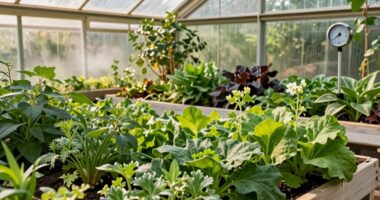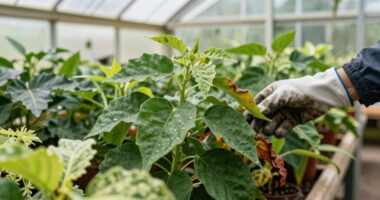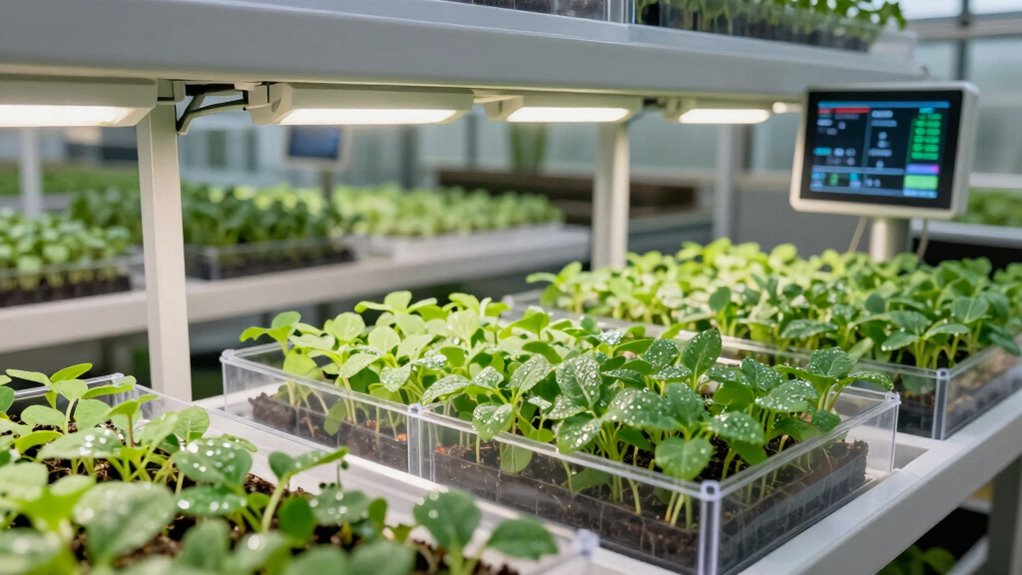

The “Micro-Zone” method helps you manage your greenhouse more efficiently by dividing it into small, tailored sections. You focus on enriching soil, controlling pests naturally, and optimizing conditions for each zone, which reduces resource use and chemical inputs. This approach promotes healthier plants and a more sustainable environment. By managing zones individually, you create a balanced ecosystem that’s resilient and eco-friendly. Keep exploring to discover how this method can transform your greenhouse practices.
Key Takeaways
- Divides greenhouses into small zones tailored to specific plant and soil needs for targeted management.
- Enables precise soil enrichment using organic amendments within individual micro-zones.
- Facilitates localized pest control, reducing chemical use and preventing pest spread.
- Promotes environmental sustainability by minimizing chemical inputs and supporting soil biodiversity.
- Enhances overall efficiency and resilience of greenhouse operations through targeted interventions.
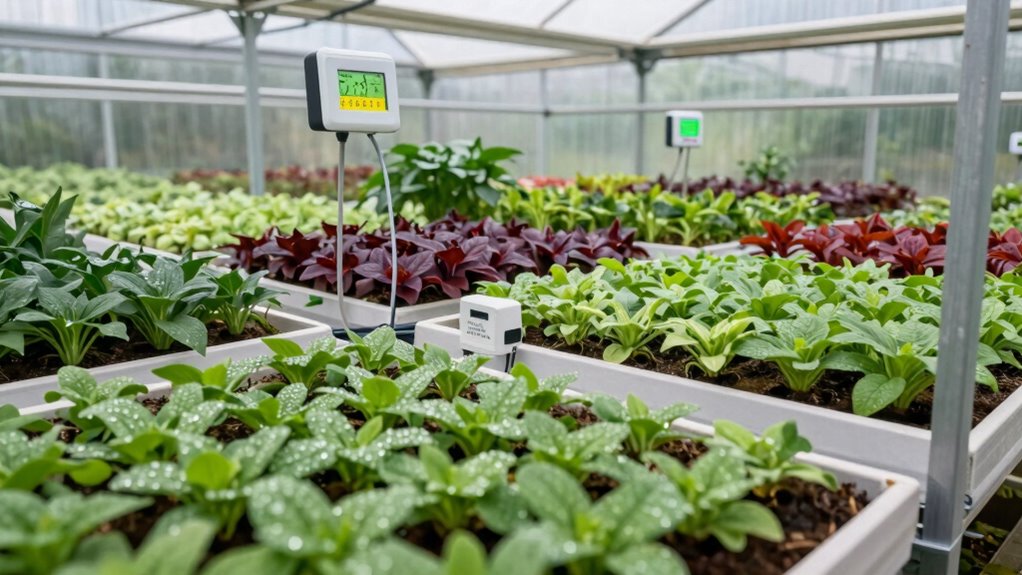
Have you ever wondered how to make your greenhouse more sustainable and eco-friendly? The “Micro-Zone” method offers a smart way to enhance your growing system while reducing your environmental impact. This approach involves dividing your greenhouse into small, manageable sections or zones, each designed to optimize specific plant needs and minimize resource use. One of the core benefits of this method is soil enrichment. Instead of treating your entire greenhouse uniformly, you focus on enriching the soil within each micro-zone individually. You can do this by adding organic compost, natural fertilizers, or cover crops tailored to the specific plants in that area. This targeted soil enrichment boosts nutrient levels precisely where they’re needed, improving plant growth and health without excessive chemical inputs. Plus, it promotes soil biodiversity, which naturally supports pest control by encouraging beneficial insects and microorganisms. Implementing biodiversity-enhancing practices within each zone can further strengthen this natural pest suppression.
Speaking of pest control, the micro-zone approach helps you manage pests more effectively and sustainably. Instead of blanket spraying pesticides across the entire greenhouse, you can monitor and treat pests only within affected zones. This localized treatment minimizes chemical use, which is better for your plants, beneficial insects, and the environment. You might introduce natural predators like ladybugs or use organic deterrents exclusively in the zones where pests appear. Over time, you’ll develop a balanced ecosystem that naturally suppresses pest populations, reducing the need for chemical interventions. The micro-zone design also encourages you to keep a close eye on each section, making it easier to catch pest issues early before they spread. Additionally, this method supports environmentally conscious growing practices by reducing waste and pollution associated with conventional pest management techniques. Incorporating soil health considerations is also essential, as healthy soil naturally enhances plant resilience and reduces dependency on external inputs. By carefully managing each zone, you can also better assess and adapt to changing environmental conditions, leading to more sustainable and resilient greenhouse operations.

Farmer’s Secret Soil Revitalizer – Organic (OMRI Listed) Dirt Health Booster – Liquid Compost Soil Amendment – Activated Humic Acid (32oz)
- Soil microbial stimulation: Boosts microbial activity in soil
- Monthly application recommended: Apply monthly during growing season
- Organic, chemical-free formula: Contains OMRI-listed activated humic acids
As an affiliate, we earn on qualifying purchases.
As an affiliate, we earn on qualifying purchases.
Frequently Asked Questions
How Does the Micro-Zone Method Impact Overall Greenhouse Energy Consumption?
The micro-zone method boosts your greenhouse’s energy efficiency by tailoring conditions to specific plant needs, reducing unnecessary energy use. You optimize resources by focusing heating, cooling, and lighting on smaller areas, preventing waste. This targeted approach minimizes overall energy consumption, saving costs and reducing your environmental impact. By customizing zones, you guarantee each section gets precisely what it needs, making your greenhouse operation more sustainable and efficient.
Can the Micro-Zone Technique Be Adapted for Different Crop Types?
Yes, you can adapt the micro-zone technique for different crop varieties by customizing zones according to each plant’s needs. Think of it as tailoring a suit—each crop benefits from specific zone conditions, like temperature or humidity. Zone customization allows you to optimize growth for diverse crops, whether leafy greens or fruiting plants. This flexibility makes the micro-zone method highly versatile, ensuring better yields regardless of the crop type.
What Are the Initial Costs to Implement Micro-Zoning in a Greenhouse?
The initial costs to implement micro-zoning in your greenhouse mainly involve a detailed cost analysis and equipment investment. You’ll need to budget for zoning-specific sensors, climate control systems, and automation tools, which can range from a few thousand to tens of thousands of dollars depending on your greenhouse size. While the upfront expenses might seem high, these investments can lead to more efficient resource use and higher yields over time.
How Does Micro-Zoning Influence Pest and Disease Management?
Micro-zoning enhances pest control and disease prevention by isolating vulnerable plant sections, reducing the spread of issues. You can target specific zones with tailored treatments, making pest control more effective and minimizing chemical use. This approach allows you to monitor each zone closely, catching pests and diseases early. As a result, your greenhouse benefits from healthier plants, fewer outbreaks, and more efficient management overall.
Are There Any Long-Term Maintenance Challenges With Micro-Zone Systems?
Long-term maintenance challenges with micro-zone systems mainly involve maintaining soil health and water efficiency. Over time, soil can become depleted or imbalanced, requiring regular amendments to sustain plant growth. Additionally, water delivery systems may clog or malfunction, reducing efficiency. You need to monitor and adjust these elements consistently to prevent issues, ensuring the system remains productive and sustainable in the long run. Proper upkeep keeps your micro-zones thriving.
Conclusion
Embracing the micro-zone method transforms your greenhouse into a thriving symphony of life, each zone a carefully tuned instrument. With this approach, you’re not just growing plants—you’re crafting a lush, vibrant masterpiece that dances with health and energy. Think of it as planting seeds of innovation, where every corner blooms brighter and stronger. So, take the reins, design your micro-zones, and watch your greenhouse flourish like never before—an oasis crafted by your own green thumb magic.