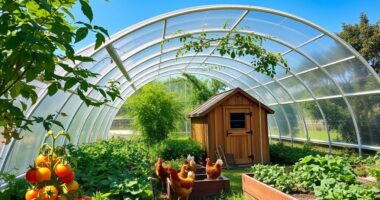
To save water naturally in your greenhouse, adopt smart habits like using efficient irrigation methods such as drip or soaker hoses to deliver water directly to plant roots. Collect rainwater in barrels or tanks to reduce reliance on municipal supplies. Regularly inspect and maintain your watering systems to prevent leaks, and use moisture sensors to avoid overwatering. These practices help you conserve water effectively; keep exploring to discover even more sustainable ways to grow plants efficiently.
Key Takeaways
- Implement hydroponic systems to deliver nutrients directly to roots, reducing water waste and promoting efficient reuse.
- Collect and store rainwater for greenhouse irrigation, minimizing reliance on municipal water sources.
- Use efficient watering methods like drip irrigation and monitor water usage with smart sensors.
- Schedule watering during cooler periods to minimize evaporation and conserve water.
- Regularly inspect and maintain irrigation systems to prevent leaks and ensure optimal water use.
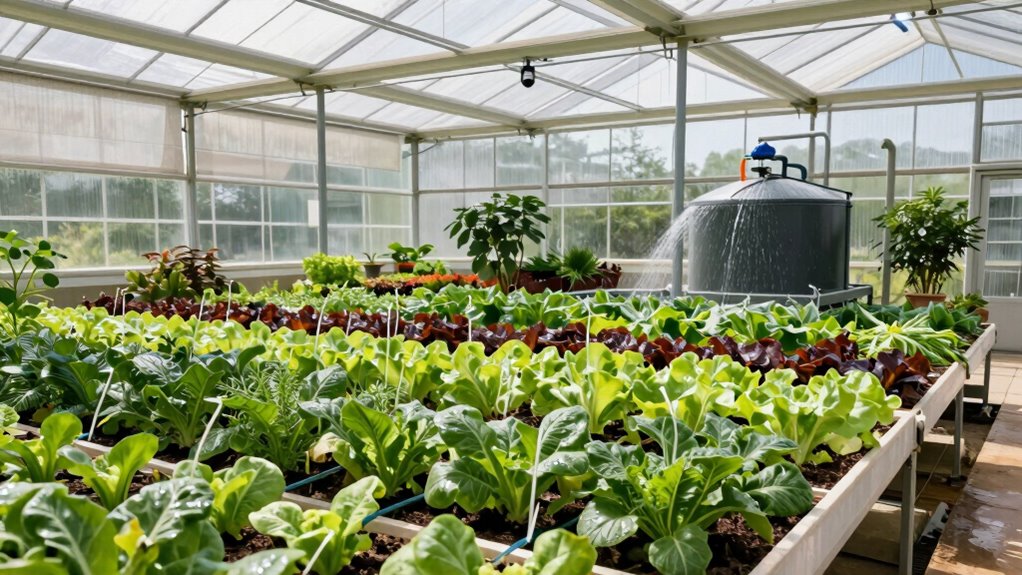
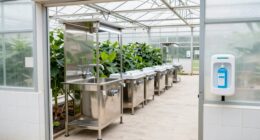
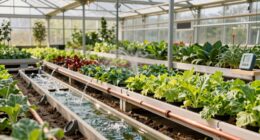
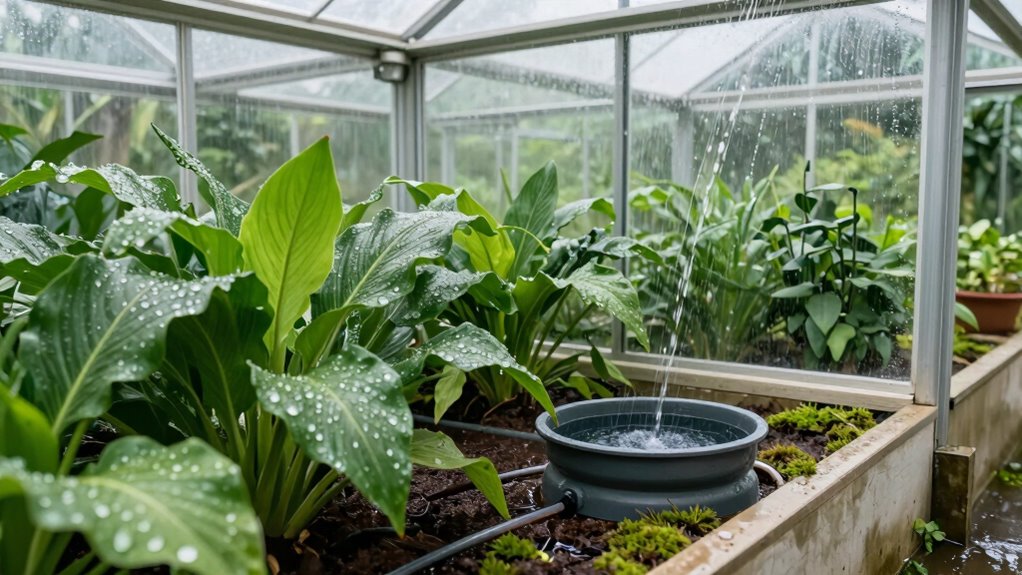
Water conservation is crucial for maintaining a healthy greenhouse environment, especially as water resources become increasingly limited. To achieve this, adopting smart watering habits can make a significant difference. One effective method is utilizing hydroponic techniques, which deliver nutrients directly to plant roots through a water-based solution, drastically reducing water waste compared to traditional soil gardening. Hydroponics allows you to recycle water within the system, minimizing runoff and evaporation. By carefully monitoring and adjusting nutrient solutions, you preserve water while ensuring your plants get what they need to thrive. This method also promotes faster growth and higher yields, making it a sustainable choice for water-conscious growers. Additionally, integrating water-saving innovations such as smart sensors can help optimize water usage further. Another essential habit is rainwater harvesting, which lets you collect and store rainwater for later use. Installing rain barrels or larger storage tanks at strategic points around your greenhouse lets you tap into free, natural water sources during rainfall. This not only reduces your reliance on municipal water supplies but also helps you avoid water quality issues associated with tap water, such as chlorine or fluoride that can harm plants. When using harvested rainwater, you guarantee your plants receive naturally soft and chemical-free water, promoting healthier growth and reducing your overall water consumption.
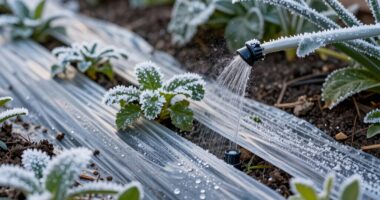
Furthermore, understanding the importance of water management techniques can enhance your conservation efforts and ensure your greenhouse remains sustainable. Regularly inspecting your irrigation system for leaks or blockages ensures you’re not wasting water unknowingly. Incorporating efficient watering methods like drip irrigation or soaker hoses delivers water directly to the roots, which prevents unnecessary evaporation and runoff. Using advanced water monitoring tools can further help track and control your water usage more precisely. Watering during cooler parts of the day, like early morning or late evening, also helps minimize water loss due to heat. Additionally, staying informed about water conservation practices can help you adapt to changing environmental conditions and maximize resource efficiency. Remember, overwatering is as wasteful as underwatering; learning to gauge your plants’ needs is key.

Thiswing 360° Adjustable Drip Irrigation System with 16 Nozzles
- Large Diameter Tubing: 5/16-inch for increased water flow
- Complete Irrigation Kit: Includes tubing, nozzles, connectors, and accessories
- 360° Adjustable Nozzles: Detachable, washable copper nozzles with flexible angles
As an affiliate, we earn on qualifying purchases.
As an affiliate, we earn on qualifying purchases.
Frequently Asked Questions
How Can I Reduce Evaporation in a Greenhouse?
To reduce evaporation in your greenhouse, focus on humidity management by maintaining ideal humidity levels; too low causes rapid evaporation, while too high can lead to mold. Use soil moisture monitoring tools to keep the soil consistently moist without overwatering. Additionally, consider shading or covering the soil with mulch to retain moisture. These steps help you conserve water, improve plant health, and create a more efficient greenhouse environment.
What Plants Require the Least Water in a Greenhouse?
Think of drought-resistant plants as your green superheroes, needing less water to thrive. You’ll want to focus on water-efficient species like succulents, sedums, and certain herbs. These plants are naturally adapted to conserve moisture, making them perfect for a greenhouse aiming to reduce water use. By choosing these hardy, low-maintenance varieties, you guarantee your greenhouse stays lush while using minimal water, saving resources effortlessly.
Are There Eco-Friendly Watering Systems Suitable for Greenhouses?
Yes, you can definitely use eco-friendly watering systems like drip irrigation and rainwater harvesting in your greenhouse. Drip irrigation delivers water directly to plant roots, reducing waste and evaporation. Rainwater harvesting captures natural rain, providing a sustainable water source. Combining these methods guarantees efficient watering, conserves water, and supports eco-conscious gardening practices. With these systems, you’ll minimize water use while maintaining healthy, thriving plants in your greenhouse.
How Often Should I Check for Leaks in Greenhouse Plumbing?
You should check for leaks in your greenhouse plumbing weekly to prevent water waste; even tiny drips can waste up to 10 gallons daily. Regular leak detection and plumbing maintenance help catch issues early, saving water and reducing costs. Make it a routine to inspect hoses, joints, and valves thoroughly. Staying vigilant guarantees your watering system stays efficient, and your plants get the right amount of water without unnecessary loss.
Can Composting Help Conserve Water in Greenhouse Gardening?
Yes, composting can help conserve water in your greenhouse gardening. By enriching your soil with compost benefits, you improve its ability to retain moisture and maintain ideal soil moisture levels. This reduces the need for frequent watering and helps plants stay hydrated longer. Plus, composting creates a healthier growing environment, leading to stronger plants that require less water overall. It’s a simple, eco-friendly way to make your greenhouse more sustainable.
Conclusion
By adopting smart greenhouse habits, you can substantially cut down water usage and make a real difference. Did you know that efficient watering techniques can save up to 50% of water compared to traditional methods? Every small change you make, like using drip irrigation or collecting rainwater, adds up over time. So, take action today—your plants, wallet, and the planet will thank you for it. Together, we can create more sustainable greenhouses for the future.