
Focusing on seasonal shifts helps you notice subtle shifts in nature that signals larger environmental changes. These moments challenge your emotional resilience and reveal how climate disruptions affect daily life and mood. By paying attention to how seasons change, you can better understand your own responses and build adaptability. These fleeting signals connect your inner world with the planet’s health. Stay curious—there’s more to discover about how these transitions impact us all.
Key Takeaways
- Transitional moments reveal subtle environmental signals that highlight climate change impacts beyond traditional seasonal patterns.
- Emotions and personal responses during transitions provide deeper insights into ecological and mental well-being.
- These periods serve as opportunities for reflection, adaptation, and resilience amidst unpredictable climate shifts.
- Seasonal transitions act as pulse points, emphasizing the interconnectedness of environmental changes and inner emotional states.
- Recognizing subtle cues during transitions enhances awareness of ongoing climate disruptions and personal growth.
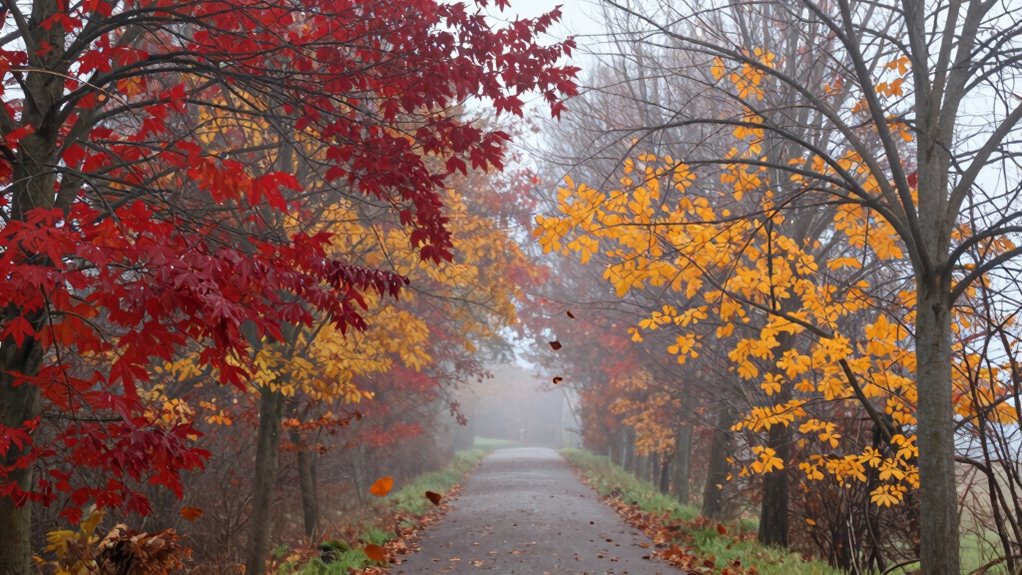
Have you ever noticed how the true change isn’t just in the weather, but in the way you feel and adapt during those brief, often overlooked moments? That’s the magic of seasonal transitions. While many focus on the predictable shift from summer to fall or winter to spring, what truly matters is how these moments influence your emotional landscape and highlight broader issues like climate change. The transition periods are when nature’s signals are most vivid, prompting you to recalibrate physically and emotionally. During these times, you might feel a surge of nostalgia, excitement, or even unease—emotions that are often more telling than the weather itself. Recognizing these subtle cues can deepen your understanding of climate change effects and your personal resilience. Climate change has amplified the importance of these transitional periods. You may notice that the seasons don’t follow their usual patterns anymore. Springs arrive earlier, autumns linger longer, and harsh winters or unseasonal heatwaves become more common. These disruptions aren’t just inconvenient; they serve as a stark reminder of a changing climate and how it impacts every facet of your life. As the environment shifts, so do your emotional responses. You might feel anxious about unpredictable weather or frustrated with the loss of familiar seasonal cues. These emotional shifts are natural reactions to a world in flux, revealing how deeply connected you are to the natural rhythms around you. Understanding climate variability can help you better interpret these changes and foster a sense of adaptability.
Moreover, being aware of these fluctuations can encourage a mindful approach to how you respond emotionally and physically to environmental changes, fostering greater resilience in uncertain times.
The transitional phases also serve as opportunities for reflection and adaptation. As you observe the changing landscape—leaves falling earlier than expected or flowers blooming out of season—you start to notice how your own mood and routines are affected. You might find yourself more introspective, questioning the stability of your environment and, by extension, your life. These moments encourage you to develop resilience, to accept change, and to recognize that seasonality isn’t just a matter of temperature or date on the calendar, but a reflection of larger, global shifts.
In essence, the significance of seasonal transitions lies in their ability to reveal the interconnectedness of climate change and emotional shifts. They remind you that change is constant, often subtle, but always impactful. When you pay attention to how you feel during these brief periods, you gain insight into both your inner world and the health of the planet. It’s in these fleeting moments of transition that you truly understand why they matter more than the seasons themselves—they’re the pulse points of a world in motion, and your emotional responses are the signals that tell you everything is connected.

Verilux HappyLight Lucent – One-Touch Light Therapy Lamp with 10,000 Lux, UV-Free, LED Bright White Light & Detachable Stand for Boosting Mood & Improving Sleep
- Easy One-Button Operation: Simple on/off button for quick use
- 10,000 Lux UV-Free Light: Effective, safe full-spectrum LED light
- Enhances Mood and Sleep: Boosts energy, improves focus and sleep
As an affiliate, we earn on qualifying purchases.
As an affiliate, we earn on qualifying purchases.
Frequently Asked Questions
How Do Seasonal Transitions Affect Mental Health?
Seasonal shifts can considerably impact your mental health by causing mood fluctuations and altering your energy levels. As days get shorter or longer, you might feel more tired, irritable, or anxious. These shifts are common, but being aware helps you manage them better. You can boost your mood and energy by maintaining routines, spending time outdoors, and practicing self-care. Recognizing these changes allows you to support your mental well-being effectively during these periods.
What Are the Environmental Impacts of Seasonal Changes?
Think of seasonal changes as the Earth’s heartbeat, subtly shaping ecosystems. You might notice more intense storms or shifting wildlife patterns, signs of climate change disrupting the ecological balance. These environmental impacts, driven by altered seasons, threaten biodiversity and accelerate climate issues. By understanding this, you realize your actions—like reducing emissions—help restore harmony, ensuring our planet’s natural rhythm continues to beat strong and healthy for generations to come.
Can Seasonal Transitions Influence Our Sleep Patterns?
Seasonal shifts can influence your sleep patterns by affecting light exposure, which regulates your internal clock. As days get shorter or longer, you might experience sleep disruptions, feeling more tired or restless. These changes can alter your melatonin production, making it harder to fall asleep or wake up refreshed. To minimize this, try to maintain consistent sleep routines and maximize natural light during the day, especially during transitional seasons.
How Do Animals Adapt During Seasonal Shifts?
During seasonal shifts, animals adapt through behaviors like migration and hibernation. You might see birds flying south to warmer areas, conserving energy during cold months. Some mammals hibernate, slowing their metabolism to survive scarce food and cold temperatures. These adaptations help animals survive changing conditions, ensuring they can find food, stay warm, and reproduce at the right times. Your awareness of these shifts deepens your understanding of nature’s resilience.
What Are the Best Ways to Prepare for Seasonal Transitions?
You must embrace the chaos of seasonal shifts like a hero preparing for battle! Start by updating your seasonal wardrobe—swap out shorts for cozy sweaters and layer up. Make dietary adjustments by adding warming soups and hearty foods. Keep a close eye on weather forecasts, and prepare your home with insulation and weatherproofing. These small but mighty steps will help you conquer the changing seasons with ease and style!
Conclusion
Just like the turning of the seasons in *Game of Thrones* signals change and new beginnings, your seasonal shifts hold the power to refresh your mindset and habits. Embrace these moments as opportunities to shed old layers and welcome growth, knowing that the real magic lies in how you navigate the changes. When you honor these transitions, you align with nature’s rhythm, making each change a chapter in your ongoing story of renewal and resilience.