As spring arrives, you might be caught off guard by the rapid changes in temperature, light, and plant growth in your greenhouse. These shifts demand quick adjustments to your routines, such as refining water and nutrient schedules or adopting new techniques like hydroponics. Increased activity also elevates pest risks, so staying vigilant is essential. Staying ahead of these seasonal surprises helps guarantee a healthy, productive season—if you stay alert, you’ll discover how to master these changes and thrive.
Key Takeaways
- Rapid pest proliferation due to warm weather and dense plant growth can surprise new growers.
- Increased activity in spring demands timely adjustments in watering, nutrient, and pest control routines.
- Transitioning to hydroponic systems accelerates growth but requires diligent maintenance to prevent pests.
- Insufficient monitoring may lead to unchecked pest outbreaks, impacting plant health and yields.
- Spring opportunities for refining techniques can be overshadowed by overlooked pest and system management challenges.
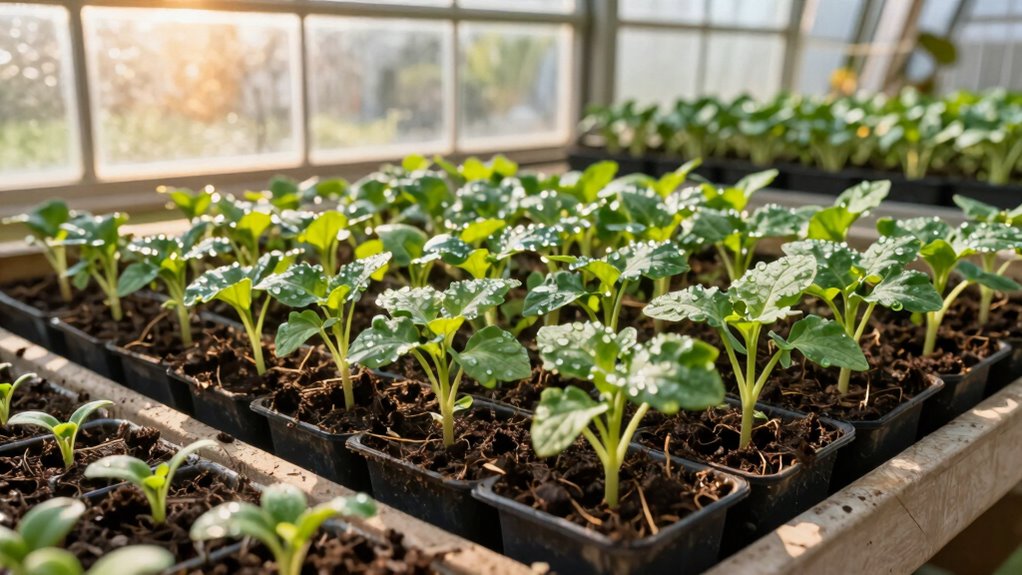
Have you noticed how the arrival of spring often signals a shift in greenhouse activities? As temperatures rise and days lengthen, you’ll find yourself adjusting your routines, especially if you’re new to greenhouse growing. This season is a prime time to adopt new techniques, like hydroponic systems, which can boost productivity and efficiency. Hydroponic techniques allow you to cultivate plants without soil, using nutrient-rich water solutions. They are excellent for spring because they enable faster growth and better control over plant health—perfect for maximizing your greenhouse’s output during the busy season. But with these advantages come new challenges, particularly in pest management. Spring’s warm weather and increased plant density create ideal conditions for pests to thrive, making vigilant pest control essential.
You might be surprised how quickly pests can establish themselves once spring arrives. The key is to stay ahead of infestations by implementing integrated pest management strategies. Regular monitoring becomes your best tool for early detection. Keep an eye out for common pests like aphids, whiteflies, or spider mites, which tend to flourish in the spring’s lush environment. Use sticky traps or visual inspections to identify problems early. Combining biological controls, such as introducing beneficial insects, with physical barriers helps reduce pesticide reliance and keeps your plants healthy. Remember, pest management isn’t a one-time task; it’s an ongoing process, especially as your greenhouse becomes more active.
Spring also encourages you to experiment with hydroponic techniques, but it’s important to understand how they influence pest behavior. Since hydroponic systems rely on water, pests that thrive in moist environments, like fungus gnats, can become more problematic if your system isn’t properly maintained. Proper sanitation and regular water changes are essential to prevent disease and pest outbreaks. Adjusting your nutrient and watering schedules can help keep plants vigorous, making them less susceptible to pests. Additionally, understanding plant health fundamentals can help you develop more effective strategies for pest prevention and control. Incorporating pest behavior knowledge into your routine helps in tailoring your strategies to specific pests and environmental conditions. You’ll find that integrating pest management into your hydroponic routine is crucial for maintaining a healthy, productive greenhouse.
As you navigate this seasonal shift, remember that spring offers unique opportunities to refine your growing methods. Embracing hydroponic techniques can accelerate growth, but it demands diligence in pest management. By staying vigilant and proactive, you guarantee a smooth transition into the busy growing season. With a little preparation and attentiveness, you’ll turn the spring greenhouse shift into a success rather than a surprise.

Bonide Insect Control Systemic Granules, 4 lbs. Ready-to-Use Water Resistant Long Lasting Protection Outdoor Use
- Product Type: Systemic insect control granules
- Application: Ready-to-use, water-resistant formula
- Protection Duration: Lasts up to 8 weeks
As an affiliate, we earn on qualifying purchases.
As an affiliate, we earn on qualifying purchases.
Frequently Asked Questions
How Do I Select the Right Greenhouse Location?
You should select a greenhouse location with good soil testing results and ample natural light. Look for well-drained soil to prevent waterlogging and guarantee healthy plant roots. Prioritize areas with maximum sunlight exposure, especially during the winter months, to optimize light for your crops. Avoid shaded or windy sites, and consider proximity to water and utilities. Proper site selection helps you create an ideal environment for healthy plant growth.
What Are Common Mistakes New Growers Make?
You might think your greenhouse setup is ready, but common mistakes include neglecting soil preparation and overlooking lighting optimization. Don’t skip testing and amending your soil; healthy roots depend on it. Also, make certain your lighting is tailored to your crops’ needs, which boosts growth and reduces problems later. Many new growers overlook these essential steps, but addressing them early helps you avoid costly setbacks and promotes thriving plants from the start.
How Can I Prevent Pests in My Greenhouse?
To prevent pests in your greenhouse, focus on natural pest control methods and maintain excellent greenhouse sanitation. Regularly inspect plants for signs of pests and remove affected foliage promptly. Keep the environment clean by disinfecting tools and surfaces, and avoid overwatering to prevent pest habitats. Introducing beneficial insects can also help control pests naturally. Consistent vigilance and proper hygiene are your best defenses against pest problems in your greenhouse.
What Are the Best Beginner Crops for Greenhouses?
You should start with easy-to-grow beginner crops like lettuce, radishes, and herbs. Use companion planting to naturally deter pests and improve growth, pairing plants like basil with tomatoes. Prioritize soil preparation by enriching it with compost and ensuring proper drainage. These steps set a strong foundation, making your greenhouse experience more successful and enjoyable, especially as you learn to manage the seasonal shifts that can catch new growers off guard.
How Do I Manage Greenhouse Heating Efficiently?
A stitch in time saves nine, and this applies to greenhouse heating. To manage it efficiently, focus on climate control systems that regulate temperature and humidity precisely. Use energy-efficient options like thermostats and exhaust fans, and insulate well to minimize heat loss. Regular monitoring helps prevent overheating or cold spots, ensuring your plants thrive without wasting energy. Proper management keeps costs down and your greenhouse running smoothly year-round.
Conclusion
So, next spring, don’t be surprised if your greenhouse throws a tantrum just when you think you’ve got it all figured out. Mother Nature loves a good plot twist to keep you humble—after all, who needs predictability when you can have surprises? Embrace the chaos, learn to dance with the shifting seasons, and remember: even the greenest thumbs sometimes need a little springtime slap of reality to stay humble. Happy growing, or at least, trying to!