TL;DR

Get garden gear delivered free with Prime
- Fast, free delivery on millions of items
- Prime Video, Amazon Music and more included
- Member-only deals all year
Country Living tested cayenne solution, vinegar, dog hair and Irish Spring soap shavings on four pumpkins, alongside an untreated control, for 12 days. The cayenne-treated pumpkin stayed untouched through day 11 with regular reapplication, while the control was eaten by day 5. The small test does not establish that cayenne will work in other yards.
Country Living tested four inexpensive remedies to deter squirrels from eating porch pumpkins and reported that a cayenne pepper solution performed best during its 12-day trial. The treated pumpkin remained untouched through day 11 after repeated applications, then showed signs of squirrel feeding by day 12; the result offers a small-scale comparison, not proof the method works in every yard.
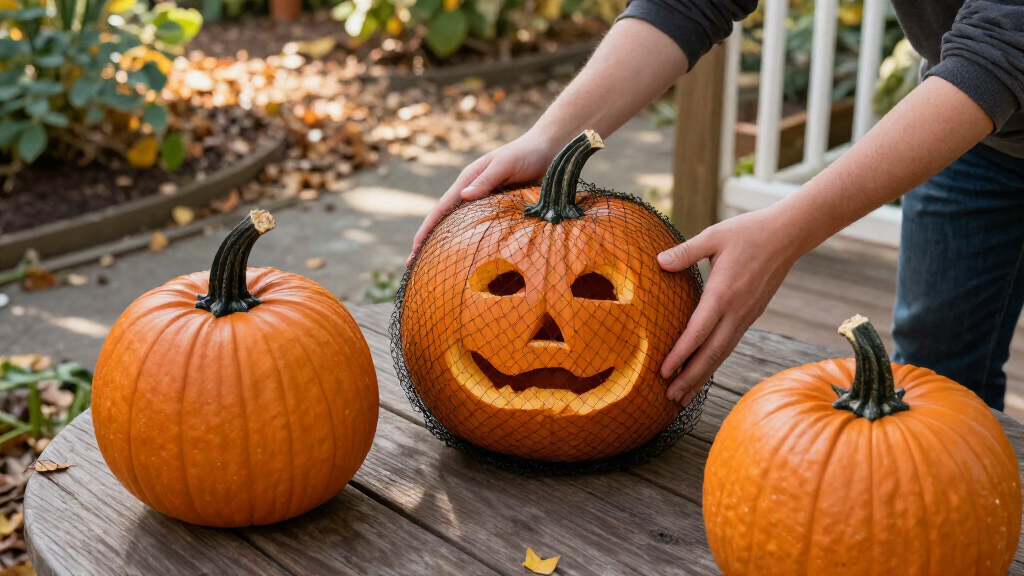
With a neighbor’s permission, the publication placed four treated pumpkins and one untreated control in a yard where squirrels had repeatedly damaged holiday displays. The remedies were fresh dog hair, white vinegar, a mixture of powdered cayenne and water, and Irish Spring soap shavings. The trial ran for 12 days, although the soap test began later than the others.
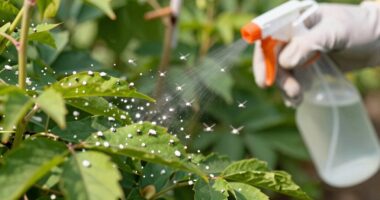
For the cayenne treatment, the testers mixed 2 tablespoons of powdered cayenne with 16 ounces of water. The powder clogged the spray bottle, so they poured the mixture over the pumpkin. They reapplied it every other day or after rain, with the last application on day 7. The pumpkin was still untouched through day 11; squirrels had started eating it by day 12. The testers said the solution did not visibly change the pumpkin.
The vinegar-treated pumpkin had one small nibble, apparently on day 4 or 5, but was otherwise largely untouched through day 12. Squirrels ate a significant portion of the pumpkin placed on dog hair by day 5. The soap-shaving pumpkin stayed untouched for more than 10 days, then was eaten on day 11. The untreated control was gnawed within hours, scooped out by day 3 and gone by day 5.
What the Pumpkin Trial Suggests
For people displaying pumpkins outdoors, the test suggests that regular reapplication may matter: the best-performing treatment was reapplied after rain or every other day, and the pumpkin was eventually eaten after applications stopped. The results also distinguish deterrence from appearance and cleanup. Vinegar and cayenne did not visibly alter the pumpkins, while the testers found the soap shavings unattractive and difficult to collect.
These observations may help readers choose which low-cost approach to try, but the trial involved one yard and one pumpkin per method. It cannot show how consistently a treatment works across different squirrel populations, weather conditions or pumpkin displays. The control’s rapid loss also shows that, in this particular location, an untreated pumpkin was vulnerable.
Products Worth Considering

Orbit B-hyve XR 8-Zone Indoor/Outdoor Smart Sprinkler Controller

Husqvarna 525P4S Gas-Powered Pole Saw with 12-Inch Bar

Orbit B-hyve Smart Indoor/Outdoor 12-Zone Sprinkler Controller
As an affiliate, we earn on qualifying purchases.
How the Five-Pumpkin Test Worked
The report was published by Country Living and describes a test conducted at a neighbor’s yard with permission. The neighbor had struggled for years to protect a seasonal pumpkin display. The publication compared four home remedies with an untreated pumpkin rather than testing each method across multiple pumpkins or locations.
The control pumpkin’s early disappearance raised a question for the testers: whether it may have served as an alternative food source while the treated pumpkins remained available. The dog-hair pumpkin began to be eaten around the time the control was gone. Country Living said the test could not determine whether the control affected the other results; that possibility remains a hypothesis, not a finding.
Limits of the Yard Trial
The report does not establish that cayenne is a reliable squirrel deterrent beyond this single 12-day trial. It tested one pumpkin per treatment, did not report a comparison across multiple yards, and does not provide enough evidence to separate the treatment’s effect from other local conditions. The precise timing of the small nibble on the vinegar pumpkin was also uncertain.
The control may have influenced how squirrels approached the other pumpkins, but the test cannot confirm that. The soap pumpkin was introduced later and, after the other pumpkins were gone, sat alone for five days, making direct comparisons among all methods less straightforward. The report also does not specify how much rain fell or how weather affected each treatment.
A Decoy Pumpkin Is the Next Test
Country Living said its next planned experiment is to put a decoy pumpkin in a far corner of the yard and observe whether it helps protect display pumpkins in busier areas, such as a porch or sidewalk. No results or schedule for that experiment were provided.
For now, the reported finding is limited: cayenne solution ranked highest in this test when reapplied regularly, but squirrels eventually ate that pumpkin too. Readers who try any outdoor treatment should follow product directions where applicable and consider where materials or runoff may go; the report specifically cautioned that soap outdoors could pose a concern if runoff reaches water.
Key Questions
Which method performed best in the test?
Cayenne pepper solution ranked first. The pumpkin remained untouched through day 11 with regular reapplication, but squirrels began eating it by day 12.
How was the cayenne solution prepared?
The testers mixed 2 tablespoons of powdered cayenne with 16 ounces of water. Because the powder clogged the spray bottle, they poured the mixture over the pumpkin instead.
Did vinegar keep squirrels away?
The vinegar-treated pumpkin had a small nibble, apparently on day 4 or 5, then remained largely untouched through day 12. That is the result from this one test, not a guarantee for other yards.
Why was Irish Spring soap not the winner?
The soap-shaving pumpkin stayed untouched for more than 10 days, but squirrels ate it on day 11. The testers also disliked the green shavings’ appearance and found them difficult to clean up.
Could an untreated pumpkin protect other pumpkins as a decoy?
That remains unknown. Country Living raised the possibility because the control was eaten before the dog-hair pumpkin was attacked, but its trial could not determine whether the control changed squirrel behavior.
Source: countryliving.com