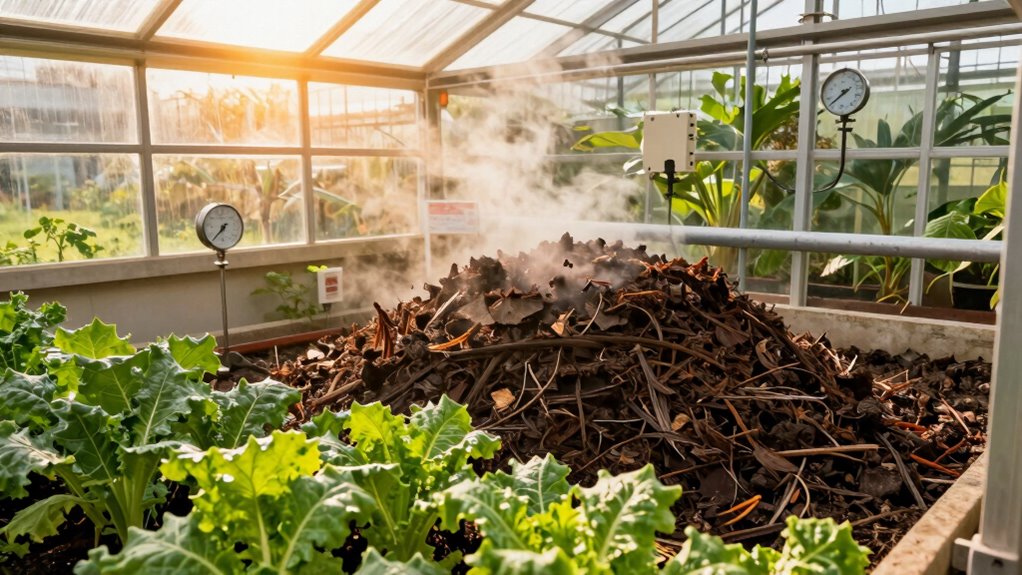

Compost heat can help warm your greenhouse by naturally raising temperatures through microbial activity, typically reaching 130°F to 160°F. With proper management, it can extend your growing season and reduce energy costs. However, its heat output is seasonal and limited, and understanding how to control moisture, aeration, and compost type is essential. If you’re curious about maximizing this sustainable method and working through its challenges, there’s more to explore below.
Key Takeaways
- Compost can raise greenhouse temperatures by 10-20°F, providing seasonal warmth, but not replacing full heating systems.
- Proper management of moisture, aeration, and compost composition is essential for consistent heat generation.
- High nitrogen materials and fast-composting methods maximize heat output temporarily during microbial activity peaks.
- Integrating compost heat requires strategic placement, insulation, and monitoring to optimize transfer and retain warmth.
- Expect seasonal, fluctuating temperatures; compost heat is a valuable supplement, not a complete heating solution.
How Does Compost Heat Work Inside a Greenhouse?
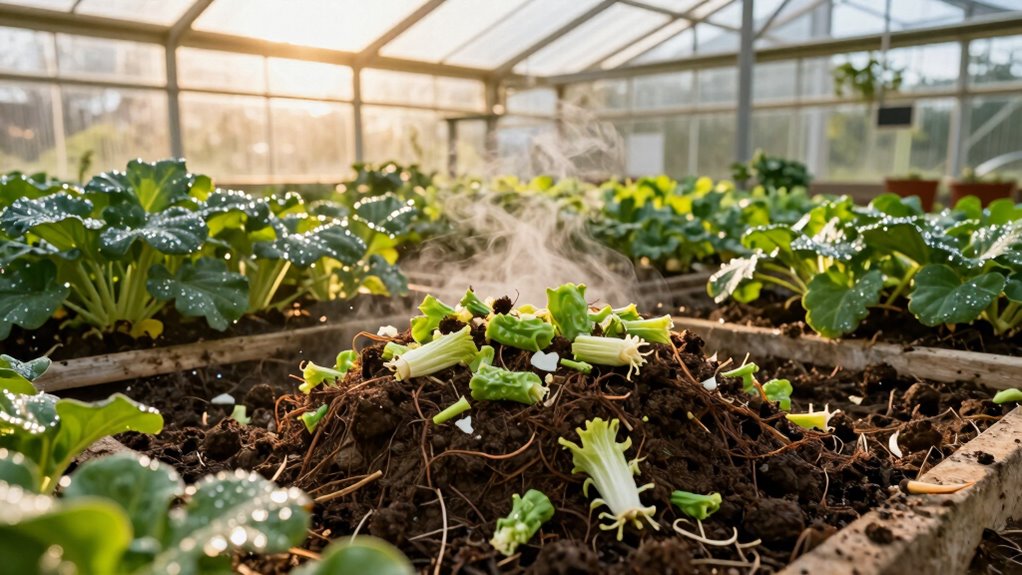
Compost heat works inside a greenhouse because microorganisms break down organic materials, releasing energy in the process. As composting occurs, the compost temperature rises, creating a natural heat source. This heat transfer happens as warmth moves from the compost pile into the surrounding air and soil, warming your greenhouse environment. The process relies on microbial activity, which generates heat during the decomposition of organic matter. The higher the compost temperature, the more heat is produced, but it’s important to monitor it to prevent overheating. Effective heat transfer ensures that this warmth spreads evenly, helping to maintain a more consistent temperature inside your greenhouse. Understanding how compost temperature and heat transfer work together is key to harnessing compost heat for your gardening needs. Additionally, maintaining the right temperature range is essential for optimal microbial activity and heat production.
What Factors Affect How Much Heat Your Compost Produces?
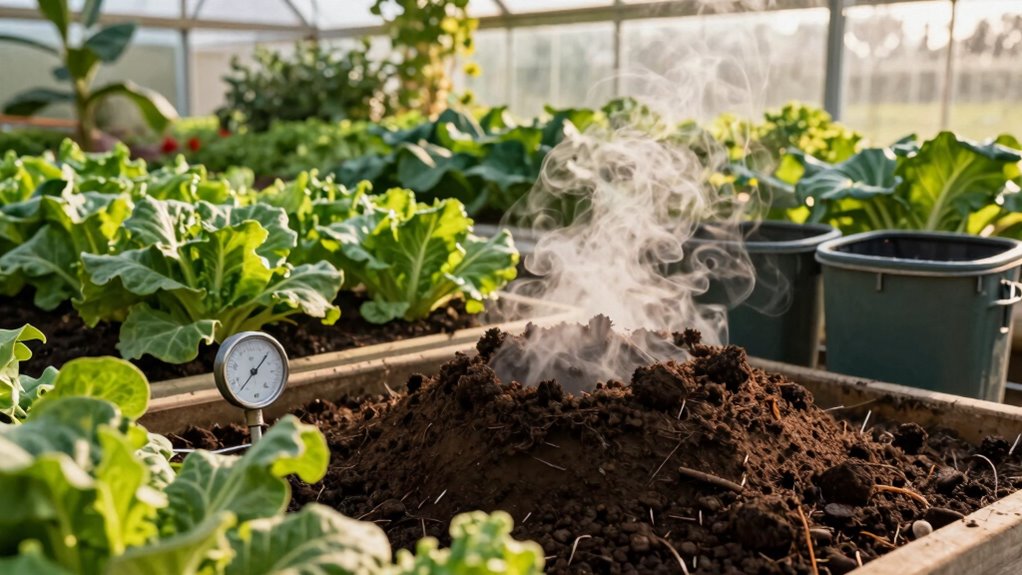
The heat your compost produces depends largely on its ingredients and how they break down. The right mix of green and brown materials can boost microbial activity, increasing heat. Additionally, external conditions like temperature and moisture levels also influence how much heat your compost generates. Employing advanced composting techniques can further optimize heat production for gardening or renewable energy applications.
Compost Pile Composition
Ever wondered why some compost piles heat up more than others? The composition of your compost pile plays a vital role. To generate maximum heat, you need a good balance of carbon-rich materials (browns) like straw or leaves, and nitrogen-rich materials (greens) like vegetable scraps or grass clippings. Properly maintaining soil nutrients ensures microbes stay active, boosting heat production. If your pile contains too much of one type, it can slow decomposition and reduce heat. Be mindful of compost pests, which can disrupt the process or introduce unwanted critters. Turning your pile regularly helps aerate it and keeps microbes working efficiently. Overall, a well-balanced, pest-free compost mix rich in nutrients is key to maximizing heat in your greenhouse compost pile. Additionally, Free Floating techniques can optimize airflow and temperature regulation within your compost system.
External Environmental Conditions
External environmental conditions considerably influence how much heat your compost pile can produce. When practicing climate adaptation for outdoor gardening, understanding these factors helps optimize compost warmth. – Ambient temperature impacts microbial activity; colder weather slows heat generation, while warmth boosts it. – Sun exposure can increase the pile’s temperature, especially if placed in direct sunlight. – Wind and precipitation can cool the compost or cause moisture imbalances, reducing heat output. Monitoring these conditions allows you to adjust your composting practices accordingly, such as insulating the pile or shading it. – Essential oils can be used to support microbial activity and maintain compost health in various conditions. In outdoor gardening, being aware of external factors ensures your compost maintains sufficient heat to support plant growth and decomposition. Proper management of environmental influences increases the efficiency of compost heat for greenhouse use.
How Much Heat Can You Expect From Compost in Your Greenhouse?
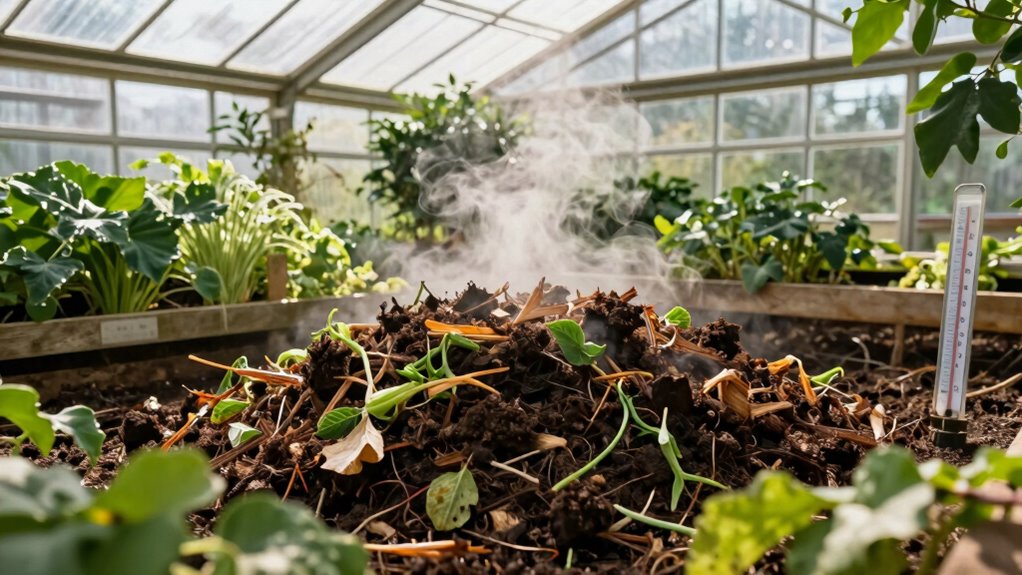
You might wonder how much heat your compost can generate in your greenhouse. Generally, compost piles can reach temperatures between 130°F and 160°F, providing valuable warmth. However, factors like moisture, aeration, and the size of your pile will influence just how much heat you can expect. Proper wall surface finishes can also help retain this heat effectively within your greenhouse environment.
Temperature Range Expectations
When composting properly, you can generally expect the heat generated to raise your greenhouse temperature by about 10 to 20 degrees Fahrenheit above ambient conditions. This temperature boost helps maintain thermal comfort and aids in temperature regulation, especially during cooler months. However, the exact range can vary depending on compost volume, moisture, and airflow. You might see:
- Slight fluctuations, with occasional peaks up to 25 degrees above ambient
- Consistent, steady heat in well-managed compost piles
- Limited increases if conditions aren’t ideal, such as dry or compacted compost
Keep in mind, compost heat provides a helpful, natural warming source, but it’s unlikely to sustain very high temperatures on its own. Proper management ensures you get predictable, safe heat for your plants’ needs.
Factors Influencing Heat Output
Several key factors determine how much heat compost can generate in your greenhouse. First, the compost’s composition affects microbial activity, influencing heat production. Second, proper aeration prevents compost pests and reduces foul compost odor, maintaining efficient decomposition. Third, moisture levels must stay balanced; too dry or too wet compost hampers heat output. Here’s a quick overview:
| Factor | Impact | Tip |
|---|---|---|
| Compost composition | Affects microbial activity and heat generation | Use a mix of greens and browns |
| Aeration | Controls compost pests and odor | Turn compost regularly |
| Moisture levels | Optimizes microbial processes | Keep compost damp but not soaked |
Maintaining these factors ensures your compost produces consistent, effective heat without attracting pests or odor issues.
Which Composting Systems Are Best for Greenhouse Heating?
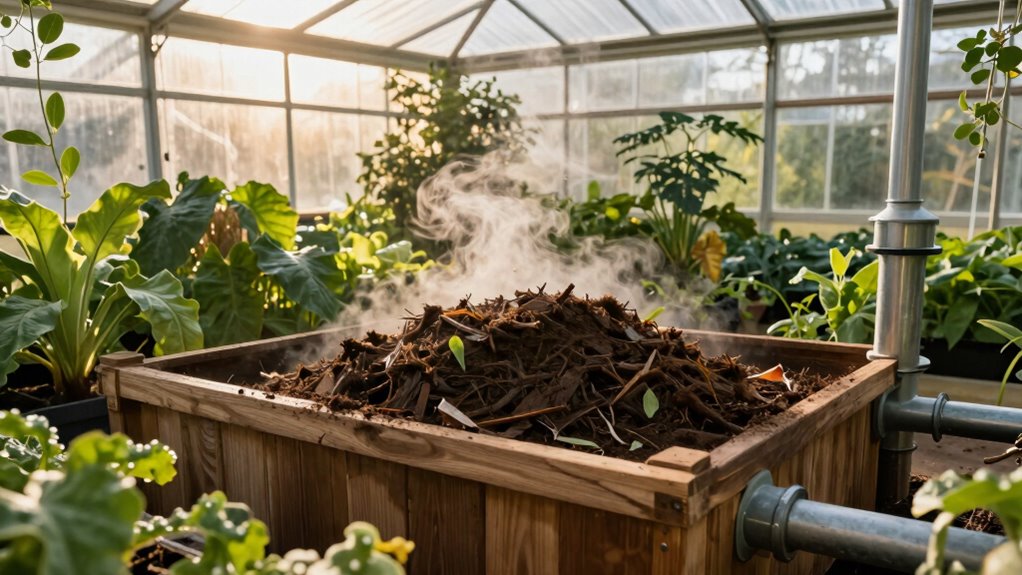
Choosing the right composting system is essential for effectively heating a greenhouse. The best systems maximize heat efficiency by selecting suitable compost types that generate consistent warmth. You might consider static pile composting, which is simple and effective for steady heat production. Worm bins or vermicomposting create moderate heat and can be integrated into greenhouse setups. Aerobic compost tumblers offer quick decomposition and efficient heat output, especially with high nitrogen materials. Additionally, selecting composting methods with high heat output can significantly improve the warmth generated for your greenhouse. Your choice depends on your space, materials, and heating goals. Prioritizing compost types that generate steady, reliable heat ensures your greenhouse stays warm without excessive energy input.
How Can You Set Up a Compost Heating System in Your Greenhouse?
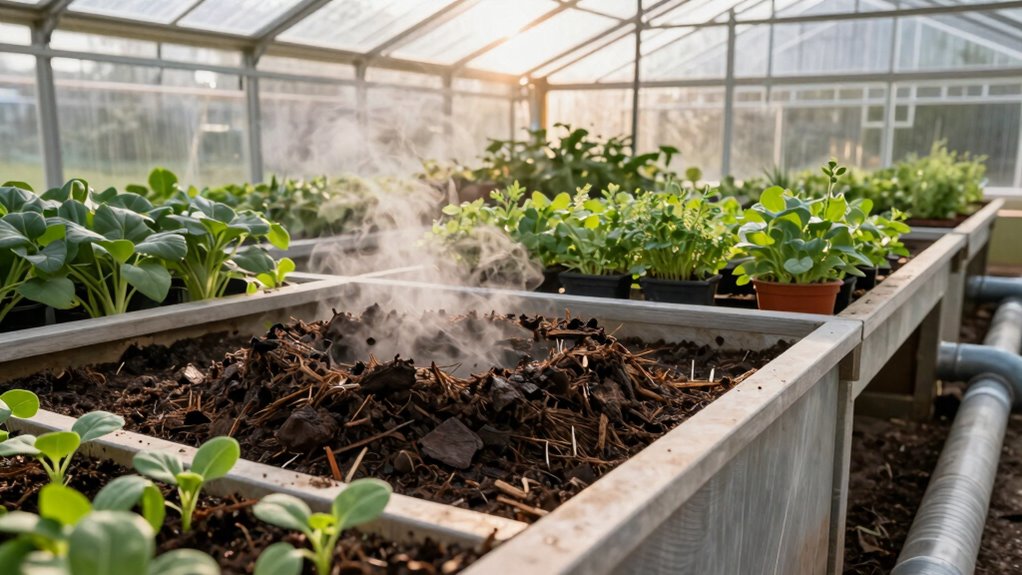
To set up a compost heating system in your greenhouse, you need to choose the right composting method that suits your space and needs. Next, you’ll want to integrate the compost system so that it effectively transfers heat to your plants. With careful planning, you can optimize both composting and heating to keep your greenhouse warm year-round. Incorporating smart appliances can help monitor and regulate the temperature more precisely, ensuring optimal conditions for your plants and energy efficiency.
Selecting Composting Methods
Setting up a compost heating system in your greenhouse begins with selecting the right composting method that efficiently generates heat. Your choice depends on understanding different compost types and how biological processes produce warmth. Fast-composting methods, like hot composting, generate high temperatures quickly, ideal for heating. Continuous pile composting offers steady heat through ongoing biological activity. Vermicomposting, while slower, produces moderate warmth suitable for maintaining consistent temperatures. Consider materials with high nitrogen content for faster heat buildup. Managing moisture and aeration is essential to sustain active biological processes that generate heat effectively. Your goal is to choose a method that balances speed, heat output, and maintenance needs for ideal greenhouse heating.
Integrating Heating Systems
Integrating a compost heating system into your greenhouse involves designing a setup that efficiently captures and distributes the heat generated by decomposing organic materials. To maximize heat output, focus on maintaining high compost quality through proper layering and moisture control. Good compost quality ensures consistent microbial activity, producing reliable warmth. Adequate greenhouse insulation is vital to prevent heat loss, allowing the warmth from composting to effectively raise temperatures. You might consider placing compost piles near the greenhouse’s core or installing underground channels to transfer heat efficiently. Use insulated barriers around the compost to retain heat and avoid drafts that can diminish temperature gains. Proper insulation and high-quality compost work together to create a sustainable, effective heating system that reduces reliance on external energy sources. Additionally, monitoring the compost temperature with thermometer placement can help optimize decomposition and heat production.
What Are the Benefits of Using Compost Heat to Extend Your Growing Season?
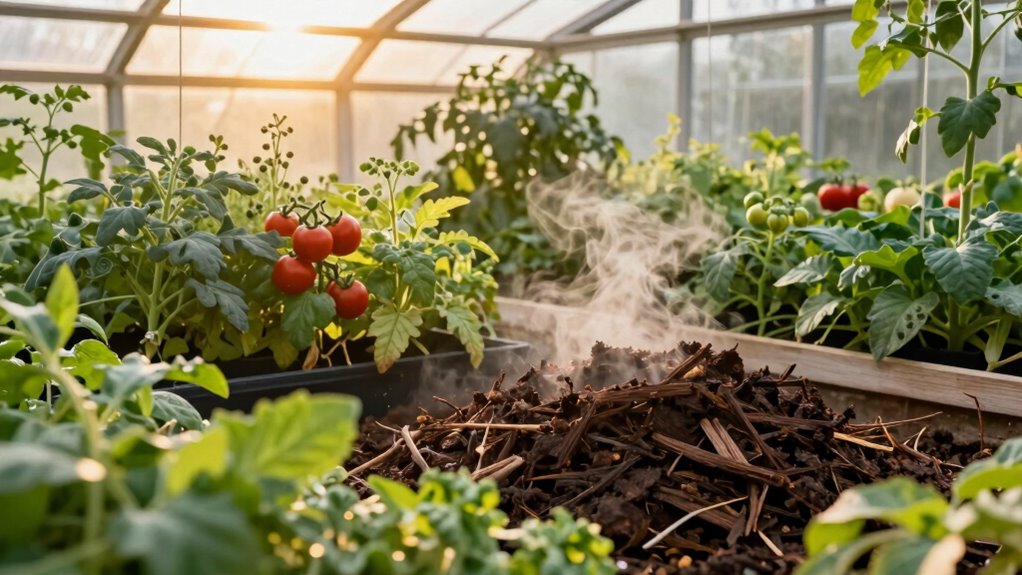
Using compost heat can substantially extend your growing season by providing a reliable source of warmth during colder months. This consistent warmth helps maintain ideal soil temperatures, boosting soil fertility naturally and reducing the need for chemical fertilizers. Additionally, compost heat can aid in pest management by encouraging beneficial insects that thrive in warmer environments, minimizing pest problems. Incorporating compost heat also promotes educational understanding of soil dynamics, enhancing your overall gardening knowledge.
What Challenges and Limitations Might You Face With Compost Heating?

While compost heat offers many advantages for extending your growing season, it also presents some challenges that can affect its effectiveness. One key issue is compost odor, which can become unpleasant if the compost isn’t properly managed. Additionally, the warmth can attract pests like rodents or insects, creating new problems around your greenhouse. Proper aeration and moisture control are essential to minimize odors and pest attraction. Understanding the science behind composting microorganisms can help optimize conditions and improve overall system performance.
How Do You Maintain and Monitor Your Compost Heating System?
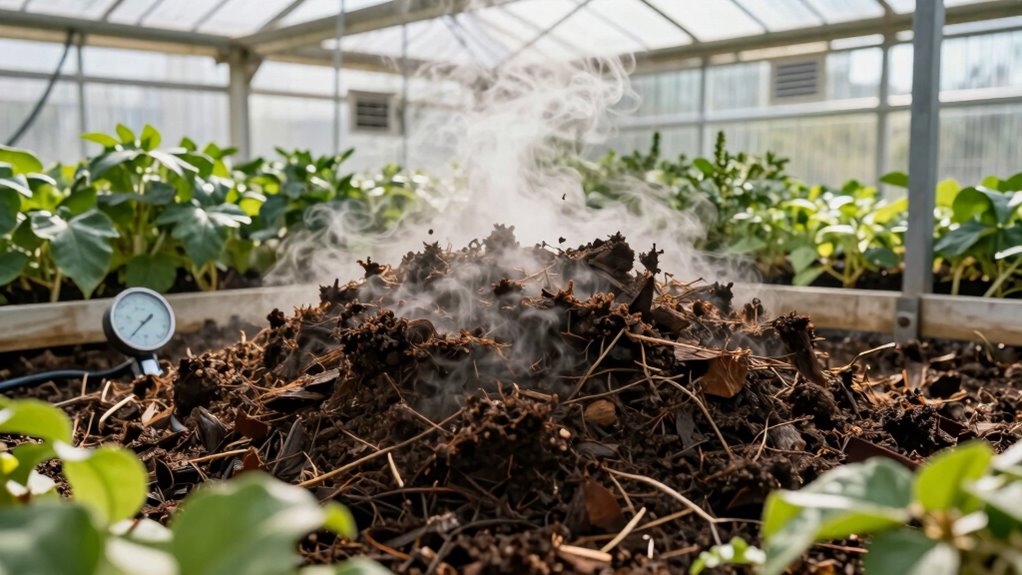
To keep your compost heating system running efficiently, regular maintenance and monitoring are essential. You need to track moisture levels to prevent the compost from drying out or becoming too wet, which can hinder heat generation. Using temperature sensors helps you keep an eye on the heat output and guarantee the compost stays within ideal ranges.
- Check moisture levels regularly and adjust as needed
- Calibrate and monitor temperature sensors for accuracy
- Turn or aerate the compost to promote even heating
Are There Successful Examples of Compost-Based Greenhouse Heating?
Many greenhouse operators have successfully implemented compost-based heating systems, demonstrating their practical viability. These examples show that, despite some compost myths and heat misconceptions, compost can generate enough warmth to supplement or even replace traditional heating methods. For instance, some small-scale farms use compost piles integrated into their greenhouse design to maintain consistent temperatures during colder months. These successes highlight that compost heat isn’t just a theoretical concept but a workable solution when properly managed. However, it’s important to recognize that such systems require careful planning and maintenance. While they can be effective, they’re not magic solutions and won’t produce unlimited heat. Understanding the realities behind compost myths helps set realistic expectations, making your efforts more efficient and successful.
What Realistic Expectations Should You Have for Compost Heat?
Understanding what to expect from compost heat helps you plan effectively and avoid disappointment. Compost heat can provide some warmth, but it’s unlikely to fully heat a large greenhouse. Your compost pile’s microbial activity generates heat, yet factors like temperature, moisture, and aeration influence how much heat is produced. Don’t expect a constant, high-temperature source; instead, view it as a supplemental boost. Be aware that increased microbial activity might cause compost odor if not managed properly. To set realistic expectations, consider:
- Compost heat as a seasonal or supplemental warming aid
- Temperature fluctuations based on microbial activity levels
- Managing compost odor to prevent issues and maintain airflow
Frequently Asked Questions
Can Compost Heat Replace Traditional Greenhouse Heating Methods Entirely?
Compost heat can’t fully replace traditional greenhouse heating methods, especially if you want consistent, reliable warmth. While it reduces solar dependency and can boost crop yield naturally, it often lacks the capacity to maintain ideal temperatures during extreme cold. To guarantee year-round growth, combine compost heat with other heating options, balancing natural warmth with backup systems for stability and better crop outcomes.
How Quickly Can Compost Heat Be Generated After Starting the System?
You can expect compost temperature and heat buildup to start within a few days after starting the system. Typically, compost heats up rapidly as microbes become active, often reaching peak temperatures in 3 to 7 days. The speed depends on factors like moisture, aeration, and the compost mix. Once heat buildup begins, you’ll see consistent warmth, but maintaining it requires proper management of compost conditions.
Is Compost Heat Effective in Extremely Cold Climates?
In extremely cold climates, compost heat can be effective if you address insulation challenges and maintain proper compost moisture. You need to insulate your compost pile well to retain heat and prevent it from escaping. Also, keeping the compost moist helps microorganisms generate consistent warmth. Without proper insulation and moisture management, the compost might struggle to produce enough heat to impact your greenhouse conditions considerably.
What Are the Odor Management Considerations for Compost Heating Systems?
Did you know that poor odor control can reduce greenhouse efficiency by up to 30%? To manage compost heating odors, you should prioritize ventilation strategies that direct smells away from your workspace. Proper aeration and sealed compost bins help minimize odor release, while exhaust fans and air filters improve air quality. Regularly turning compost also helps prevent odor buildup, making your greenhouse more pleasant and effective.
How Does Compost Type Influence Heat Production in a Greenhouse Setting?
You’ll see that compost type considerably influences heat production in your greenhouse. Compost composition, such as the balance of greens and browns, impacts microbial activity, which generates heat. Richer composts with ample nitrogen boost microbial activity, producing more heat. Conversely, composts with less nitrogen or poor aeration reduce microbial activity, leading to less heat output. Choosing the right compost type optimizes heat generation and keeps your greenhouse warm naturally.
Conclusion
While compost heat can be a helpful boost for your greenhouse, it’s not a magic bullet. Think of it as a gentle flame—warm and steady, but not enough to replace your primary heating. With proper setup and maintenance, you’ll nurture a lively ecosystem that supports plant growth. Keep realistic expectations, and remember, patience and care turn small sparks into a sustainable fire for your greenhouse’s success.