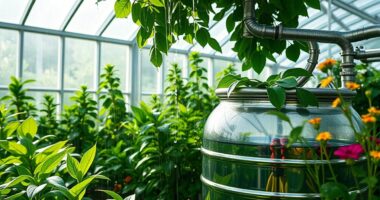
Using greywater in your greenhouse can save water and promote healthy plants if you make sure it’s properly treated and free from harmful chemicals. Make certain you filter and test the water regularly to avoid contamination that can harm plants or soil, avoid using greywater with harsh detergents or toxins, and choose plants tolerant to residual chemicals. If you keep safety measures in mind, greywater can be a sustainable resource—learn more about how to do it safely and effectively.
Key Takeaways
- Greywater can be safe for greenhouse use if properly filtered, treated, and tested to remove contaminants and chemicals.
- Avoid using greywater containing high levels of soaps, detergents, salts, or toxic chemicals that can harm plants or soil.
- Regular monitoring of greywater quality and soil health indicators ensures safe and sustainable reuse.
- Sensitive plants and those requiring chemical-free water should not be irrigated with untreated or contaminated greywater.
- Discontinue greywater use if tests show contamination, or if plants exhibit signs of stress or soil deterioration.
What Is Greywater and How Is It Different From Blackwater?

Have you ever wondered what distinguishes greywater from blackwater? Greywater is the relatively clean wastewater generated from sinks, showers, and washing machines. It doesn’t contain fecal matter, making it suitable for reuse through greywater recycling and other water conservation techniques. Blackwater, on the other hand, comes from toilets and contains human waste, requiring more advanced treatment before safe reuse. Understanding these differences helps you decide when and how to reuse greywater in your greenhouse, reducing reliance on fresh water sources. Using greywater wisely can support sustainable gardening practices and promote eco-friendly water management. Just remember, while greywater is less contaminated than blackwater, proper handling and treatment are essential to avoid potential health risks. Additionally, considering water quality standards is important to ensure safe reuse and prevent contamination.
Is Greywater Safe to Use in My Greenhouse?

Using greywater in your greenhouse can be safe if you take proper precautions, but it’s important to understand potential health risks. Greywater may contain bacteria, chemicals, or salts that could harm plants or pose health concerns. Always check greywater regulations in your area to ensure compliance and safety. Some plants are sensitive to certain contaminants, risking plant toxicity if improperly used. To minimize risks, avoid greywater with harsh detergents or chemicals. Regularly test greywater quality and monitor your plants for signs of stress. Additionally, understanding water quality testing can help prevent potential issues. Here’s a quick comparison:
| Aspect | Considerations |
|---|---|
| Greywater Regulations | Vary by region; check local guidelines |
| Plant Toxicity | Some substances can harm or stunt plant growth |
How Can I Reuse Greywater Safely in My Greenhouse?

To reuse greywater safely in your greenhouse, you need effective treatment methods to eliminate contaminants. Choose plants that tolerate greywater and won’t be harmed by residual substances. Regular monitoring and maintenance ensure your system stays safe and efficient over time. Incorporating seasonal checklists can help you stay on top of maintenance tasks to keep your greywater reuse system functioning properly.
Greywater Treatment Methods
Wondering how to reuse greywater safely in your greenhouse? The key is proper greywater treatment, primarily through effective greywater filtration. Start by removing solids and debris with a simple filter or mesh screen to prevent clogging. Next, consider using biological or chemical treatments to reduce harmful pathogens and maintain plant compatibility. You might also implement slow sand filters or constructed wetlands to naturally purify the water further. Always test treated greywater to ensure it’s safe for your plants, checking for residual contaminants. Proper filtration and treatment methods help eliminate bacteria, chemicals, and solids, making greywater suitable for irrigation without harming your plants. Remember, well-treated greywater supports healthy growth and minimizes risks of disease or toxicity. Incorporating innovative filtration systems can further enhance greywater quality and safety for sustainable greenhouse practices.
Suitable Plants for Reuse
Choosing the right plants for greywater reuse involves understanding their tolerance to residual chemicals and nutrients. You should focus on plants with high compatibility for greywater systems, especially those that thrive in slightly alkaline or neutral water pH. Vegetables like carrots, lettuce, and herbs such as basil and mint generally tolerate these conditions well. Avoid plants sensitive to chemical residues or those requiring very specific water pH levels, like certain fruiting crops. Assess your greywater’s pH and nutrient content regularly to guarantee it remains within a safe range for your selected plants. Additionally, selecting appropriate plant varieties that are known for their resilience to greywater conditions can help ensure healthy growth and successful reuse. By choosing adaptable, compatible plants, you minimize risks and promote healthy growth while making effective use of greywater in your greenhouse.
Monitoring and Maintenance
Monitoring and maintaining greywater systems is essential to guarantee safe and effective reuse in your greenhouse. Regularly check for signs of plant disease that could spread through contaminated water, and address issues promptly. Keep an eye on the system’s filters and pipes, cleaning them to prevent clogs and bacterial buildup. Consistent testing of greywater quality helps ensure it’s free from harmful pathogens, reducing risks to your plants. Proper maintenance also supports pest control by preventing standing water that attracts insects or creates breeding grounds. Establish a routine schedule for inspecting and cleaning the system, and stay alert for any changes in plant health. By actively monitoring and maintaining your greywater setup, you safeguard your greenhouse environment and promote healthy, pest-free plants.
What Chemicals and Contaminants Are in Greywater?

Greywater often contains a variety of chemicals and contaminants that can impact plant health and soil quality. Chemical contaminants like soaps, detergents, and cleaning agents may include salts and surfactants that can harm plants or alter soil chemistry. Additionally, greywater can carry pathogen risks, which pose health hazards if not properly managed. These pathogens originate from human skin, waste, or cleaning processes, increasing the potential for disease transmission. It’s important to recognize that not all greywater is safe for direct use in your greenhouse, especially if it contains high levels of chemical contaminants or pathogens. Proper treatment or filtration can reduce these risks, but understanding what’s in your greywater is essential to prevent damage to your plants and maintain a healthy growing environment. Contaminant levels in greywater can vary widely depending on its source and usage, making it crucial to assess and treat greywater accordingly.
How Do I Know If Greywater Is Harming My Plants or Soil?

You’ll notice the first signs of trouble when your plants start to wilt, yellow, or show stunted growth. Changes in soil texture or color can also indicate that greywater is affecting its composition. Paying attention to these cues helps you catch problems early and adjust your greywater practices accordingly.
Signs of Plant Stress
Plants often show subtle signs when their environment becomes stressful, especially if greywater contains harmful components. You might notice yellowing leaves or stunted growth, which can indicate plant nutrient deficiencies caused by imbalanced salts or chemicals in the greywater. Additionally, stress can weaken plants’ defenses, making them more vulnerable to pest infestation signs like tiny holes, webbing, or discolored patches. Watch for unusual leaf curling, wilting, or spots that don’t match typical pest damage. These symptoms suggest your plants are struggling and possibly reacting to harmful substances in the greywater. Recognizing these early warning signs helps you determine if the greywater is harming your plants and allows you to take corrective action before serious damage occurs.
Soil Composition Changes
Changes in soil composition are key indicators that greywater may be harming your plants or soil. You might notice shifts in soil acidity, making conditions either too acidic or alkaline for healthy growth. Additionally, microbial activity could decline, disrupting nutrient cycling. To assess these changes, monitor soil tests regularly. Here’s a quick comparison:
| Aspect | Healthy Soil | Harmed Soil |
|---|---|---|
| Soil acidity | Balanced pH (6.0-7.0) | Fluctuating, often too acidic or alkaline |
| Microbial activity | Active, diverse microbes | Reduced, less diversity |
| Nutrient levels | Consistent | Imbalanced or depleted |
| Plant growth | Vigorous | Stunted or stressed |
| Soil structure | Well-drained, crumbly | Compact, poor drainage |
If you see persistent changes, greywater could be negatively affecting your soil’s health.
How to Treat and Filter Greywater Before Using It

Before applying greywater in your greenhouse, it’s essential to treat and filter it to remove contaminants and sediments. Greywater contaminants, such as soap residues, oils, and organic matter, can harm plants if not properly addressed. Filtration techniques help eliminate these pollutants, ensuring the water is safe for your plants. Use coarse filters initially to remove large debris, followed by finer mesh or charcoal filters to reduce smaller particles and chemicals. You might also consider settling tanks to allow sediments to settle out before filtration. Proper treatment minimizes risks of clogging irrigation systems and prevents plant damage. Regularly clean your filters and monitor water quality to maintain safe, effective greywater use in your greenhouse. Additionally, understanding the physics behind bubble behavior in sonoluminescence can inspire innovative filtration technologies for water treatment.
When Should I Avoid Using Greywater in My Greenhouse?

Using greywater in your greenhouse isn’t advisable when it contains high levels of contaminants or chemicals that could harm your plants. Greywater hazards include substances like soaps, detergents, and chemicals from cleaning products, which pose serious contamination risks. If your greywater contains harmful pathogens, heavy metals, or toxic substances, it can damage plant roots or introduce disease. Avoid using greywater if you’re unsure about its quality or if it has not been properly filtered and treated. Additionally, greywater from sources like laundry or kitchen sinks often has higher contaminant levels, making it unsuitable for greenhouses without adequate treatment. When contamination risks are present, it’s safer to seek alternative watering methods to protect your plants and ensure a healthy greenhouse environment. Proper testing methods can help determine if greywater is safe for use.
Tips for Creating a Safe and Sustainable Greenhouse Environment

Creating a safe and sustainable greenhouse environment starts with careful water management and maintaining healthy conditions for your plants. To achieve this, focus on water conservation by collecting rainwater and recycling greywater responsibly. Use sustainable practices like mulching to reduce evaporation and applying drip irrigation to target roots efficiently. Regularly monitor water quality to prevent buildup of harmful substances. Keep an eye on humidity and temperature levels to prevent mold and pest issues. Incorporate organic amendments and compost to enrich your soil naturally. Proper ventilation ensures fresh airflow, reducing disease risk. By implementing these practices, you create an eco-friendly space that conserves resources and promotes healthy plant growth, ensuring your greenhouse remains both productive and sustainable over time.
Frequently Asked Questions
Can Greywater Be Reused for Watering Edible Plants Safely?
Yes, you can reuse greywater for watering edible plants safely if you follow proper guidelines. Make certain greywater is free from strong chemicals or contaminants, and avoid using water containing detergents or harmful substances. Use it on plants with edible leaves or fruit that won’t directly contact the water. Regularly monitor greywater safety to prevent any health risks, and always prioritize safe practices for edible plant watering.
What Are the Legal Regulations Regarding Greywater Use in Greenhouses?
You can use greywater in your greenhouse, but first, you must comply with legal regulations. Confirm you follow local legal compliance and regulatory standards, which vary by region. Many areas require permits, specific treatment methods, and restrictions on what greywater can be used for. Ignoring these rules risks fines or health hazards. Always check with your local authorities to stay within legal bounds and keep your greenhouse practices safe.
How Often Should Greywater Systems Be Maintained or Cleaned?
You should perform regular system maintenance and clean your greywater system at least once a month. This cleaning frequency helps prevent clogging, buildup of bacteria, and potential contamination. Check filters, pipes, and pumps during each maintenance to guarantee everything functions smoothly. If you notice any foul odors or reduced flow, increase cleaning frequency. Consistent maintenance keeps your system safe, efficient, and prolongs its lifespan.
Are There Specific Greywater Filtration Systems Recommended for Greenhouses?
You should consider filtering methods like biofilters or sand filters for your greenhouse greywater system. System recommendations often include modular, easy-to-maintain units designed for small-scale use. Look for systems with effective filtration that remove solids and pathogens, ensuring safety for your plants. Regular maintenance is key, so choose a setup that’s simple to clean and inspect, helping you keep your greywater safe and functional.
How Does Greywater Impact Soil Health Over Long-Term Use?
Using greywater long-term can impact your soil health by causing nutrient depletion if not managed properly. It may reduce soil microbial diversity, which is essential for healthy plant growth. To avoid this, you should regularly test your soil and supplement nutrients as needed. Proper filtration and treatment help maintain microbial balance, ensuring your soil remains fertile and resilient over time, supporting robust greenhouse plant production.
Conclusion
Using greywater in your greenhouse can be a sustainable choice, but it’s essential to know when it’s safe. Did you know that over 80% of household wastewater is greywater? Proper treatment and understanding contaminants help protect your plants and soil. By following safety tips and avoiding greywater when necessary, you can create a thriving, eco-friendly greenhouse. Stay informed and cautious—your plants and the environment will thank you.