
To reduce plastic use in your gardening, switch to sustainable potting solutions like biodegradable containers made from coconut coir, peat, or organic materials. Recycled plastic pots from post-consumer waste also help cut down on new plastic production. Hybrid designs combining recycled plastics with natural fibers offer durable, eco-friendly options. These choices promote healthier plants and less environmental impact, offering practical benefits. Keep exploring to discover how these options can transform your gardening habits into more eco-conscious practices.
Key Takeaways
- Use biodegradable containers like coconut coir or peat pots that decompose naturally, reducing plastic waste.
- Opt for recycled material containers made from repurposed plastics to lower new plastic production.
- Choose hybrid pots combining recycled plastics with natural fibers for strength and eco-friendliness.
- Plant directly into biodegradable pots to eliminate transplant shock and minimize plastic use.
- Support sustainable gardening by selecting versatile, durable containers that promote environmental health and reduce plastic footprint.
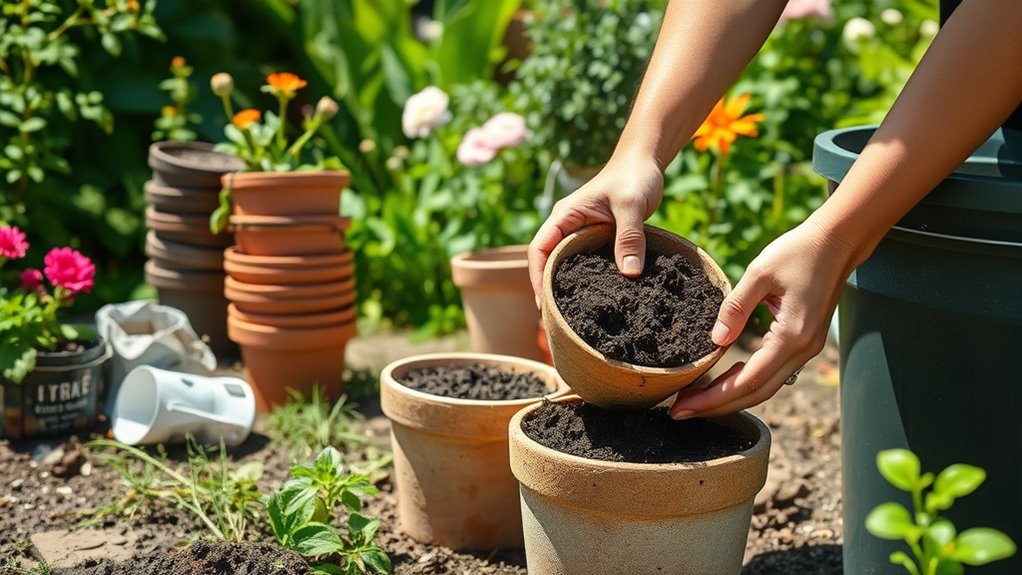
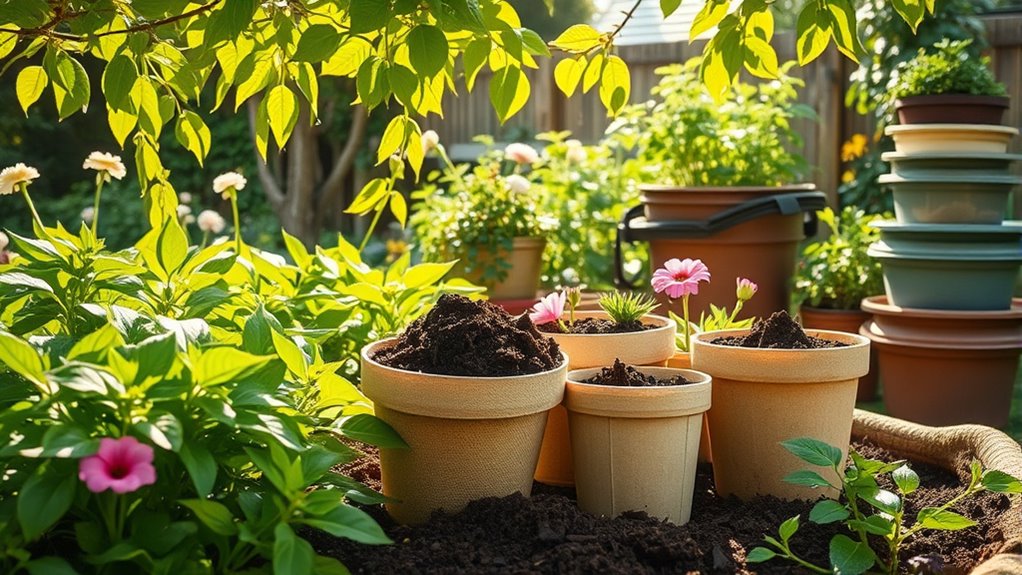
As more gardeners seek eco-friendly options, sustainable potting solutions have become essential for reducing environmental impact. One of the most effective ways to do this is by choosing biodegradable containers. These containers break down naturally over time, which means they won’t clutter landfills or contribute to plastic pollution. When you opt for biodegradable pots, you’re making a conscious decision to support the environment by reducing waste. They are often made from natural materials like coconut coir, peat, or other organic compounds, ensuring that your gardening habits remain gentle on the planet. Using biodegradable containers also simplifies the planting process, as you can often plant directly into the ground without removing the pot, minimizing root disturbance and transplant shock.
In addition to biodegradable options, recycled materials serve as another sustainable solution. Many plant containers now come from recycled plastics or other repurposed materials, giving new life to items that would otherwise be discarded. By selecting pots made from recycled plastics, you help reduce the demand for virgin plastic production, which is a major contributor to environmental degradation. Recycled materials often come from post-consumer waste, such as discarded bottles and packaging, so your choice actively supports waste reduction efforts. These containers are durable, lightweight, and suitable for multiple planting seasons, making them a practical and eco-conscious choice.
You’ll find that combining biodegradable containers with recycled materials creates a powerful impact. For instance, some manufacturers produce pots from a blend of recycled plastics and natural fibers, offering a sturdy yet eco-friendly option. These hybrid containers are designed to decompose safely when disposed of, reducing long-term waste. When you select such sustainable options, you’re not only cutting down on plastic waste but also supporting innovations that prioritize environmental health.
Transitioning to these solutions doesn’t mean sacrificing quality or convenience. Many biodegradable pots and recycled material containers provide excellent drainage, are easy to handle, and come in various sizes to suit different plants. Plus, they’re often competitively priced, making it accessible for casual gardeners and seasoned green thumbs alike. By making these mindful choices, you can enjoy gardening while actively reducing your plastic footprint. Overall, embracing biodegradable containers and recycled materials helps foster a more sustainable gardening practice, ensuring your love for plants doesn’t come at the planet’s expense.
Frequently Asked Questions
How Do Biodegradable Pots Compare in Cost to Traditional Plastic Options?
Biodegradable pots typically cost more upfront than traditional plastic options, but their cost comparison depends on factors like material quality and supplier. You might pay slightly higher initially, yet they offer significant economic benefits by reducing waste disposal costs and appealing to eco-conscious consumers. Over time, biodegradable pots can be a cost-effective choice, helping you promote sustainability while potentially boosting your market appeal and reducing environmental impact.
Are There Any Plants That Don’t Thrive in Eco-Friendly Pots?
You’ll be surprised, but most plants adapt well to eco-friendly pot varieties. However, some sensitive species, like certain orchids or delicate seedlings, might not thrive due to their specific root needs or moisture requirements. Always check plant compatibility before choosing eco-friendly pots. While these pots support sustainable gardening, verify they match your plant’s growth habits to prevent any plant from struggling or failing to flourish.
How Long Do Sustainable Pots Typically Last Outdoors?
Sustainable pots typically last outdoors between 2 to 5 years, depending on their materials and exposure. Their durability estimates vary, but many are designed with weather resistance in mind, so they can withstand rain, sun, and temperature fluctuations. To maximize their lifespan, place them in sheltered areas or bring them indoors during extreme weather. Proper maintenance, like cleaning and avoiding harsh chemicals, also helps extend their outdoor durability.
Can Reusable Pots Be Sanitized Effectively for Multiple Uses?
You can definitely sanitize reusable pots effectively for multiple uses. Proper pot sanitization involves scrubbing with soap and water, then disinfecting with a diluted bleach solution or vinegar. This maintenance prevents disease transfer and keeps your plants healthy. Many worry about residue, but thorough cleaning and rinsing eliminate it. Regular reusable pot maintenance not only extends their lifespan but also ensures your gardening stays eco-friendly and safe for your plants.
What Are the Environmental Impacts of Compostable Versus Biodegradable Pots?
Compostable pots have a positive environmental lifecycle, as they decompose into nutrient-rich soil quickly, reducing waste and supporting plant growth. Biodegradable pots also break down but may take longer and sometimes leave residues, depending on the material. When choosing, consider how each material decomposes and impacts the environment, ensuring they align with your sustainability goals. This helps minimize pollution and fosters healthier ecosystems.
Conclusion
By choosing sustainable potting solutions, you help cut down plastic waste and protect the environment. Did you know that over 300 million tons of plastic are produced worldwide each year, much of which ends up polluting our ecosystems? By switching to eco-friendly options, you contribute to reducing this staggering number. Every small change you make counts toward a healthier planet, so start embracing sustainable potting today and make a real difference for future generations.