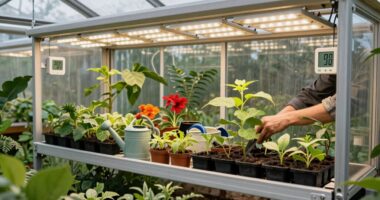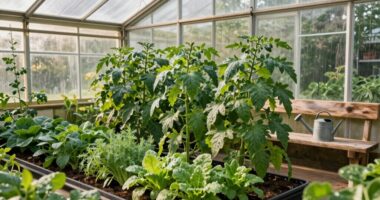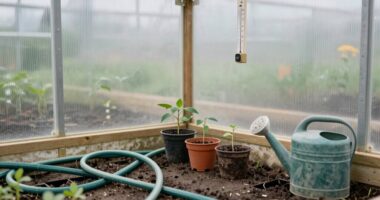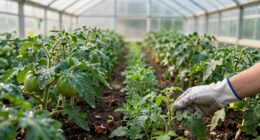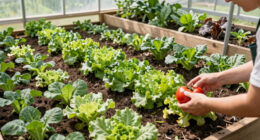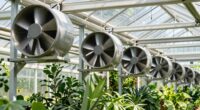
A balanced greenhouse in real life combines natural systems with advanced technology to create an efficient, eco-friendly environment. You’ll see features like solar panels, rainwater harvesting, and natural ventilation working together seamlessly. The design prioritizes sustainability, with thoughtful material choices and passive solar principles that maximize heat retention and reduce energy use. Climate control sensors and automated systems keep conditions ideal for plants, making the greenhouse resilient and productive. Want to discover more about how it all works?
Key Takeaways
- A balanced greenhouse integrates natural systems like solar panels, rainwater harvesting, and natural ventilation for sustainability.
- It features thoughtful material choices and passive solar design to optimize thermal regulation and energy efficiency.
- Automated climate control systems manage light, humidity, and airflow based on real-time data for optimal plant health.
- The structure emphasizes eco-friendly features, reducing reliance on external energy and minimizing environmental impact.
- It maintains a resilient environment that adapts to seasonal changes, supporting healthy plant growth sustainably.
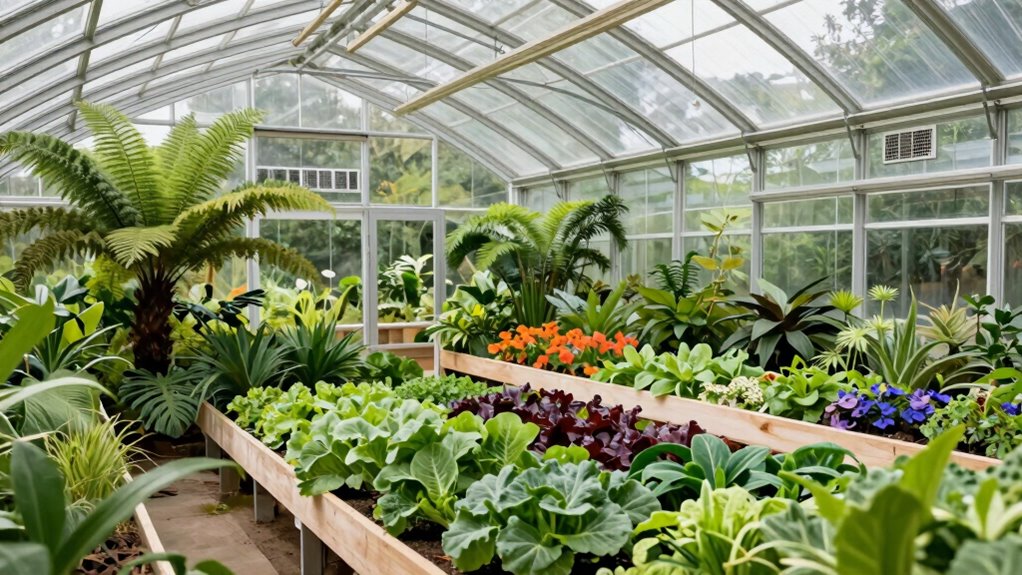
Have you ever wondered how a balanced greenhouse maintains the perfect environment for plants to thrive? It’s all about creating a space where every element works in harmony, ensuring ideal growth while minimizing waste and resource use. A balanced greenhouse isn’t just about lush plants; it’s about thoughtful design choices that promote sustainability and efficiency. Sustainable design plays a vital role here, integrating natural systems into the structure to reduce reliance on external energy sources. You’ll notice features like solar panels, rainwater harvesting, and natural ventilation systems that work together to lower the greenhouse’s carbon footprint. These elements aren’t just environmentally friendly—they also help you save money in the long run, making the entire operation more economical and eco-conscious.
Energy efficiency is central to maintaining this balance. Instead of heavy reliance on artificial lighting and heating, a well-designed greenhouse uses passive solar design principles. The building orientation and insulation maximize sunlight during colder months and minimize heat loss, reducing the need for supplemental heating. When you step inside, you’ll see that the materials used are carefully chosen to enhance thermal regulation, keeping temperatures stable without overworking energy systems. Automated systems further support energy efficiency by adjusting lighting, watering, and ventilation based on real-time conditions, ensuring you’re not wasting resources. This approach not only preserves energy but also creates a healthier environment for your plants, which thrive under stable conditions. Additionally, integrating natural ventilation helps maintain optimal airflow, reducing the need for mechanical cooling systems. Incorporating energy-efficient materials into construction also enhances thermal regulation, further reducing energy consumption. Emphasizing passive solar design principles can significantly influence the overall sustainability of your greenhouse, ensuring it operates efficiently year-round. Proper environmental management, including humidity control, is also essential for maintaining plant health and resource efficiency.
Achieving a balanced greenhouse also involves managing internal conditions like humidity, airflow, and light levels. You’ll find that sensors and climate control systems work silently in the background, fine-tuning conditions to meet the specific needs of different crops. By carefully balancing these factors, you prevent issues like mold, drought stress, or overheating, which can compromise plant health. Proper environmental management is essential for maintaining optimal conditions and preventing resource waste. This precise control reduces the need for interventions, saving time and resources. In a balanced greenhouse, sustainability and energy efficiency aren’t separate goals—they are intertwined, driving the entire system to operate at its best.
In real life, a balanced greenhouse is a reflection of intentional design, technological integration, and eco-conscious practices. You create a space that produces healthy, vigorous plants while respecting the environment. With sustainable design guiding your choices and energy efficiency keeping operations lean, you build a resilient, productive environment that benefits both your plants and the planet. It’s about harmonizing technology and nature, ensuring that your greenhouse remains productive, sustainable, and efficient for years to come.

ZIZIWIN Solar Chicken Coop Fan 2 Kit, 20W Solar Powered Greenhouse Fan Outdoor Waterproof, Solar Exhaust & Intake Fans, Hi-Airflow for Shed Dog House Air Circulation Ventilation Cooling, No Battery
- Enhanced airflow for cooling: Rapidly cools and refreshes air
- Suitable for small spaces: Covers up to 100 sq.ft
- High-speed solar fan: 3200 rpm airflow with large panel
As an affiliate, we earn on qualifying purchases.
As an affiliate, we earn on qualifying purchases.
Frequently Asked Questions
How Much Does a Balanced Greenhouse Typically Cost to Build?
A balanced greenhouse typically costs between $10,000 and $50,000 to build, depending on size and materials. You’ll need to invest in quality for soil fertility management and pest control systems. The costs include sturdy framing, climate control, and soil amendments. Remember, investing in good pest management and maintaining soil health helps guarantee your greenhouse remains productive and sustainable, making the initial expense worthwhile.
What Are the Best Plants for a Balanced Greenhouse?
Think of your greenhouse as a symphony, where each plant plays its part. You should choose resilient, versatile plants like tomatoes, herbs, lettuce, and peppers for ideal plant selection. Use proper growing techniques—adequate watering, good airflow, and proper lighting—to keep everything in harmony. These plants thrive together, creating a balanced environment that’s productive and sustainable, making your greenhouse a lively, flourishing space.
How Do I Maintain Proper Humidity Levels Reliably?
To maintain proper humidity levels reliably, focus on humidity control and moisture regulation. Use a hygrometer to monitor humidity, aiming for consistent levels suited to your plants. Incorporate a humidifier or misting system during dry periods, and vent or dehumidify when humidity gets too high. Regularly check and adjust these systems to keep conditions stable, ensuring your greenhouse remains a healthy environment for your plants.
What Are Common Pests in Balanced Greenhouses?
In a balanced greenhouse, common pests like aphids, whiteflies, and spider mites can still appear. You should focus on pest prevention by maintaining healthy plants and proper hygiene. Use organic controls such as neem oil, insecticidal soaps, or introducing beneficial insects like ladybugs. Regular monitoring helps catch infestations early, ensuring your greenhouse remains balanced and pest-free. Consistent, organic pest prevention is key to protecting your plants naturally.
How Energy-Efficient Are Balanced Greenhouses?
You might worry about energy costs, but balanced greenhouses are surprisingly efficient. With solar integration, they harness renewable energy, reducing reliance on external power sources. Plus, water conservation practices further boost efficiency by minimizing waste and lowering utility bills. This combination makes balanced greenhouses eco-friendly and cost-effective, helping you grow healthy plants sustainably while saving money and energy.
Conclusion
A balanced greenhouse is like a delicate dance, where every plant and breeze moves in harmony. You’ll find that when each element treads softly together, the whole space breathes with life and purpose. It’s not about perfection, but about nurturing a symphony of growth. When you create this equilibrium, your greenhouse becomes a lush sanctuary—an orchestra of nature’s resilience, where balance fuels beauty and every leaf whispers the promise of thriving life.