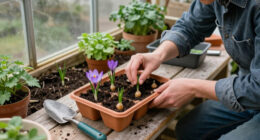
To create a productive, low-waste greenhouse, focus on sustainable materials like reclaimed wood, bamboo, and recycled plastics. Use natural ventilation, passive solar design, and eco-friendly insulation to cut energy use. Maximize space with vertical gardening and modular setups, and incorporate drip irrigation to conserve water. Emphasize composting and recycling to reduce waste while maintaining plant diversity for resilience. Keep these strategies in mind, and you’ll discover more ways to build an eco-friendly, efficient greenhouse.

Get garden gear delivered free with Prime
- Fast, free delivery on millions of items
- Prime Video, Amazon Music and more included
- Member-only deals all year
Key Takeaways
- Use recycled, durable materials like reclaimed wood, bamboo, or recycled plastic for construction and shelving.
- Incorporate passive solar design and natural ventilation to reduce energy consumption.
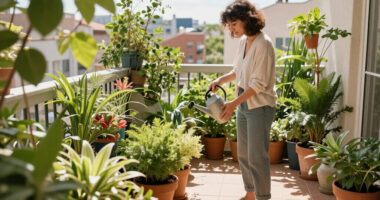
- Implement vertical gardening and modular layouts to maximize space efficiency.
- Install eco-friendly drip irrigation and rainwater harvesting systems for water conservation.
- Incorporate composting and recycling practices to minimize waste and create a closed-loop system.
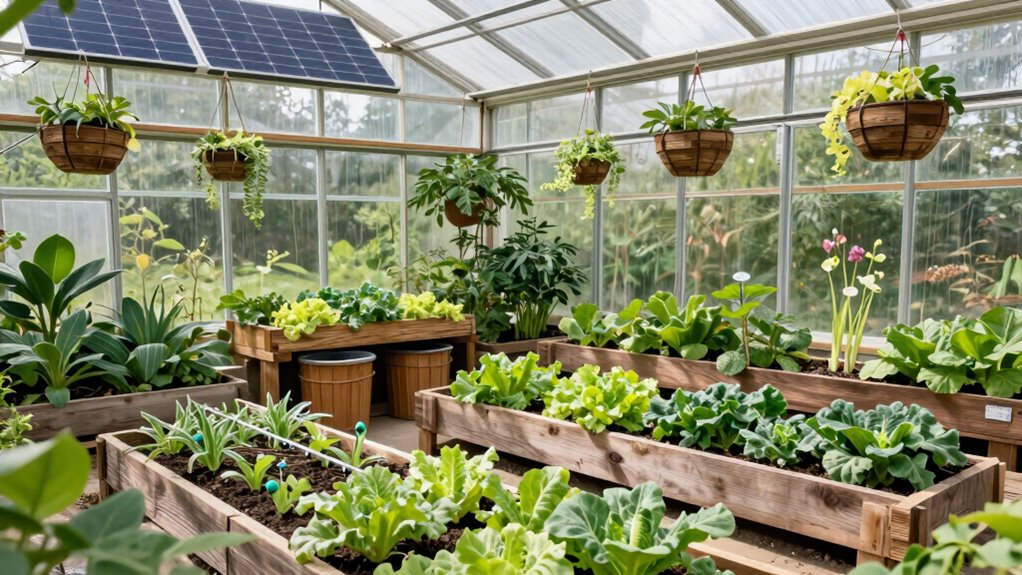
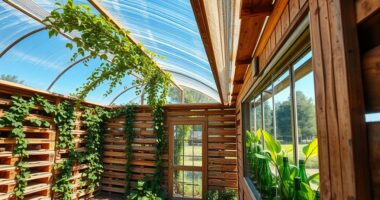
Using sustainable materials throughout your greenhouse design is equally important. Select recycled or salvaged materials for structures, shelving, and containers to cut down on new resource consumption. Bamboo, reclaimed wood, and recycled plastic can serve as durable, eco-friendly options that minimize your carbon footprint. You might also consider installing rainwater harvesting systems, which use sustainable materials like food-grade barrels or tanks. These systems help you water your plants efficiently, reducing reliance on tap water and conserving this essential resource.
Maximizing efficiency in your greenhouse isn’t just about materials; it’s about thoughtful design. Incorporate natural ventilation and passive solar heating to reduce energy use. Position your greenhouse to maximize sunlight exposure while providing shade during the hottest parts of the day. Use insulation made from sustainable materials to keep temperatures stable with less energy. These small adjustments can considerably lower your energy consumption, making your greenhouse more sustainable and cost-effective. Additionally, exploring energy-efficient techniques can further reduce your environmental impact.
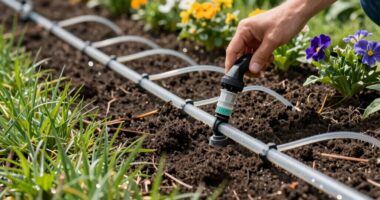
In addition, consider integrating vertical gardening and modular setups to make the most of limited space. This approach not only increases productivity but also reduces the need for extensive soil disturbance and resource use. When watering, use drip irrigation systems made from eco-friendly materials, which deliver water directly to your plants and reduce waste. Incorporating water conservation methods is vital for maintaining a truly low-waste environment. Implementing plant diversity practices can also enhance ecosystem resilience and reduce pest outbreaks. Combining this with composting to create a closed-loop system where waste is recycled into fertilizer, decreasing dependency on external inputs. Utilizing sustainable materials in your greenhouse construction further enhances its eco-friendliness and durability.
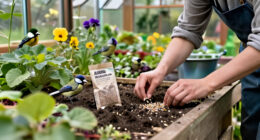
Creating a low-waste, productive greenhouse is about blending smart design, sustainable choices, and mindful resource management. By focusing on composting methods and sustainable materials, you set a foundation that supports both your plants and the environment. Every decision you make—from the materials you choose to how you manage waste—contributes to a space that’s not only efficient but also environmentally responsible. This way, your greenhouse becomes a thriving, sustainable oasis that reflects your commitment to low-impact gardening.
reclaimed wood greenhouse shelves
As an affiliate, we earn on qualifying purchases.
As an affiliate, we earn on qualifying purchases.
Frequently Asked Questions
What Are the Best Sustainable Materials for Greenhouse Construction?
You should consider using recycled plastics for panels or insulation, as they’re durable and eco-friendly. Bamboo framing makes an excellent sustainable choice because it’s fast-growing, lightweight, and strong. Combining recycled plastics and bamboo helps reduce waste and minimizes environmental impact. These materials are not only sustainable but also cost-effective, making your greenhouse both eco-conscious and functional, promoting a low-waste, productive environment.
How Can I Automate Watering to Reduce Waste?
Ironically, overwatering is a common mistake, so why not automate it? You can do this easily with drip irrigation systems connected to moisture sensors. These sensors detect when your plants need water, preventing waste and overwatering. When paired, they create a smart watering system that conserves water, saves time, and keeps your greenhouse thriving without the fuss of manual checks. It’s the most efficient way to stay eco-friendly.
What Eco-Friendly Pest Control Methods Work Best?
You can use eco-friendly pest control methods like composting techniques to attract beneficial insects that naturally control pests. Applying organic repellents such as neem oil or garlic spray also keeps pests at bay without harming your plants or the environment. Regularly inspecting your greenhouse helps you catch infestations early. Combining these strategies creates a sustainable, low-waste approach that maintains a healthy, productive greenhouse ecosystem.
How Do I Maximize Space Efficiency in Small Greenhouses?
Imagine your greenhouse as a bustling city, where space is precious. You maximize efficiency by employing vertical stacking—think of skyscrapers reaching for the sky—and modular design, like adaptable building blocks. These strategies help you utilize every inch without clutter, creating a thriving ecosystem. By stacking plants and designing flexible layouts, you turn your small greenhouse into a productive, low-waste haven that feels expansive and organized.
What Are Low-Impact Heating and Cooling Options?
You can use low-impact heating and cooling options by incorporating solar shading and geothermal cooling. Solar shading helps regulate temperature naturally, reducing the need for extra energy by blocking excess sunlight. Geothermal cooling utilizes the earth’s stable temperature to cool your greenhouse efficiently, minimizing energy use. These eco-friendly solutions lower your greenhouse’s environmental impact while maintaining a comfortable environment for your plants year-round.
Conclusion
By embracing these tips, you’ll transform your greenhouse into an oasis of productivity and sustainability. Think of it as your personal eco-paradise, where waste diminishes and growth flourishes like a jungle bursting with life. Remember, every small step you take today plants the seeds for a greener, more bountiful tomorrow. Keep nurturing your space with care and creativity — soon, you’ll be amazed at how effortlessly your green haven thrives and inspires!
Fall Picks
fall essentials
As an affiliate, we earn on qualifying purchases.