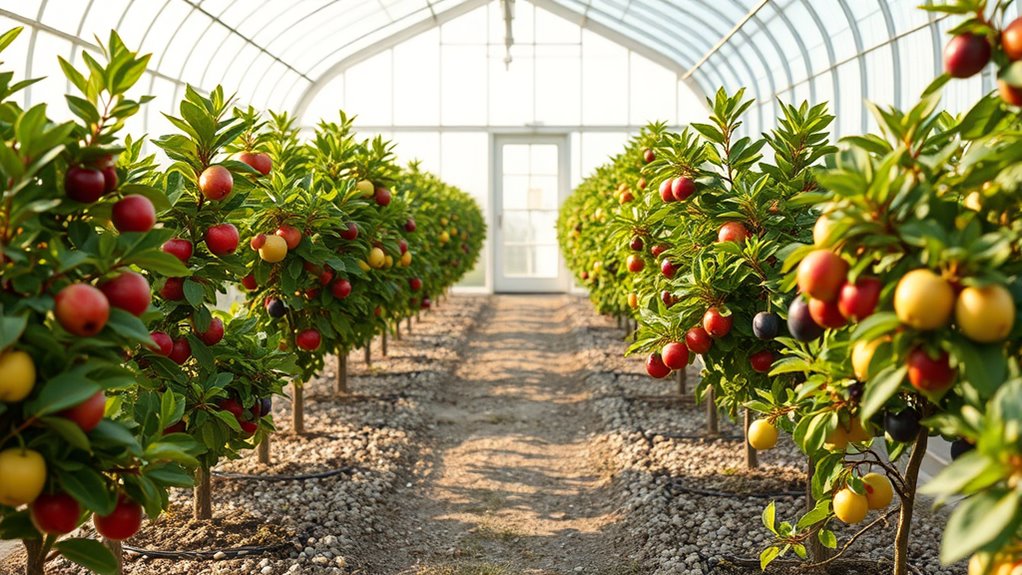
Growing dwarf fruit trees in greenhouses lets you enjoy fresh, homegrown fruit all year while making the most of limited patio or urban spaces. These manageable trees thrive in controlled environments, which help extend the growing season and protect them from pests and weather extremes. Proper care, pruning, and pest management are key to healthy, productive trees. Keep exploring to discover how you can create your own lush patio orchard with ease.

Get garden gear delivered free with Prime
- Fast, free delivery on millions of items
- Prime Video, Amazon Music and more included
- Member-only deals all year
Key Takeaways
- Greenhouses enable year-round cultivation of dwarf fruit trees, ensuring a continuous supply of fresh produce.
- They provide controlled environments that optimize flowering, fruiting, and overall tree health.
- Dwarf varieties are ideal for small patios, maximizing space efficiency and manageability.
- Integrated pest management in greenhouses reduces pest issues and promotes organic, healthy fruit production.
- Proper care and sanitation in greenhouse patio orchards lead to abundant, high-quality fruits in limited spaces.
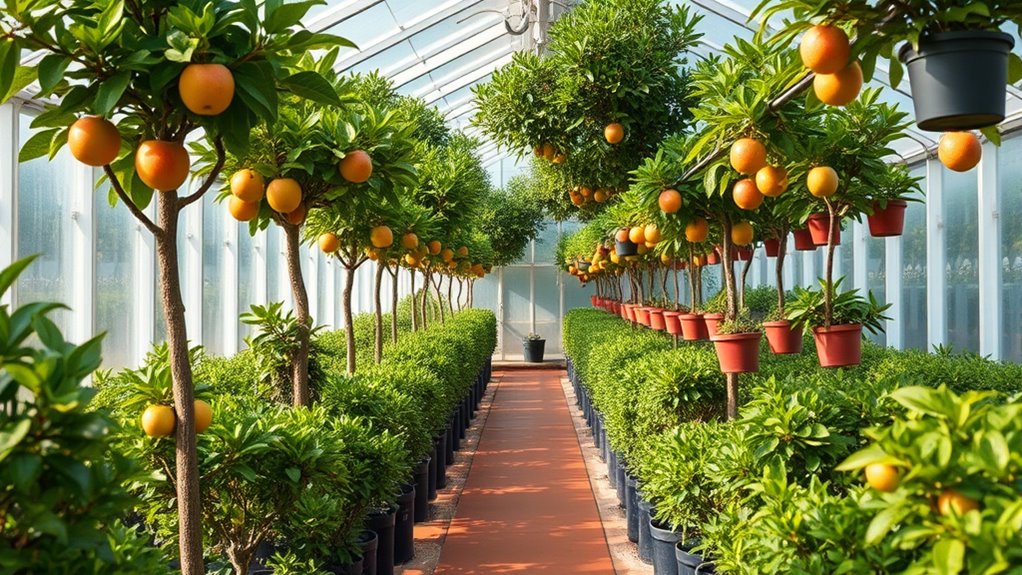
Growing dwarf fruit trees in greenhouses offers a practical way to enjoy fresh, homegrown produce year-round, even if you have limited space. If you’re interested in urban farming, this approach lets you transform small patios or rooftops into productive orchards. Dwarf varieties are ideal because they stay manageable in confined spaces, making it easier to tend to them regularly. With the right setup, you can harvest apples, peaches, or cherries right outside your door, reducing trips to the store and ensuring your fruit is as fresh as it gets.
Grow fresh, homegrown fruit year-round with dwarf trees in small greenhouses or patios.
In a greenhouse environment, you gain control over growing conditions, which is especially beneficial for fruit trees. You can regulate temperature, humidity, and light, creating ideal conditions for flowering and fruiting. This control extends to pest management, a vital aspect of maintaining healthy trees. Unlike traditional outdoor gardening, a greenhouse minimizes exposure to pests and diseases, but it doesn’t eliminate the need for vigilant pest management. You’ll want to routinely inspect your trees for signs of pests like aphids, spider mites, or scale insects, which can quickly damage your trees if left unchecked. Using organic pest controls or introducing beneficial insects can help keep pests at bay without resorting to harsh chemicals.
Urban farming with dwarf fruit trees in greenhouses also means you can implement integrated pest management strategies. These combine biological controls, cultural practices, and minimal chemical use to keep pests under control while protecting your crops and the environment. Regular pruning and sanitation help reduce pest habitats and improve air circulation, which discourages fungal issues and pest infestations. You can also use sticky traps or companion planting to further deter pests naturally.
Having a greenhouse dedicated to your patio orchard means you can extend your growing season and produce fruit that’s usually out of reach in traditional outdoor settings. The key is to stay proactive about pest management—early detection and intervention prevent pests from spreading or causing severe damage. Plus, the controlled environment reduces the need for chemical interventions, making your harvest more organic and safe for your family. Incorporating educational toys and tools designed for pest identification can help you learn to recognize and address issues more effectively. With consistent care and attention, your dwarf fruit trees will thrive, rewarding you with abundant, delicious fruit all year. Whether you’re a seasoned urban farmer or just starting out, growing dwarf fruit trees in a greenhouse combines the joys of gardening with practical urban farming, turning even the tiniest outdoor space into a lush, productive patio orchard.
dwarf fruit trees for greenhouses
As an affiliate, we earn on qualifying purchases.
As an affiliate, we earn on qualifying purchases.
Frequently Asked Questions
What Are the Best Dwarf Fruit Varieties for Greenhouse Cultivation?
For greenhouse cultivation, you should choose dwarf fruit tree varieties like dwarf lemon, fig, and cherry trees, as they thrive in limited space. Focus on dwarf fruit tree selection that suits your climate and greenhouse conditions. Use greenhouse cultivation tips like proper pruning, adequate sunlight, and controlled watering to make certain of healthy growth. These choices allow you to enjoy fresh, home-grown fruit year-round in your patio or greenhouse setting.
How Do I Prevent Pests on Dwarf Fruit Trees Indoors?
Pests can seem like an army trying to conquer your indoor orchard, but you can easily stop them. Use natural pest control methods like introducing beneficial insects or neem oil, and keep a close eye with indoor pest monitoring. Regularly inspect your dwarf fruit trees, remove any pests you find early, and guarantee good airflow. Staying vigilant and proactive keeps your indoor oasis pest-free and flourishing.
What Are the Optimal Temperature Ranges for Greenhouse Dwarf Trees?
You should keep your greenhouse dwarf trees between 65-75°F during the day and slightly cooler at night. Maintain humidity levels around 50-60% to prevent stress and promote healthy growth. Incorporate seasonal pruning to manage airflow and reduce disease risk. Use a thermometer and humidity monitor regularly, adjusting ventilation and watering as needed. Proper temperature and humidity control help your trees thrive, ensuring ideal fruit production and overall health.
How Often Should I Fertilize Dwarf Fruit Trees in a Greenhouse?
You should fertilize your dwarf fruit trees every 4 to 6 weeks during the growing season to maintain healthy soil nutrition. Use a balanced, slow-release fertilizer or a liquid feed, depending on your fertilization schedule. Regular feeding ensures your trees get essential nutrients, promotes fruit development, and prevents deficiencies. Adjust the frequency if your trees show signs of over- or under-application, and always follow the fertilizer package instructions.
Can Dwarf Fruit Trees Be Grown Year-Round Indoors?
Yes, you can grow dwarf fruit trees indoors year-round with proper care. Make sure you provide adequate light, maintain temperature, and facilitate indoor pollination when needed. Regular dwarf tree pruning helps keep the trees healthy and productive. You’ll also want to pollinate blossoms manually if natural pollinators aren’t present. With these steps, your dwarf fruit trees can thrive indoors throughout the year, providing fresh fruit regardless of the season.
Conclusion
With dwarf fruit trees in your greenhouse, you can enjoy fresh, homegrown fruit year-round—no need for a time machine! These compact trees fit perfectly on your patio, turning your space into a bustling orchard of flavors. Just imagine, in your Victorian-style greenhouse, you’re cultivating a mini Eden. So go ahead, embrace this modern twist on old-world gardening, and savor the sweet rewards of your green sanctuary. Your patio can truly be your garden of delights!
Fall Picks
fall essentials
As an affiliate, we earn on qualifying purchases.